




As the Census Bureau reported last week, the country grew by just 0.5 percent between June 2024 and July 2025, or half the rate of increase between 2023 and 2024.
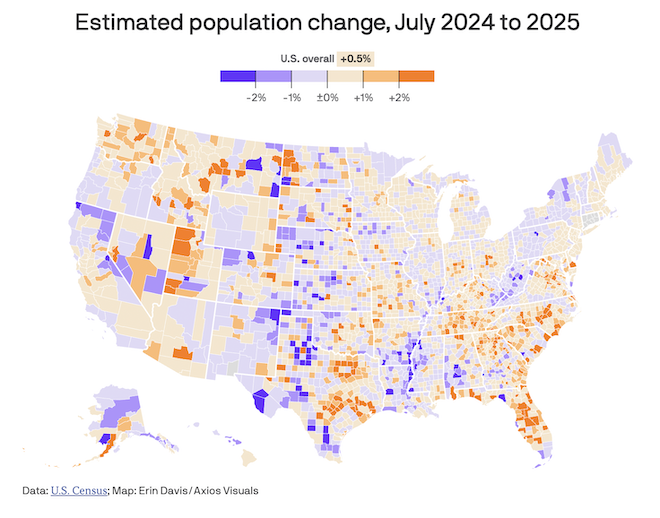
This slowdown in population growth is not unexpected as the number of counties with natural decrease (more deaths than births) was 65 percent — roughly the same level as the prior two years.
What’s different this time? The decline in immigration is hitting major cities.
-
- Our biggest cities and counties are collectively losing people: Collectively, the 50 counties with 1 million or more people in 2025 had a net domestic migration loss of 637,634. New York City, for example, lost 12,200 residents over the course of the year, and its international migration dropped by a whopping 70 percent.
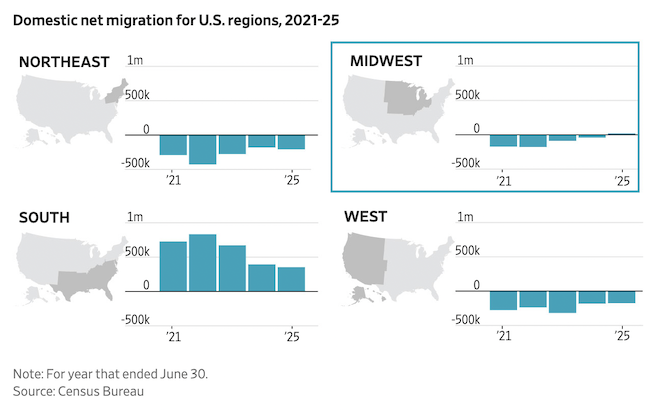
- The Midwest is now primed for growth. Michigan notched more resident arrivals than departures for the first time in decades in 2025 — that’s especially notable given that immigration dropped so much. Though much smaller, cities like Des Moines have grown nearly as quickly as Phoenix over the past five years.
-
- Domestic migration patterns continue to redistribute the population from the largest counties to less populous ones. Mid-sized counties (50,000-999,999 in population) had a combined net domestic migration gain of 533,766. In other words, people are moving to smaller cities and less populated suburban counties. You might have seen that Halina Bennet piece on the Case for the “Solid B” City — the truth is that people have clearly already found, and are moving to, these places.
-
- They’re also moving to places beyond the suburbs. Smaller counties (15,000-49,999) had a net domestic migration gain of 95,095. Even rural counties with less than 15,000 people are defying the pattern of population loss and had a slight net domestic migration gain of 8,773.
What the Census means
Many cities, such as Philadelphia and Chicago, are seeing effectively flat population growth at this point after a few years of slowly trying to regain population lost during Covid. But annual population changes aren’t just a function of how many people arrive, they’re a function of how many people leave. And here’s what’s also changed this time around: Fewer people are leaving these cities.
Does this mean that people are happier in these cities and want to stay there? Or that those who wanted to leave already left, particularly during the 2020-2022 reshuffling? Or does this point to something else — a lack of economic opportunity and affordable housing elsewhere, and a population that is stuck in place? I think it’s increasingly the latter.
Stagnant population growth is going to have a lot of impacts on local businesses. If you’re always pitching to the same people, year after year, your business is going to have to find ways to connect deeply with an existing customer base. It’s also going to have ramifications for real estate — fewer people coming and going is bad for that industry as well.
3 population predictions for the next 5 years
I love making predictions based on the data, and I see a few trends worth commenting on here.
-
- I think we are going to hit zero population growth by the end of the decade. A confluence of issues are going to affect population: The oldest Boomers turn 80 this year; immigration will be nonexistent so long as Trump is president, and the tanking economy will slow down both family formation and having extra kids.
- Within that context of flat population and zero immigration, I think the Midwest will become the fastest growing region of the country by the end of the decade. Housing is still much cheaper there — average housing costs in Ohio are about half the cost of housing in Florida.
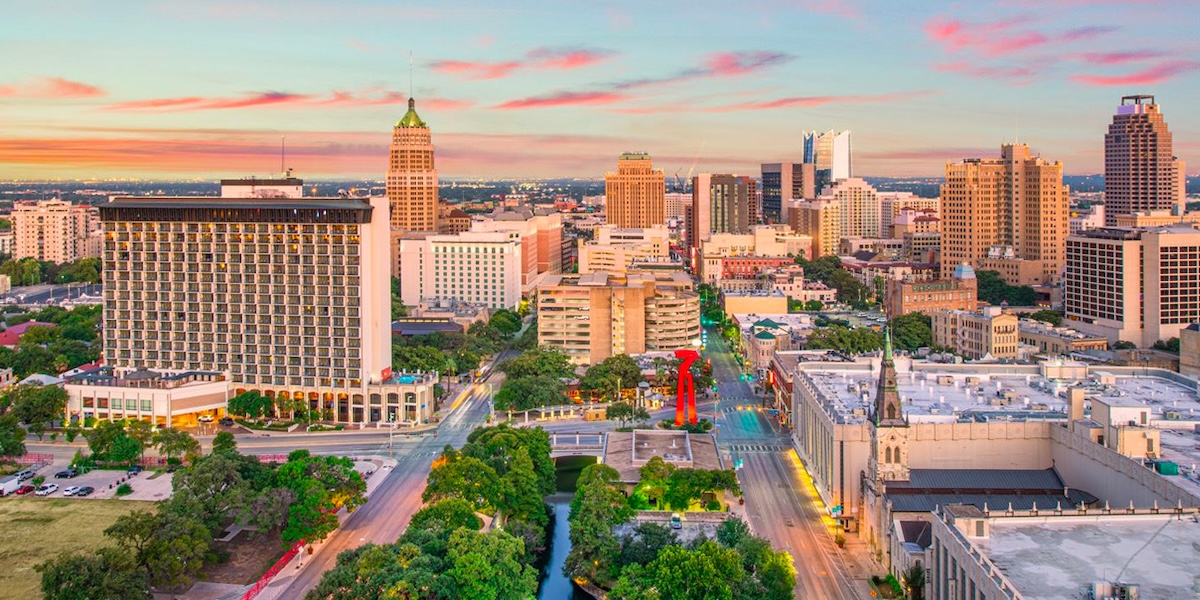
- I think Houston will become the country’s third-largest city by 2030 — and San Antonio will replace Philadelphia as sixth-largest sooner than that. Houston’s Harris County is already just 150,000 people shy of Chicago’s Cook County, and Houston added about 125,000 in this latest Census count. Meanwhile, according to the World Population Review, San Antonio is already the country’s 6th largest city. I haven’t seen this reported anywhere else, but given that Philadelphia added just 1,546 residents in this latest Census report while San Antonio continues to grow, it sure seems right.
Diana Lind is a writer and urban policy specialist. This article was also published as part of her Substack newsletter, The New Urban Order. Sign up for the newsletter here.

MORE NEW URBAN ORDER
The San Antonio, Texas skyline, courtesy of Visit San Antonio. Based on trends in the latest U.S. Census, the city's population may outstrip that of Philadelphia in the coming years.