

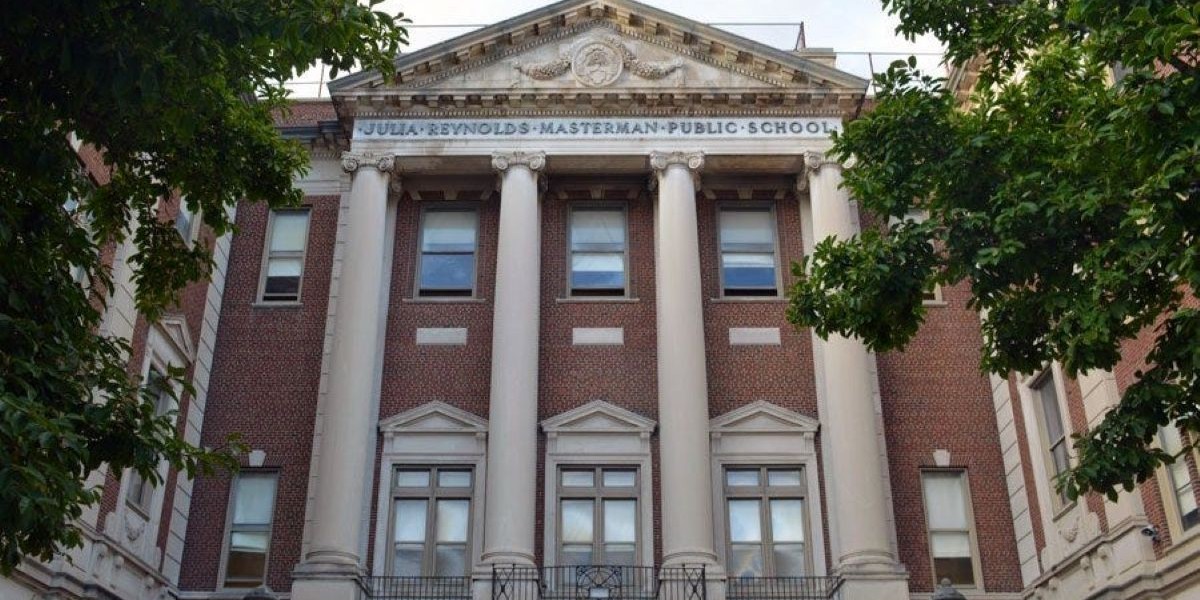


For the past month, Philadelphia has been publicly debating a new facilities master plan for our school district. Like so many municipal planning documents, it is full of hard choices.
Listen to the audio edition here:
For my family, the consequences aren’t abstract. We’re directly affected by some of the planned closures and consolidations in our neighborhood. I understand the plan rationally — hooray, our schools will probably be great in 2040! But when I look at the disruption in the next five years and at the fact that my kids need great schools now, I’m actually kind of full of despair.
Kristen Graham, The Philadelphia Inquirer’s primary education reporter, and the rest of the Inquirer team, has been doing extraordinary work documenting community by community how years of hard-won investment in Philadelphia — libraries built, special programs created, test scores raised — are being swept away with the closure.
But no one seems to be discussing that there is not one new school building created in the district’s plan. Every categorization is a variation on what already exists — Modernize, Maintain, Co-locate, Close & Repurpose, Close & Convey. The vocabulary of the plan tells you everything about the psychology behind it. This story line of retreat is compounded by the school district’s recent plan to close a $300 million budget gap with layoffs and cuts.
School closures are presented as inevitable these days, not only in Philadelphia but around the country. A recent Boston Globe piece explores how public schools are closing throughout Massachusetts, with Boston public schools reaching record low enrollment and rural parts of the state experiencing 30 percent enrollment declines.
But in Philadelphia, it’s as much about mentality as it is about the reality of demographic changes. Philly peaked at 2 million people in 1950, and has shrunk to 1.6 million. In that time, we’ve become genuine masters of rethinking our existing building stock. We celebrate the adaptive reuse of old schools into housing, into creative hubs like the Bok Building. That ingenuity is real and worth honoring. But somewhere along the way, expansion got eliminated from our cultural DNA entirely. We have so many old buildings that we’ve often stopped being able to imagine building something new.
There’s a parking lot in my neighborhood that proves the point. In the 1970s, the school district cleared a square block at Fairmount and 22nd Street to build a new high school. NIMBY neighbors who worried about teens from other parts of the city coming to their neighborhood successfully blocked it. The result was 50 years of vacancy and eventually paid parking on one of our prime commercial corridors. The neighborhood civic association that acquired the property for $250,000 in 1999 reaps the parking revenue and has never developed it. I imagine selling might threaten their funding stream; building is too complicated. And so the lot sits.
What we need is an abundance mindset for schools — not a scramble over a shrinking pie, but a goal to create the schools families actually want, and a willingness to reverse-engineer solutions from there.
That lot is a perfect case study in what an abundance mindset could actually look like. The city and the school district could acquire it and partner with a private developer to build everything the neighborhood needs at once: new housing, a new school, a community hub, ground-floor retail. The profitable sides of the development would subsidize the cost of the new school and community assets.
In New York, it’s not uncommon to find this model at play. For example, two public schools share a building with Whole Foods and market-rate apartments in a Midtown building designed by renowned firm SOM. It’s just one of many projects made possible by the city’s Educational Construction Fund, which has added over 18,000 school seats, 4,500 units of housing and 1.2 million square feet of office space in New York City since its inception in 1967.
In Baltimore, the city is co-locating schools with community hubs and mixed-use development as a way to invest in neighborhoods and make the math work for everyone.
Interestingly, this mixed-use model is also how a private school in Philadelphia is currently financing its new K-8 campus in Center City, bundling the school with luxury apartments. The market knows how to do this. The question is whether the public sector has the ambition to try.
What we need is an abundance mindset for schools — not a scramble over a shrinking pie, but a goal to create the schools families actually want, and a willingness to reverse-engineer solutions from there. Rather than try to whittle down the district’s holdings, losing the confidence and participation of families who are tired of investing in a district that seems destined for instability and decline, what would it take to build the schools that would enable Philadelphia (and many urban school districts like it) to compete with those in the suburbs? With that as a north star, how could the school district harness public land and private capital to create a master plan that better balances the need to close some schools with the need to create new ones as well?
Even in NIMBY strongholds like the Bay Area, communities like Davis are seeking to annex nearly 500 acres to build 1,800 units of housing, all in a bid to not just add more attainable housing, but add the enrollment and tax base needed to avoid closing its prized schools. In denser cities like Philly and Boston, you have the potential to accomplish similar goals in much less space.
There is some hope in Philadelphia: a new Harlem Children’s Zone model coming to North Philadelphia could be transformative for families there (albeit in existing school buildings). At least here we are witnessing an appropriate sense of ambition. We also need this kind of big picture thinking for the broad middle — families who want to stay in cities and need reassurance the schools will be there for them if they do.
Diana Lind is a writer and urban policy specialist. This article was also published as part of her Substack newsletter, The New Urban Order. Sign up for the newsletter here.
 MORE FROM THE NEW URBAN ORDER