Do Something

Stay engaged and informed on local government

Find out who represents you on the City Council and reach out. If you have a zoning issue, a neighborhood need, or are looking into a proposed City law, your councilperson is your first point of contact.

Here you can find instructions on how to sign up to comment on Council meetings and how to speak at public hearings. You can review the agendas on the calendar here and watch meetings live here.

Connect WITH OUR SOCIAL ACTION TEAM


Read More

Solutions for better citizenship

One of the founding tenets of The Philadelphia Citizen is to get people the resources they need to become better, more engaged citizens of their city.

We hope to do that in our Good Citizenship Toolkit, which includes a host of ways to get involved in Philadelphia — whether you want to contact your City Councilmember about the challenges facing your community, get those experiencing homelessness the goods they need, or simply go out to dinner somewhere where you know your money is going toward a greater good.

Find an issue that’s important to you in the list below, and get started on your journey of A-plus citizenship.

Vote and strengthen democracy

Stand up for marginalized communities

Create a cleaner, greener Philadelphia

Help our local youth and schools succeed

Support local businesses

Cheat Sheet

Why we need adaptive reuse

A recent guest commentary in The Philadelphia Citizen that characterized the proposed reuse of a historic church as a brewery as the product of a zoning “loophole” has stirred a second direct response. Hanna Stark, director of policy and communications at the Preservation Alliance for Greater Philadelphia, asserts that referring to these zoning incentives as a loophole misstates both their purpose and history.

In 2019, City Council unanimously passed legislation that created a narrowly tailored adaptive reuse incentive for designated historic buildings with existing or historic special-purpose uses. Rather than forcing every reuse proposal through the zoning variance process, the law permits a broader range of by-right uses under specific conditions. Adaptive reuse is often the mechanism that allows historic places to remain occupied, maintained, and architecturally intact while serving new community needs, Stark writes. She lays out how it works in this column.

Guest Commentary

Adaptive Reuse is Not a Loophole

A Philadelphia preservationist argues a City Council policy that changed zoning processes for historic buildings is both intentional and highly effective

Guest Commentary

Adaptive Reuse is Not a Loophole

A Philadelphia preservationist argues a City Council policy that changed zoning processes for historic buildings is both intentional and highly effective

A recent guest commentary in The Philadelphia Citizen characterized the proposed reuse of a historic church as a brewery as the product of a zoning “loophole.” That description misstates both the purpose and history of the zoning incentive involved.

The zoning change at issue was a deliberate preservation policy adopted by Philadelphia City Council in 2019 to address a persistent preservation challenge of how to ensure historic buildings remain viable when their original use is no longer needed. Across Philadelphia, churches, schools, factories, and other “special purpose” buildings face obsolescence as demographics shift, institutional needs evolve, and operating costs rise.

Religious properties, in particular, have become increasingly vulnerable. Congregations shrink or relocate. Buildings become too large or costly to maintain. Without a realistic path to continued use, vacancy and deterioration often follow. Philadelphia has already lost numerous historic religious buildings to demolition, and many others remain at risk.

For decades, Philadelphia’s zoning code unintentionally compounded this problem. Many buildings remain governed by zoning classifications that do not reflect contemporary realities. A church building located in a residential district may legally function as a church, but once that use ends, repurposing the building for another community purpose frequently required a zoning variance. Meanwhile, demolition often faced fewer procedural hurdles.

Recognizing this dynamic, Philadelphia’s Historic Preservation Task Force, created by Mayor Jim Kenney in 2017 and composed of preservation professionals, architects, planners, developers, neighborhood representatives, and city agencies, recommended regulatory reforms to encourage adaptive reuse.

Adaptive reuse is often the mechanism that allows historic places to remain occupied, maintained, and architecturally intact while serving new community needs.

One of those recommendations became Bill No. 190613-A. Enacted unanimously by City Council in 2019, the legislation created a narrowly tailored adaptive reuse incentive for designated historic buildings with existing or historic special-purpose uses. Rather than forcing every reuse proposal through the zoning variance process, the law permits a broader range of by-right uses under specific conditions.

Reasonable questions about a specific project, including daily operations or outdoor activity, are entirely appropriate for public discussion. Those concerns are addressed through other established review and permitting processes. Outdoor seating, for example, requires separate approvals through the City’s Department of Licenses & Inspections, and any proposal to serve alcohol is likewise subject to a separate licensing process that includes opportunities for public notice and community input.

Disagreement over a proposed use should not become an argument against the policy tools that enable adaptive reuse. The question facing many historic properties today is not whether they will remain exactly as they were. More often, the choice is whether they will find a new use or disappear altogether.

Adaptive reuse is often the mechanism that allows historic places to remain occupied, maintained, and architecturally intact while serving new community needs. Philadelphia’s historic preservation zoning incentive was adopted to help ensure that more historic buildings remain standing. Calling this framework a “loophole” suggests an unintended bypass, but in reality, this was intentional public policy.


Hanna Stark is the director of policy and communications at the Preservation Alliance for Greater Philadelphia.

The Citizen welcomes guest commentary from community members who represent that it is their own work and their own opinion based on true facts that they know firsthand.

MORE ON ZONING IMPACTS COMMUNITIES

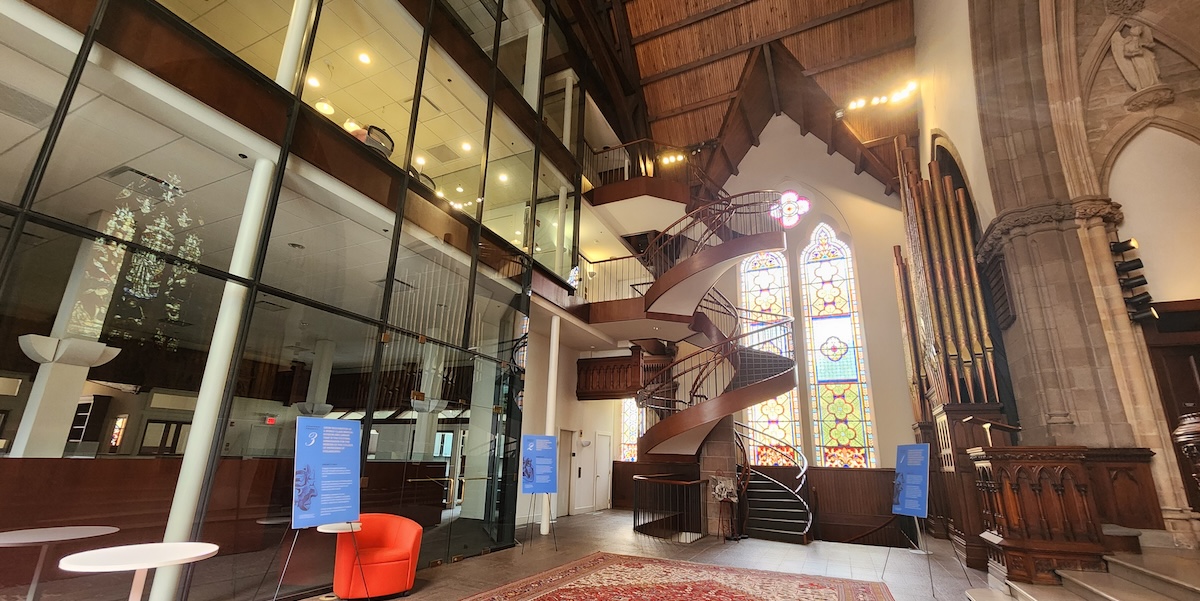
The former Church of the New Jerusalem at 2129 Chestnut Street, now owned and used as office and classroom space by the College of Physicians of Philadelphia, operators of the neighboring Mütter Museum.

Advertising Terms

We do not accept political ads, issue advocacy ads, ads containing expletives, ads featuring photos of children without documented right of use, ads paid for by PACs, and other content deemed to be partisan or misaligned with our mission. The Philadelphia Citizen is a 501(c)(3) nonprofit, nonpartisan organization and all affiliate content will be nonpartisan in nature. Advertisements are approved fully at The Citizen's discretion. Advertisements and sponsorships have different tax-deductible eligibility.

Photo and video disclaimer for attending Citizen events

By entering an event or program of The Philadelphia Citizen, you are entering an area where photography, audio and video recording may occur. Your entry and presence on the event premises constitutes your consent to be photographed, filmed, and/or otherwise recorded and to the release, publication, exhibition, or reproduction of any and all recorded media of your appearance, voice, and name for any purpose whatsoever in perpetuity in connection with The Philadelphia Citizen and its initiatives, including, by way of example only, use on websites, in social media, news and advertising. By entering the event premises, you waive and release any claims you may have related to the use of recorded media of you at the event, including, without limitation, any right to inspect or approve the photo, video or audio recording of you, any claims for invasion of privacy, violation of the right of publicity, defamation, and copyright infringement or for any fees for use of such record media. You understand that all photography, filming and/or recording will be done in reliance on this consent. If you do not agree to the foregoing, please do not enter the event premises.