



“Tell me about a complicated man,” writes Emily Wilson, the College for Women Class of 1963 Professor in the Humanities and Professor of Classical Studies at the University of Pennsylvania, in her 2017 translation of Homer’s The Odyssey.
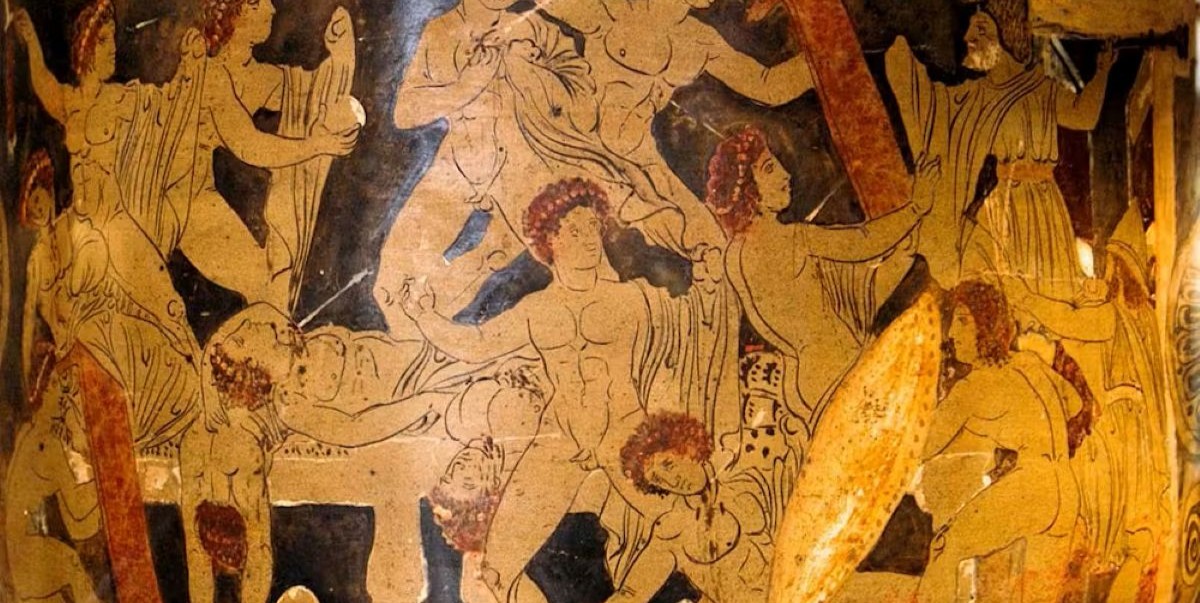
Wilson’s English translation — the first ever by a woman — is the basis for Christopher Nolan’s blockbuster film, The Odyssey. According to W. W. Norton, Wilson’s translation has sold a million copies just since the film came out on July 17. New Yorker writer David Denby further reports, anecdotally, his interaction with an 11-year-old who had recently read and annotated the entire poem. Denby prefaces a redistribution of a New Yorker profile of Emily Wilson written by Judith Thurman in 2023, with a reminder of the power of humanities education.
My own experience has been equally reassuring. Many non-academic friends and acquaintances, in addition to professors, are reading or intending to read Wilson’s 592-page translation of the 3000-year-old poem. Many also plan to listen to the audio version, a good idea since Homer wrote the poem to be read aloud. And nearly everyone I know is planning to see the Christopher Nolan film. Like Homer and Wilson, Nolan is a powerful story-teller.
In these dark days of skepticism about the study of the humanities and university cuts in humanities programs, the Odyssey phenomenon is reassuring. I’m proud that Penn, my alma mater, is Emily Wilson’s academic home and that she is teaching courses just a few miles from where I live. I hope that colleges and universities here and everywhere will take note of the broad-based hunger for a classical story about the meaning of home, family, citizenship, loyalty, courage, and life itself. The humanities have particular power to tell us about “a complicated man,” who conquered the Trojans, not through military strength but by thinking up and designing the Trojan horse. As Judith Thurman writes, Odysseus is “that charismatic prince who’s too impossible to live with and too desirable to live without.”
Every student, not just those privileged to attend Penn, should have the opportunity to wrestle with these issues. I’ve written many pieces about the importance of guiding students to worthwhile careers, but those articles are always in the context of a strong humanities education.
Reading The Odyssey in public schools of a long time ago
Tenth grade, Bartram High School: Our English teacher was famous for his dramatic retelling of Homer’s Iliad and Odyssey. Everyone in the class was transfixed. Did Paris abduct Helen, or did she elope with him? Why couldn’t Achilles’ mother keep him safe? Why didn’t anyone listen to Cassandra? Did a woman have any credibility at all? Why didn’t the Trojans “beware the Greeks bearing gifts”? Whose bright idea was it to bring the Trojan horse filled with armed soldiers through what had been the impenetrable walls of Troy? It was clear that Odysseus with his clever trick horse won the war against the Greeks. Why did he have such a hard time getting home? Did he really want to get home, or was he meant for a life of adventure? How did he lose his memory, and how did he get it back? When he did return to his home in Ithaca, why didn’t he immediately reveal himself to his wife Penelope and son Telemachus? What was the point of testing Penelope, who had been faithful to him for 10 years?
We were transported to a long time ago in a galaxy (or was it a mythical world?) far, far away. So why did it all feel so familiar to our adolescent struggles with family, home, memory, and sexuality? We were hooked. And we also acquired a framework for understanding Western culture from Homer to James Joyce.
Those who attended elite private secondary schools “don’t doubt that they belong” in a classics program. Wilson is committed to nurturing her public school students, making “the whole human experience of the poems accessible to them.”
Wilson herself first was exposed to The Odyssey as a child in England, when a teacher cast her as Athena in a school production of The Odyssey. It was a turning point in her life. This teacher kindled a love of theater and, in an interesting way, introduced her to the “shape-shifting” necessary to translators, who must be chameleons, moving from one linguistic framework to another. As a translator, she is committed to “using the language of the people who will read” the poem. She doesn’t hesitate to write, “Stop! You are acting crazy, Menelaus!”
Those who have criticized the translation and the film of The Odyssey for contemporary language should understand Wilson’s commitment to avoiding the choices of some other translators who “turned a great poem into a hard one.” “I write for the body,” she tells The New Yorker’s Judith Thurman. Wilson also translated Homer’s The Illiad, the prequel to The Odyssey, in 2023.
In 2023, Wilson, who lives near the Penn campus, took Thurman for a walk along the banks of the Schuylkill and told her about her complicated background. Her mother, Katherine Duncan-Jones, was an Oxford scholar specializing in Elizabethan literature. Her father, A. N. Wilson has written famous biographies of Jesus, Darwin, Tolstoy, Milton, Shakespeare, and Queen Victoria. Her younger sister Bee Wilson is a noted British food writer. The parents divorced in 1988. Emily stayed in Oxford to support her devastated mother and to study English literature. In 1996, she took a big leap, travelling to Yale to pursue a doctorate. Wilson became a U. S. citizen in 2022, “to vote where I live.”
She believes that coming from two worlds has made her a better translator and a professor who can better understand her students. Those who attended elite private secondary schools “don’t doubt that they belong” in a classics program. She is committed to nurturing her public school students, making “the whole human experience of the poems accessible to them.”
The importance of the humanities for all students
While I’m not suggesting that Homer and Virgil led directly to my becoming an English professor and university president, an early background in the classics provided the foundation for my career and for my eternal grappling with the meaning of life.
And I’m not alone. The public is voting with movie tickets and book sales for the importance of the humanities. The New York Times reports in “The Revenge of the Philosophy Majors” that the demand for philosophy majors with A.I. training is outstripping demand.
So much for the false humanities/career dichotomy! It’s possible—and desirable– to be highly employable and to study Homer’s Odyssey. In fact, it’s necessary for a good life to commit to economic viability and to pondering the fundamental questions of the human condition.
Odysseus’ journey on the “wine-dark sea” sheds light on a number of questions important to a full, meaningful life.
What is heroism? Can a crafty, problematic man (or woman) be a hero? Judith Thurman says that The Odyssey redefines heroism as imagination. What does that mean?
What do we make of Odysseus’ charisma, charming goddesses, demi-goddesses, and his mortal wife? His bravado turns them on, frequently to their own sorrow.
How do we balance domesticity with adventure, Ithaca and the “wine-dark sea?”
How do we define and enact human choice? How do we make a difference?
What is worth remembering and what is necessary to forget?
How do we successfully communicate with–and love–complicated people?
So much for the false humanities/career dichotomy! It’s possible—and desirable– to be highly employable and to study Homer’s Odyssey.
What’s the meaning of it all?
These questions can and should be explored in university general education and elective courses, as well as in humanities majors. Pennsylvania’s public universities (PASSHE) are now considering three-year bachelors degrees. That would inevitably mean cuts in general education and elective courses.
I’m not entirely opposed to three-year bachelors degrees, especially for returning adults and for others who have self-educated in the humanities and want now to focus entirely on professional preparation. But for 18-22 year-olds, for whom college is a life-changing, growing-up experience, a four-year bachelors’ degree offers the range and scope for both career preparation and reflection on life’s meaning.
It’s particularly galling to be told that three-year bachelors degrees are good enough for low-income students who are advised to rush through higher education and join the work force. Stop. Take a breath. There must be time to read The Odyssey, or, if you’re determined to be in a hurry, at least see Christopher Nolan’s film with friends who want to talk about it.
What should we do?
- Go to see Christopher Nolan’s The Odyssey, read and/or listen to Emily Wilson’s translation.
- Encourage K-12 teachers to tell Homer’s stories.
- Urge colleges and universities to support humanities programs and electives and to connect humanities majors to A. I. training
- Inspire students to be life-long learners, forever improving career skills, while exploring life’s meaning.
Elaine Maimon, Ph.D., is the author of Leading Academic Change: Vision, Strategy, Transformation. Her long career in higher education has encompassed top executive positions at Governors State University (IL), University of Alaska Anchorage, and Arizona State University West Campus, as well as distinction as a scholar in rhetoric/composition. Her co-authored book, Writing in the Arts and Sciences, has been designated as a landmark text. She is a Distinguished Fellow of the Association for Writing Across the Curriculum.
 MORE FROM ELAINE MAIMON