



In February 2018, Jason Kelce stood on the steps of the Philadelphia Museum of Art in full Mummers regalia and took the city to church. He ended his now-famous Super Bowl speech with a chant that’s since become scripture for Philly fans: “No one likes us, we don’t care.” It was a defiant chip-on-the-shoulder moment, forged by decades of Philly feeling underestimated and overlooked.
This summer, on those same Art Museum steps, this city flipped that script. As it turns out: People do like us, and we love it.
In 2026, we have proven that hospitality is our city’s superpower. We wore it proudly on our chests and unleashed it to the world as we hosted six FIFA World Cup matches, an MLB All-Star Game, a PGA Championship, and a Semiquincentennial Celebration.
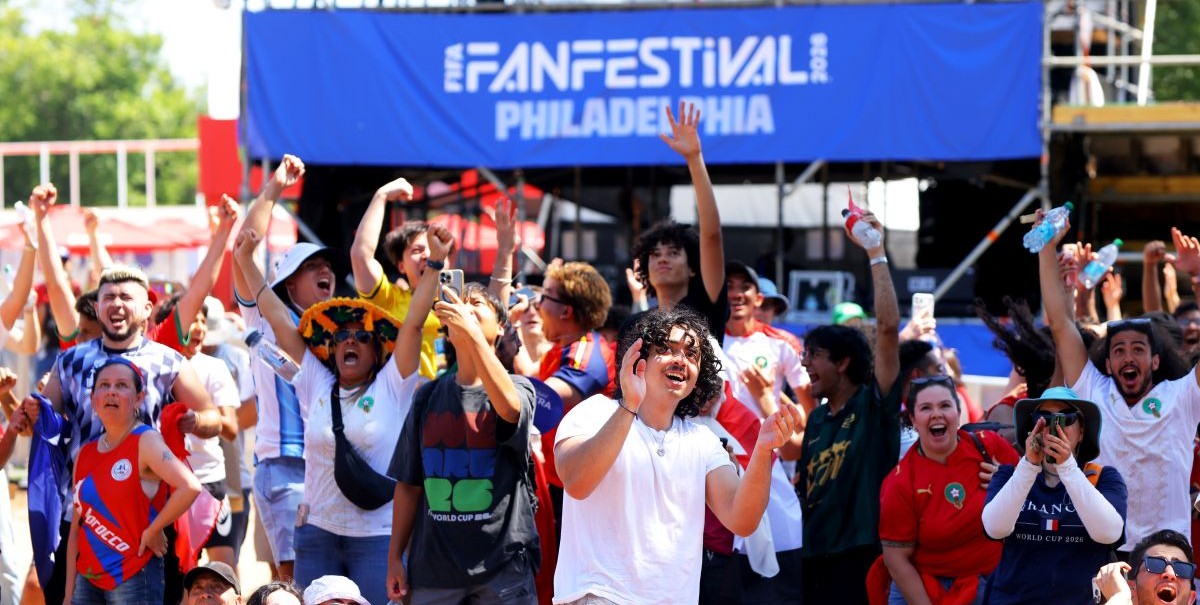
We were the only host city in North America to offer a completely free Fan Festival for the entire length of the World Cup tournament — 39 days in a public park, open to anyone. We recruited, trained, and deployed 10,000 Phambassadors to greet strangers and spread Philly love. We stood up pop-up visitor centers across Center City, which provided clean restrooms, hydration stations, and air-conditioned tents. We gave fans free SEPTA rides home from the Sports Complex. For the MLB All-Star Game, we rolled out a red carpet (literally!) on Independence Mall- a gesture with an unmistakable message: You are the guest of honor here.
For a city that built its identity on being an underdog, we proved that when we are welcoming the world, we punch above our weight.
This summer we proved something the rest of the country — and the world — needed to see, that a city built on defiance can also be the one that opens its arms widest.
None of this should surprise us, because hospitality is embedded in our DNA as a city. William Penn sailed here on a ship called the Welcome. He named this city with the Greek word for brotherly love and built it as a refuge for people who had been persecuted. He laid it out as the first gridded city in America, with public squares built into the plan from day one — a city physically designed to bring people together. Ben Franklin built on that founding value and invented the infrastructure to support it: the first library to share books and knowledge, a hospital to treat the sick poor, a fire company built on mutual aid, institutions premised on the idea that a city thrives when its people organize to take care of each other — including people who just arrived.
Hospitality isn’t just something we happen to be good at, or something we staged for this landmark year. It’s core to why this city exists at all — a “Holy Experiment” in welcoming, 343 years old and still going.
While national and international rhetoric has left a lot of visitors wary about what kind of welcome they’d find in the U.S., Philadelphians spent two months quietly making the opposite case: block by block…Phambassador by Phambassador…high-five by high-five.
Since Semiquincentennial planning started, we have asked ourselves what parks, bridges, or monuments would be the “legacy” project of 2026? But instead of building a physical bridge, like we did for the nation’s sesquicentennial in 1926, this summer Philadelphia built a social one — connecting hundreds of thousands of strangers to a kind, compassionate, gracious, inclusive America.
And therein lies our real legacy of 2026 — making Philadelphia the most welcoming city in the country, and in turn shifting the international narrative about America and Americans. We are, after everything, still Philadelphia. And this summer we proved something the rest of the country — and the world — needed to see, that a city built on defiance can also be the one that opens its arms widest. That’s not a departure from who we are. It’s exactly who we’ve always tried to be.
Kathryn Lovell is President & CEO Philadelphia Visitor Center Corporation and PHL250.
The Citizen welcomes guest commentary from community members who represent that it is their own work and their own opinion based on true facts that they know firsthand.
 MORE ON AMERICA 250 IN PHILLY