



Like Erik Orvik, I’m a very near neighbor to the planned brewery at 1800 Tasker Street. I bought my home in early 2013, and since that time have added a garden in the backyard, a powder room on the first floor, and most importantly, a husband and a child, who we’ll be sending to our neighborhood elementary school, Childs. I was recently elected as a committeeperson for my division, 36-11, which includes the proposed brewery. All of this is to say that I am deeply rooted in my neighborhood of Point Breeze, and I’m not going anywhere.
First, it’s not a zoning loophole that allows properties with historic status to be used for commercial use: It’s the expressed purpose of the law. There’s nothing nefarious here. We have already seen what happens when neighbors fight over how historic buildings should be used — they get demolished. Take the plight of beloved St. Laurentius in Fishtown, which should have been saved by its historic status, but instead continued to deteriorate while neighbors argued over what could be built within the facade. Eventually, the situation got so dire that the building could not be saved, and the site was razed for townhomes.
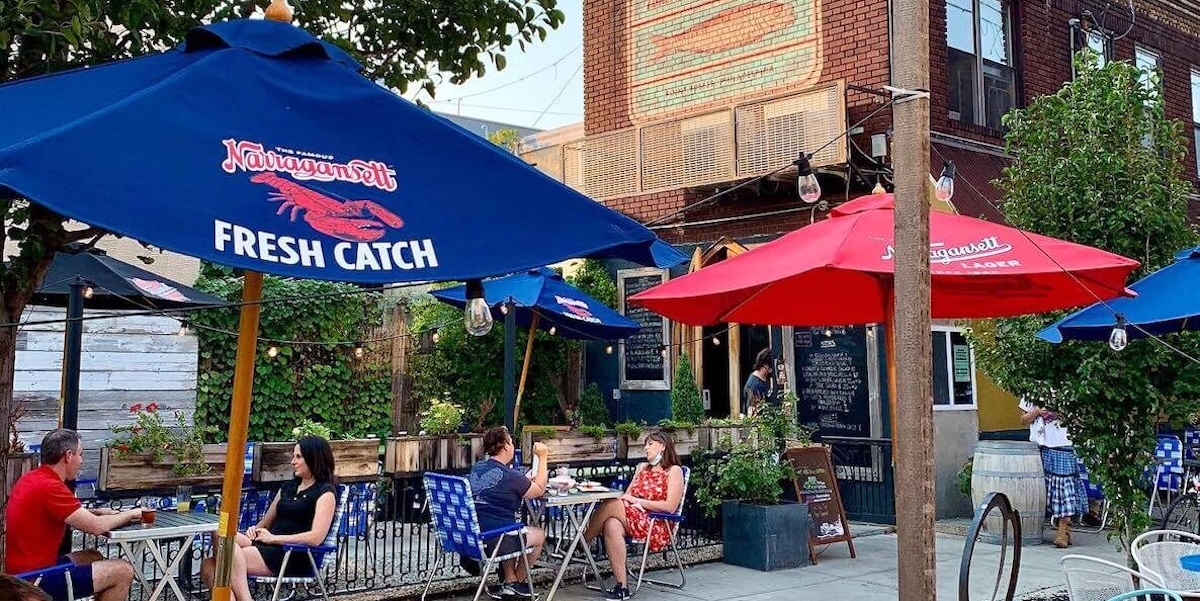
I do not want the church down the block to meet the same fate. The building is beautiful, and I’m glad it’ll be saved — but more importantly, I’m glad it will be used. The proposed brewery is just that, a brewery that plans to open at 7am as a coffee shop, serve lunch and dinner, and yes, beer. The owner is including an indoor play space, and he intends to rent our private rooms to families for kids’ birthday parties. This is a family-friendly establishment, and a far cry from a bumping club with bottle service and loud DJs. There are countless places in our neighborhood to buy beer, including tons of nuisance delis that actually deserve this author’s ire, but fewer places to actually sit down, relax, and spend time together in our community. In our endlessly antisocial and lonely world, we need more real third spaces where everyone is welcome.
Mr. Orvik fears that the brewery “will necessitate the constant churn of patrons — and is not unlikely to create heavy late-night foot and motor vehicle traffic, parking disputes and increased noise — and bring impaired drivers to this family-friendly corner.” This was the same fear-mongering we heard when American Sardine Bar opened at 18th and Federal. I am sure the restaurant is not without its problems — nothing is perfect — but I have seen it operate as a good neighbor, and I think if you polled most people on the surrounding blocks, they’d tell you they’re glad to have it so nearby. I love our quiet, residential neighborhood, but one of the amazing parts of living in a city is having quick and easy access to commercial spaces like bars and restaurants. If I didn’t want that, I’d move to the suburbs. And if I wanted to have a say over every single decision made in my neighborhood, I’d move to an HOA.
In our endlessly antisocial and lonely world, we need more real third spaces where everyone is welcome.
I am writing this not only because I’m so excited about this project, but because I have a lot of experience feeling like the author. When I moved into my house, I was against any and all development. I believed that any new housing caused displacement, but I’ve learned that the process of gentrification is actually a lot more complicated than that. It’s easy to oppose things — out of fear of change, or cynicism that nothing can ever be good or fair, or even because we believe we need to listen to every single person’s concerns. This desire is born from a beautiful and correct place — that everyone matters, as do their feelings — but in practice, it does not work. In a city that’s as diverse as ours (and I don’t just mean racially and economically), decision by consensus does not work. It just gums up the works so much that it stops projects before they even begin.
I believe that if the old church were made into apartments, or worse, knocked down to make room for seven rowhomes, many neighbors would still be against the project. The common themes of opposition — construction is loud and disruptive (it’s also temporary), and parking will become worse — would not change. Concerns about parking are heard across this city whenever anyone wants to build a house, or heaven forbid, an apartment building. Besides the fact that the City should not be in the business of providing unlimited free parking to its citizens, this brewery is four blocks from the subway, catty-corner to an Indego bike station, and on three separate bus lines. I have no doubt that the project owner, who I am sure would like to discourage drinking and driving, if only for his own legal protection, would happily work with community members to find other ways to encourage patrons not to drive.
Mr. Orvik states that the project is “locally unpopular,” but I’m local and I’m excited about it, as are many of my neighbors. It’s true that I’ve spoken to other neighbors who are on the fence, have misgivings, or are just downright opposed. But that’s because we live in a city of a million and a half people, with a million and a half different opinions. The residents of Point Breeze are not a monolith, and it’s impossible for me, Mr. Orvik, or anyone else to speak for “the community” as a whole, but I welcome him (or anyone else) to meet me for a coffee or a beer to discuss what we think is best for the neighborhood — if only we had somewhere to do it.
Mindy Isser works in the labor movement, writes a weekly-ish newsletter about politics, family, and culture, and lives in Point Breeze with her husband, toddler, and cat.
The Citizen welcomes guest commentary from community members who represent that it is their own work and their own opinion based on true facts that they know firsthand.
 MORE ON WHAT TO DO WITH OUR HISTORIC BUILDINGS