Listen

To this story on our podcast

Watch

Hawaii just found a way around Citizens United. Other states are following

Get Involved

Engaged citizens strengthen democracy

One of the founding tenets of The Philadelphia Citizen is to get people the resources they need to become better, more engaged citizens of their city.

We hope to do that in our Good Citizenship Toolkit, which includes a host of ways to get involved in Philadelphia — whether you want to contact your City Councilmember about the challenges facing your community, get those experiencing homelessness the goods they need, or simply go out to dinner somewhere where you know your money is going toward a greater good.

Find an issue that’s important to you in the list below, and get started on your journey of A-plus citizenship.

Vote and strengthen democracy

Stand up for marginalized communities

Create a cleaner, greener Philadelphia

Help our local youth and schools succeed

Support local businesses

Listen

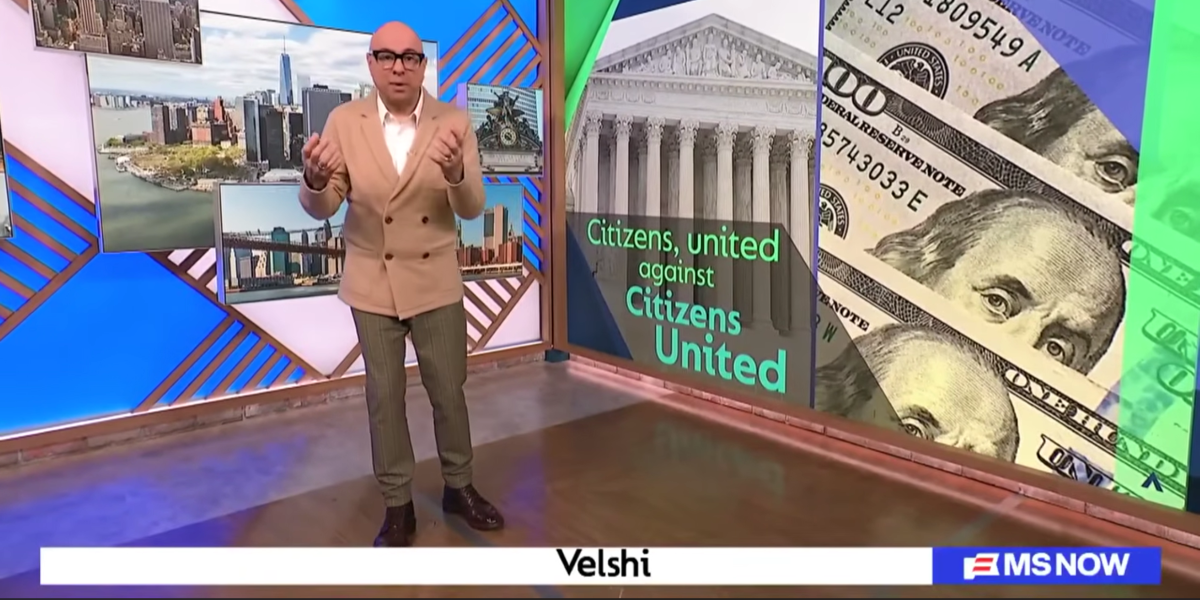
Ali Velshi Covers The Bill That Bans Corporate Spending in Elections

The MS NOW host and Citizen board member explains the legal framework behind Hawaii's legislation on corporate money in elections and how other states are following suit

Listen

Ali Velshi Covers The Bill That Bans Corporate Spending in Elections

The MS NOW host and Citizen board member explains the legal framework behind Hawaii's legislation on corporate money in elections and how other states are following suit

“To Whom does this democracy actually belong?” asked Hawaii state GOP Rep. Kanani Souza in an impassioned speech supporting the passage of a law that directly addresses the massive influx of corporate money into our elections after the Supreme Court decision in Citizens United v. FEC. The bill passed with near-unanimous bipartisan support, and was signed into law May 14 by Hawaii governor Josh Green. Today, Ali Velshi explains how Hawaii, and soon other states, can take democracy back from corporations and put it into the hands of the people.

Citizens United determined that since Corporations are treated as individual people under the law, they also, like people, have a constitutional right to spend unlimited money in elections under the First Amendment. From 200-2024, outside groups spent more than $4 billion on federal elections alone, and dark money (spent by groups not require to disclose their donors) hit a record $1.9 billion dollars.

Hawaii is the first state in the nation to effectively ban corporate and dark money in elections. The law circumvents Citizens United by redefining the powers that corporations have in the first place. Political spending is no longer one of those powers. The strategy, known as the “Corporate Power Reset,” was developed by Tom Moore of the Center for American Progress.

Corporations are created by laws of the state, a principle defined by an 1819 Supreme Court decision in Trustees of Dartmouth College v. Woodward. This decision has never been superseded, meaning, states have the ultimate power of what rights and responsibilities a corporations has. Where Citizens United protected a corporation’s right to free speech, Hawaii has decided that the state itself won’t grant corporations the right to spend money on elections or ballot measures.

Fourteen other states have introduced bill that rely on this legal framework, and more states are planning legislation in the coming year.

“The impact on American political financing would be, and this is not an overstatement, seismic,” Velshi says of the potential success of these efforts to reverse the damage Citizens United has done.

LISTEN: HOW HAWAII HAS CIRCUMVENTED CITIZENS UNITED


WATCH: VELSHI EXPLAINS HOW CORPORATIONS EXIST UNDER STATE LAW

 

MORE FROM MSNOW’S ALI VELSHI

Advertising Terms

We do not accept political ads, issue advocacy ads, ads containing expletives, ads featuring photos of children without documented right of use, ads paid for by PACs, and other content deemed to be partisan or misaligned with our mission. The Philadelphia Citizen is a 501(c)(3) nonprofit, nonpartisan organization and all affiliate content will be nonpartisan in nature. Advertisements are approved fully at The Citizen's discretion. Advertisements and sponsorships have different tax-deductible eligibility.

Photo and video disclaimer for attending Citizen events

By entering an event or program of The Philadelphia Citizen, you are entering an area where photography, audio and video recording may occur. Your entry and presence on the event premises constitutes your consent to be photographed, filmed, and/or otherwise recorded and to the release, publication, exhibition, or reproduction of any and all recorded media of your appearance, voice, and name for any purpose whatsoever in perpetuity in connection with The Philadelphia Citizen and its initiatives, including, by way of example only, use on websites, in social media, news and advertising. By entering the event premises, you waive and release any claims you may have related to the use of recorded media of you at the event, including, without limitation, any right to inspect or approve the photo, video or audio recording of you, any claims for invasion of privacy, violation of the right of publicity, defamation, and copyright infringement or for any fees for use of such record media. You understand that all photography, filming and/or recording will be done in reliance on this consent. If you do not agree to the foregoing, please do not enter the event premises.