



It was dark when Katie Pumphrey waded into the Chesapeake Bay at the southern end of Sandy Point State Park.
Listen to the audio edition here:
At 3:15am the water was an unseasonably warm 82 degrees. There were also small but choppy and persistent waves cresting and breaking against the shore, each a little crisis of faith.
This is the point in the story when most sane, rational people turn away and run to the warmth of their beds. But Pumphrey isn’t like most. An ultra-marathon swimmer, she has freestyled through the English Channel three times, lapped Manhattan, and raced between the spans of the Bay Bridge that stood before her that morning on June 25, 2024, looking less imposing and more like a hazy draftsman’s sketch against the horizon.
That morning, as she stepped into the Bay, she was making history: She would be the first person to swim the 24 miles from the Chesapeake into the Baltimore Harbor.
Pumphrey, a lifelong Marylander, had “always dreamt about swimming in our harbor,” she says, but years of industrial pollution and sewage kept her and others away. Neighbors would say the water is full of flesh-melting chemicals or might give them the plague. (Or, more likely, a gnarly stomach bug).
But that morning, Pumphrey wasn’t afraid, because over the previous decade, scientists, activists, nonprofit leaders and Baltimore city officials banded together to make a swimmable harbor a reality.
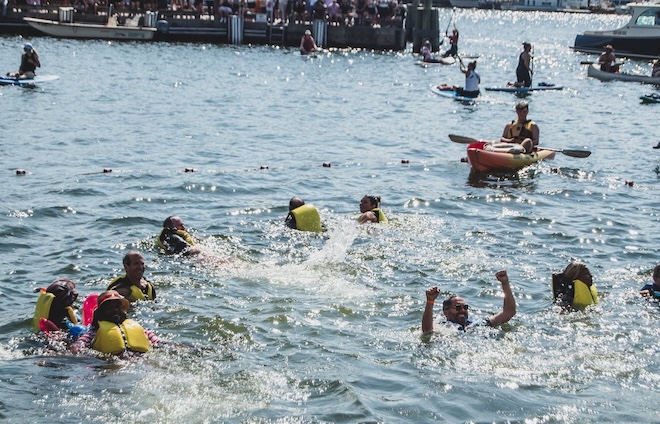
Bacteria levels in the Baltimore Harbor are now low enough to meet Maryland’s standards for swimming on most dry weather days. Periwinkle snails and oysters prosper, and videos of otters chasing each other around the docks and paddling through floating wetlands near the National Aquarium frequently go viral. The day before Pumphrey’s feat, Baltimore Mayor Brandon Scott jumped in the water as part of the first public swim in the Harbor in 40 years.
As Pumphrey rounded the corner into the harbor, sweating, at the end of her nearly 14-hour swim, the joy was palpable. Crowds cheered. Little kids held up signs encouraging her to keep going. When she touched the wall near Light and Pratt Streets in the Inner Harbor, the crowd celebrated her achievement, yes, but also the good that can come when government, nonprofits, activists, and just regular old citizens rally around a shared goal.
Pumphrey says, “I felt so proud of Baltimore, and all of the organizations in the city that worked on and continue to work on our harbor.”
How did they do it — and could Philadelphia duplicate their success on our notoriously dirty rivers?
Stormwater runoff, trash and a leaking sewage system
When Adam Lindquist came to the Waterfront Partnership of Baltimore in 2011, he thought the nonprofit business improvement district’s plan to make the harbor swimmable by 2020 was a little “crazy.”
But he was up for the challenge. He’d recently graduated from a masters program in community and watershed planning at the University of Maryland College Park. Hurricane Katrina’s decimation and flooding had motivated him to study how policy decisions impact rivers, oceans and their tributaries. Water, he knew, was powerful. The Waterfront Partnership offered him an opportunity to harness that power for good.
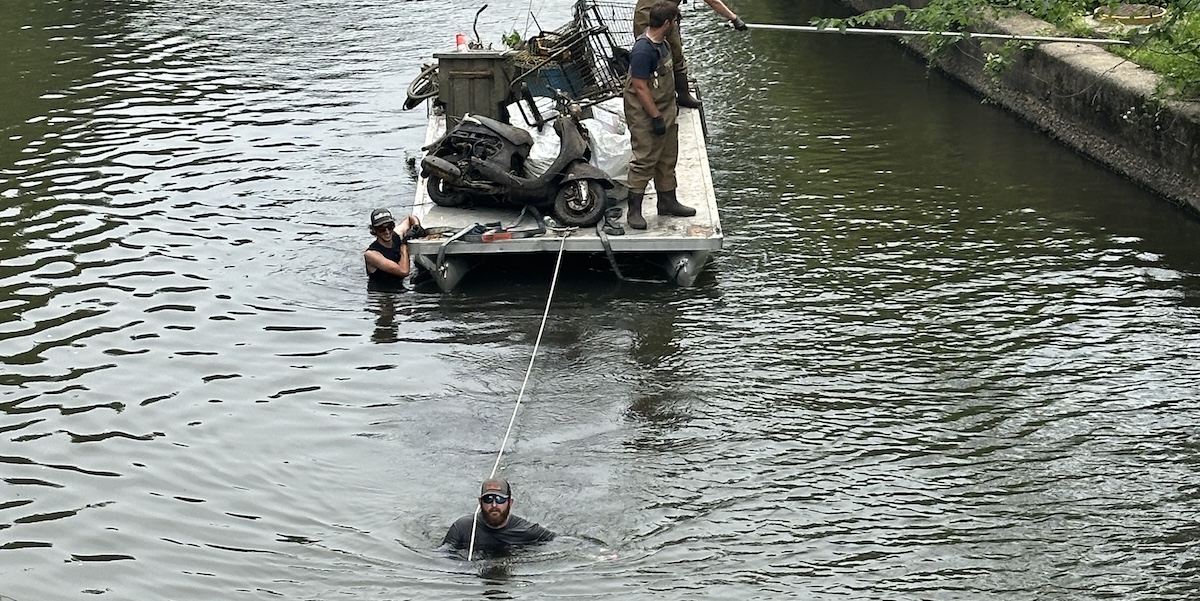
At the time, the Harbor faced three main sources of pollution: litter, stormwater runoff, and sewer issues. Some of those problems felt easy to address, starting with litter. Others felt insurmountable: It would cost billions to upgrade and repair the City’s aging sewer system to prevent overflows. (Federal and state authorities ordered the city to fix this problem in 2002).
Lindquist created a steering committee of downtown businesses, educational institutions, researchers and county and city government officials. Together, they pushed for sewer system upgrades in critical areas and for more citywide and municipal trash cans.
In 2014, John Kellett, an environmental scientist and tinkerer, took a shot at solving the second problem by creating a googly-eyed, solar-and-water-powered, trash gobbling machine that works similarly to a hay baler, using belts to collect and store up to 12 dumpsters of water bottles, cigarette butts and other litter each day. Also: Kellett’s trash wheels take photos and videos of collected waste, which Lindquist and others use to lobby for legislation, like Baltimore’s 2021 plastic bag ban or Maryland’s first-in-the-nation prohibition on styrofoam food containers.
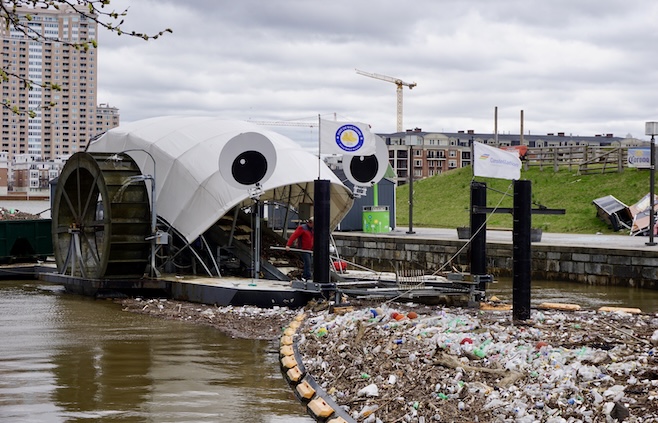
Kellett’s idea spawned a whole family — Mr. Trash Wheel, Professor Trash Wheel, Captain Trash Wheel, and Gwynnda the Good Wheel of the West — and a bit of a cult following. The Trash Wheel gang have become Baltimore’s clean water mascots, like Gritty’s eco-conscious cousins.
In 2021, Baltimore’s Department of Public Works completed the Headworks Project, a $430 million sewage treatment and storage facility with two, 18 million gallon wet weather utilization storage tanks that eliminate 80 percent of sewage overflows into the Harbor during storms.
It worked. In 2023, bacteria levels were low enough for Lindquist and a crew of scientists and steering committee members to risk swimming there. He remembers feeling a little apprehensive — there were a lot of bay nettle jellyfish milling about — but, he says, “We’d done our science. We’d done the research. We’d done our water quality monitoring, and we knew that we were all going to be okay.” He calls jumping in “cathartic.”
A healthy habitat?
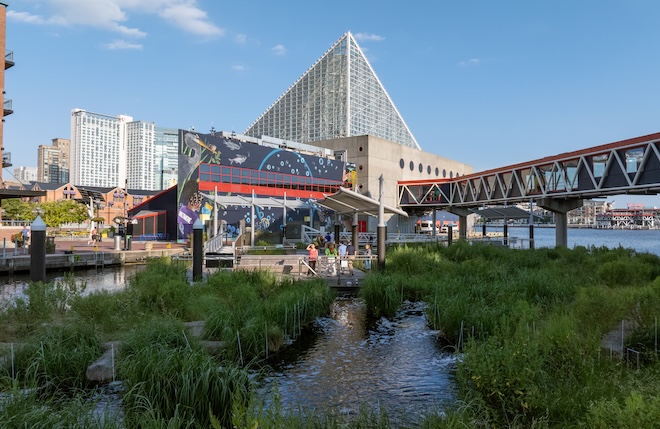
But the solutions weren’t all so technical. The world-renowned National Aquarium, another neighbor on the downtown Harbour, came up with a nature-based solution. Their floating wetlands that recreate the shoreline’s natural habitat took 14 years to create, requiring trial and error materials including recycled plastic and organic materials. They ended up using a plastic, Brillo pad-like system, which floats best in the tidal water.
Now, the approximately 10,000 square foot floating wetlands are a national model, instantly attracting a host of native species, who numbered 139 in 2025 The Baltimore Oyster Partnership aids those natural migrations, growing and planting over 6 million oysters in the city over the past 15 years with the help of local volunteers.
In the shadow of the Hard Rock Cafe, thick stems of nutrient- (like nitrogen) absorbing cordgrass grow out in the harbor. Ducks coast through the salt marsh’s shallow water channel like they’re riding a waterpark’s lazy river. Juvenile blue crabs and baby snapping turtles hide from predators in the wetlands, which teem with life beneath the surface. Eastern oysters and pumpkinseed sunfish flourish, feasting on the snails hidden in the grasses.
Still, the efforts to clean Baltimore’s Harbor are not over, nor are they perfect. Sewage travels through a cracked, corroded and occasionally overflowing pipe that’s more than 100 years old to get to the Headworks plant. It has already cost Baltimore $2 billion to fix 94 percent of its sewer-related woes. City officials estimate they’ll need another $674 million and 20 more years to get the job done. Last month, there was an oil spill.
Baltimore Harbor Water Keeper Alice Volpitta says that though fecal bacteria and nitrogen pollution have declined, phosphorus levels, which can lead to dangerous and potentially species-decimating toxic algae blooms, have increased in the Harbor and the lower Patapsco River over the last decade.
The water is only swimmable on select days. Knowing whether it’s safe to jump in requires near constant testing, which the Waterfront Partnership performs five days per week. Volpitta’s nonprofit Blue Water Baltimore also tests the water monthly or biweekly at 60 different locations along the river and reports out the data publically.
So, the situation is not perfect. But the ability to swim, even occasionally, along with the viral trash thingamajigs, are major, visible wins that further the public political will to do more.
“When we started this initiative, the perception was that the Baltimore Harbor is dead, that it’s unknowable … The stigma was about as negative as you can imagine for any urban waterway,” Lindquist says. “That is why I made sure that public engagement was first and foremost — in our oyster program, in our floating wetland work, with Mr. Trash Wheel.”
Truth be told, Philly is already heading in the same direction.
Getting the Schuylkill and Delaware swimmer-ready
On any given day, Maria Horowitz, watershed field services manager with the Philadelphia Water Department (PWD), is out on a skimming vessel, using nets to remove trash from hard-to-reach spots along shorelines and in the Schuylkill and the Delaware. She and her team remove about 5,000 tons of litter this way each year. In the basement of the Fairmount Waterworks, PWD Senior Scientist Lance Butler breeds freshwater mussels, which can filter out pollutants from up to 15 gallons of water per day, and reintroduces them into our watershed.
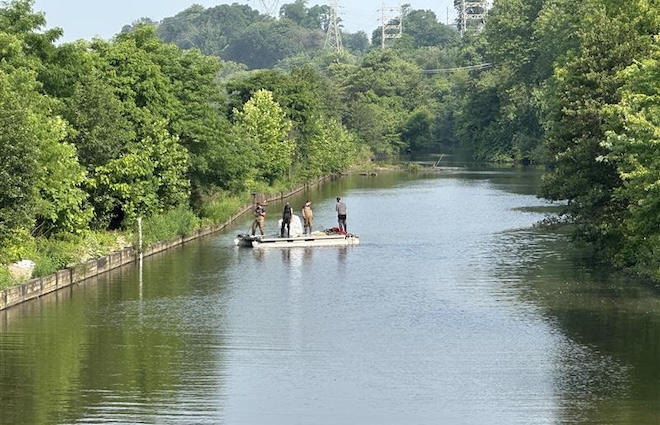
The Philadelphia Water Department (PWD) has made remarkable strides toward cleaning our waterways over the past few years. Butler came to PWD in the late 90s, when “you could literally skip across the trash,” in our rivers and tributaries, he says. “Now, they’re clean, pristine.” Fish, and fishermen, have returned to the Manayunk Canal.
These waterways are not perfect, but, “we have made significant strides,” Horowitz says.
Meanwhile, the Delaware River Waterfront Corporation (DRWC) has also been raising funds and working on designs to restore natural waterfront infrastructure with their South Wetlands Park project, spanning the Delaware’s shoreline between Piers 64 and 70 in South Philadelphia.
“So many people have been so disconnected from the river, and have forgotten that it is this ecosystem,” says Karen Thompson, the DRWC’s director of planning, policy and engagement. “There’s all this nature that’s already there and that we’re bringing back.”
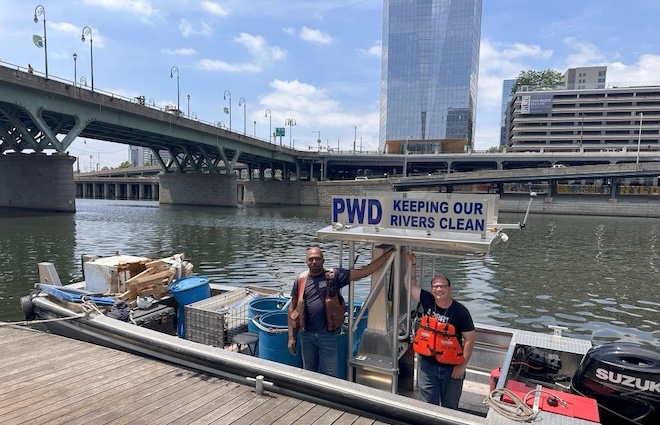
These solutions are similar to what’s happening in Baltimore. Our trash skimming vessels are similar to Mr. Trash Wheel. Our mussels are analogous to Baltimore’s oysters. The DWRC is thinking like the National Aquarium.
So, could it be safe — and legal — to swim in Philly one day? The water department is supportive of recreation, like fishing or kayaking (the Fairmount Park Conservancy has many, many programs aimed at getting people boating), but City Hall still prohibits submerging yourself in the Schuylkill, citing potential for gastrointestinal illness, plus strong currents, deep water and other potential dangers.
If we want to get there, we’ll have to surmount the biggest hurdle: our combined wastewater sewage system, says Nathan Boon, senior program officer at the William Penn Foundation oversees Environment & Public Space and public space work.
“Sewage discharge picks up a lot of solids — that’s fecal matter — as well as all manner of trash that’s getting swept off the street during rain events. All that is getting dumped into our creeks and waterways, and it has a negative impact on how they look, how they smell, and how communities and wildlife are able to experience and thrive in those spaces,” he says. “It’s as disgusting as it sounds.”
Philadelphia is in the midst of its own regulator-mandated, 25-year sewer improvement project aimed at combatting overflows. They’re largely using green stormwater infrastructure — rain gardens, green roofs, and other permeable, natural elements — to absorb polluted runoff before it makes its way into our rivers. Between 2011 and 2026, the plan has reduced sewage overflows by 3.08 billion gallons annually, PWD says.
That approach is admirable — and nationally acclaimed — but advocates worry it won’t be enough as climate change increases rainfall in the region. Increasingly frequent rain events like last weekend’s microburst storm can overwhelm the system, resulting in sewage overflows. A 2023 PennEnvironment report found that sewage pollutes our waterways for 128 days or more per year.
To further reduce sewage overflows, some advocates want to see the PWD’s work complimented with more “grey infrastructure” projects like holding tanks, which could collect and store stormwater to prevent overflows. PWD is working on “marrying gray infrastructure improvements with our green infrastructure initiatives,” Butler says. As part of the Green City, Clean Waters plan, they’re investing $345 million to increase treatment capacity at wastewater plants to better manage stormwater overflow. There’s also $420 million set aside for flexible spending, which could go to grey or green infrastructure projects.
Let’s make Philly a swimmable city
During the heat wave over Fourth of July weekend, I ventured out to the Schuylkill River trail. The sun was blistering. The humidity was so thick it felt like a slap in the face. People jogged and cycled by, water bottles in hand. I thought about how nice it would be to wander down the river bank to dip my toes in or splash water on my face. I grew up in Minnesota, where I didn’t think twice about whether or not a body of water was safe for me to submerge myself. Safe, clean water was simply my right.
Clean water is our right too. Pennsylvania is one of a handful of states with an Environmental Rights Amendment in our constitution, guaranteeing each citizen clean air, water, and the preservation of our natural resources. At the federal level, the Clean Water Act mandates that governments must clean waterways so that they’re suitable for any demonstrable use, says environmental attorney and Delaware Riverkeeper Maya K. van Rossum. That means if activists can prove people swim in Philadelphia’s rivers, the City needs to ensure they are clean and safe.
And — don’t get it twisted — people do swim in Philadelphia’s waterways. Some flaunt their disobedience, blasting music and cannonballing into Devil’s Pool. Others swim shrouded in secrecy, sneaking into the rivers from secret entry points. But they are swimming.
In fact, van Rossum’s organization “did a whole campaign — including photos and video footage — that proved that people were out in the river coming into full contact with the water,” she says. “Because people are using the river that way, it is incumbent on government officials to ensure that they’re protecting the quality of the water in order to serve and support that use.”
Groups like Riverways Collaboration, a nonprofit focused on clean water and river recreation in Philadelphia and Camden, and Philly RiverCast are already engaging in regular, independent water quality monitoring. What if, instead of a blanket ban, the City posted QR codes at common swimming sites, so that people could check the water quality and make an informed decision about whether they feel comfortable taking a dip?
“People in and around the city are told time and time again: The river is not yours. The river is too polluted for you to get into. You shouldn’t swim in the river because there are ships that come up the river,” van Rossum says. “The fact of the matter is, that’s not true. The river really does belong to the people and it belongs to nature.”
And, while our public pools, when they’re open, are great, there’s something special about being about to take a dip outside, in naturally occurring water. Riverways’ Director Stephanie Kroll says, “when you get in the water, you’re in nature, even if you can see the city skyline. You are smelling the water however it smells that day, any flowering trees nearby, you’re really immersed.” Plus, cleaning water so that it’s suitable for primary contact (aka swimming) is good for the fish, mussels and other critters that call the rivers home, too.
In May, I drove to Baltimore for one of the Waterfront Partnership’s Harbor Splash events. There were obviously lots of man-made elements. A rope and a kayak team cordoned off the area where we’d be swimming. People splashed about on pink, flamingo floaties. But we were, unmistakably, in the great outdoors. A Canada goose and her goslings paddled nearby.
“I love the harbor. I love coming down here, and I’ve been on boats out here, but I’ve never been able to swim in it” said Laurie Thompson, a 78-year-old Baltimorean, who came down for the splash. “It was just like swimming in a pond or a lake.”
Correction: The water temperature during Katie Pumphrey’s swim in Baltimore Harbor was 82 degrees F.
 MORE IDEAS WE SHOULD STEAL