


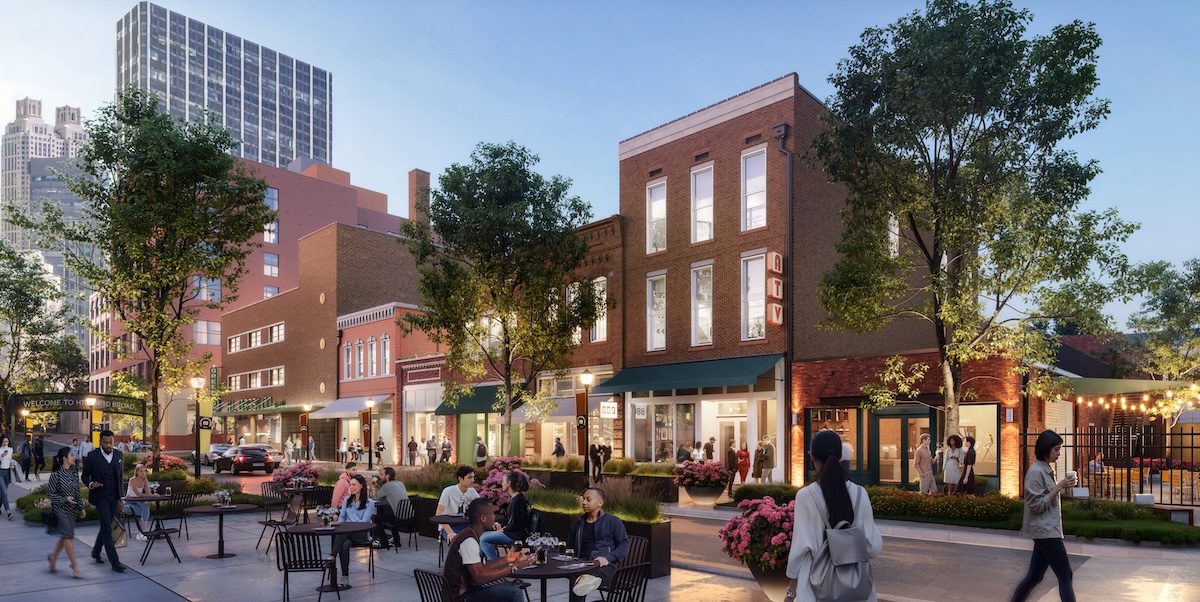


As a young East Coast urbanist in the early 2000s, all I knew of Atlanta was that it was the epitome of growth and sprawl. “This is a city without a historic core, a city in constant evolution — a Deep South version, you might say, of Los Angeles,” wrote R. W. Apple, Jr. in a 2000 New York Times piece, summing up how I imagined the city at the time.
A quarter-century later, Atlanta is clapping back. First and foremost, the Beltline, a 22-mile ring of bike and pedestrian infrastructure has forever altered the city, showing that a walkable, modern, mixed-use Atlanta is not only possible, but highly desirable.
And now a host of other developments such as Centennial Yards, the Stitch, and a 16-acre reinvention of South Downtown, are proving that Atlanta also is also more than the Beltline. When the FIFA World Cup lands in Atlanta this summer (a deadline that is endlessly mentioned by locals), the one-dimensional caricature of Atlanta from earlier in this century will be wildly outdated.
A VC strategy for real estate
David Cummings is a tech entrepreneur who sold his business Pardot for a reported $95 million and founded Atlanta Tech Village (ATV) and Atlanta Ventures in the early 2010s, helping incubate more than 300 tech businesses, like Calendly, and create more than 10,000 jobs.
But within a few years, ATV was running out of space for its community. Cummings was on the search for a larger campus when German developer, Newport, put up for sale a package of 60 buildings that had taken them years to assemble.
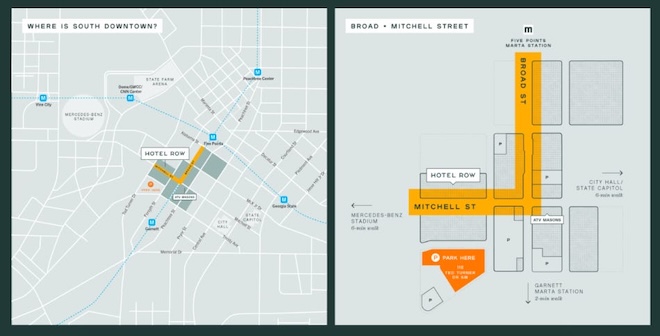
South Downtown was once a transportation hub and shopping center, with a “hotel row” serving passengers for the nearby railroad station. Over the 20th century this all changed: The station was demolished, highways encircled the area, MARTA public transit infrastructure upended the streets, department stores waned.
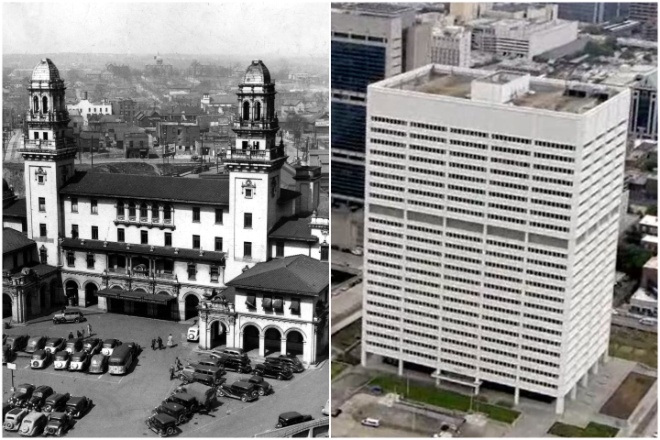
By the time Cummings owned the buildings in January 2024, they were not only in disrepair but also clad in layers of past unsuccessful bids at reinvention. Less than 100 people lived in the area. Yet, he saw their potential. Per his own blog:
The last 10+ years in Atlanta have really opened my eyes to how regions of the city can be dramatically upgraded and enhanced, with the two biggest makeovers being Midtown Atlanta and the Beltline. After $10 billion plus of investment in each of those areas, the number of residential units, restaurants, retailers, and overall walkability and livability of those areas have skyrocketed.
Could he dramatically upgrade and enhance South Downtown? My take is that Cummings and his team deployed a venture capital playbook more common in tech deals: Invest in a product you know has a clear market, remain highly unprofitable for a time, but come to dominate that market and be wildly successful in the end. Could this model translate to real estate?
Many thanks to South Downtown’s leads for architecture and development, Lucas Roberts and Bryan Capps, who toured around my subscribers and me on a rainy January day to find out.
Housing and Retail First
SoDo’s first residential project — a reinvention of a former department store — will deliver just about two dozen units, and maybe three dozen people. As South Downtown’s CEO Jon Birdsong has written, the math is crazy.
Here’s Birdsong’s account:
if everything goes exceptionally well and our team flawlessly delivers a building that was Atlanta’s first department store, built 125 years ago that hasn’t been occupied in over 30 years while also finding 34 people in 26 units who want to co-pioneer a neighborhood next to Kessler Loft residents, and we convince three retail tenants to believe early before the building is finished to sign on the dotted line, SoDo Atlanta, LLC plans to make 4.82% on the invested dollars. That barely ekes out the current 3 month T-bill or a high-yield savings account.
Of course, Year One is just the beginning. The payoff will be quite different in year 20.
There’s also a set of interdependencies here: The people living in the apartments are necessary to activate the retail and restaurants. But those amenities are needed to attract people to live downtown. It all has to come together at the same time.
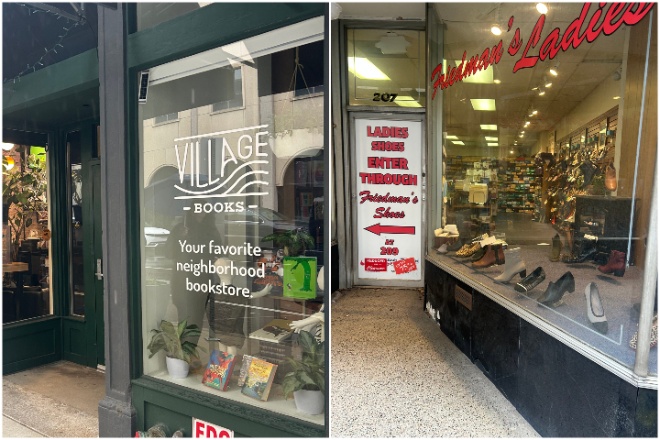
So far, the available retail in South Downtown has been filled with cute independent businesses, as well as a few historic old timers, and they’ve set a tone that will set the area apart from corridors filled with chains and Irish pubs. That curation seems to be paying off: just last week the Filipino restaurant Estrellita, which was awarded a Michelin Bib, announced its move to Broad Street in South Downtown. Birdsong’s Q3 2024 list of tenants is impressively fun. They have also posted more than a dozen short-term opportunities to lease pop-up spaces during the World Cup.
Essential placemaking
We next walked down a section of Broad Street that Eric Kronberg Architects is reinventing as a mixed-use corridor with lush landscaping and engaging commercial spaces. This video by Jon Jon Wesolowski is better and faster at explaining the situation than anything I could offer:
The SoDo campus includes not just historic buildings, but a number of parking lots. Roberts said that a typical developer would turn those parking spaces into large multifamily development first; instead they’re saving those opportunities for last, but activating the lots with temporary uses, such as Smorgasburg Atlanta, which brought out 10,000 people in its first weekend.
But they’re also turning one large parking lot which spanned Broad to Peachtree into a park. Kronberg said pitching the value of the park was an “easy sell.” (Only to urbanists!) One of the things that I loved the most about the plans for the neighborhood was the sense of constant indoor/outdoor connection. This pocket park will be like an extension of the Tesoro restaurant on the corner, while the apartments at 85 Peachtree will look out onto an activated public alley.
One interesting thing to note: There is no master architect or planner for South Downtown. There are several different architecture and design practices involved in different chunks of the development. Roberts explained they didn’t want “to cram a master plan into a space that has to feel organic.”
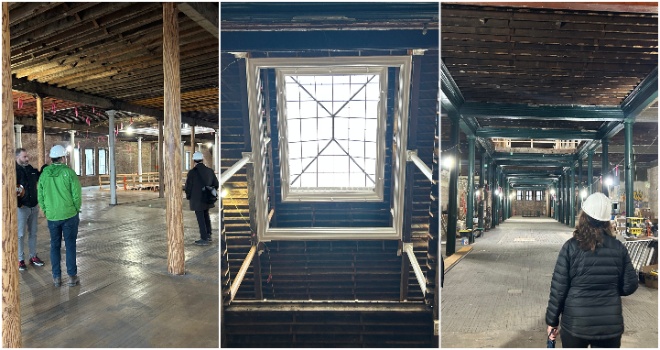
What’s been hard to convey in this short recap is the massive scale of the preservation and adaptation work under way. The process has unearthed materials and building techniques you just don’t see anymore, like the oversized windows in 85 Peachtree, the central skylight in an old department store, the wooden columns that get thinner as you go up each floor in the building. Many of the old buildings have become “organ donors” with materials and spaces incorporated into other buildings. The exploratory, unprescribed nature of the development is rare and exciting. I encourage you to check out South Downtown’s Instagram, and posts by Cummings and Birdsong to get a fuller sense than I can provide here.
Consider the alternatives
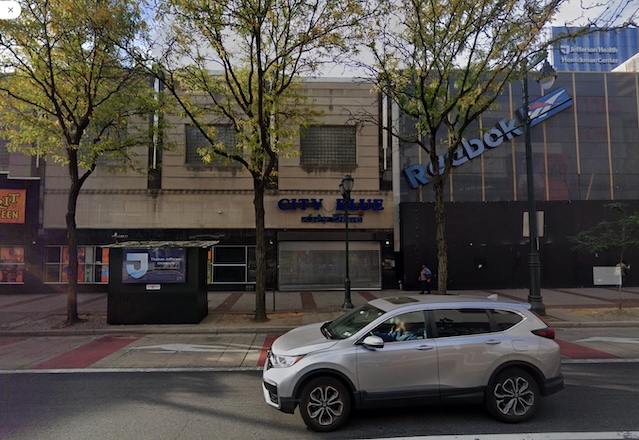
I couldn’t help but think about Philadelphia throughout the tour of Atlanta. Our Market East neighborhood is like many post-pandemic downtowns: boring, grimy, vacant, and both overvalued and undervalued at the same time. Owners of properties at 10th and Market plan to demolish several buildings and host pop-ups during the World Cup — but have presented no clear plan of what will come afterwards.
Atlanta shows what is possible when you have an enlightened developer with a long-term view on returns. The South Downtown team is building an ecosystem of place and talent that supports itself. It’s a testament to the enduring value of mid-sized, mixed-use buildings, to the simple formula of housing + retail + sidewalks = magic. But South Downtown left one question unanswered:
How do you get other developers to understand that they have to move beyond a short-term, extractive mindset to create something that will still be valuable decades from now? That’s the question cities like Philadelphia still need to answer.
Diana Lind is a writer and urban policy specialist. This article was also published as part of her Substack newsletter, The New Urban Order. Sign up for the newsletter here.
 MORE FROM THE NEW URBAN ORDER