



“We are not trying to compete. We’re trying to solve a problem.”
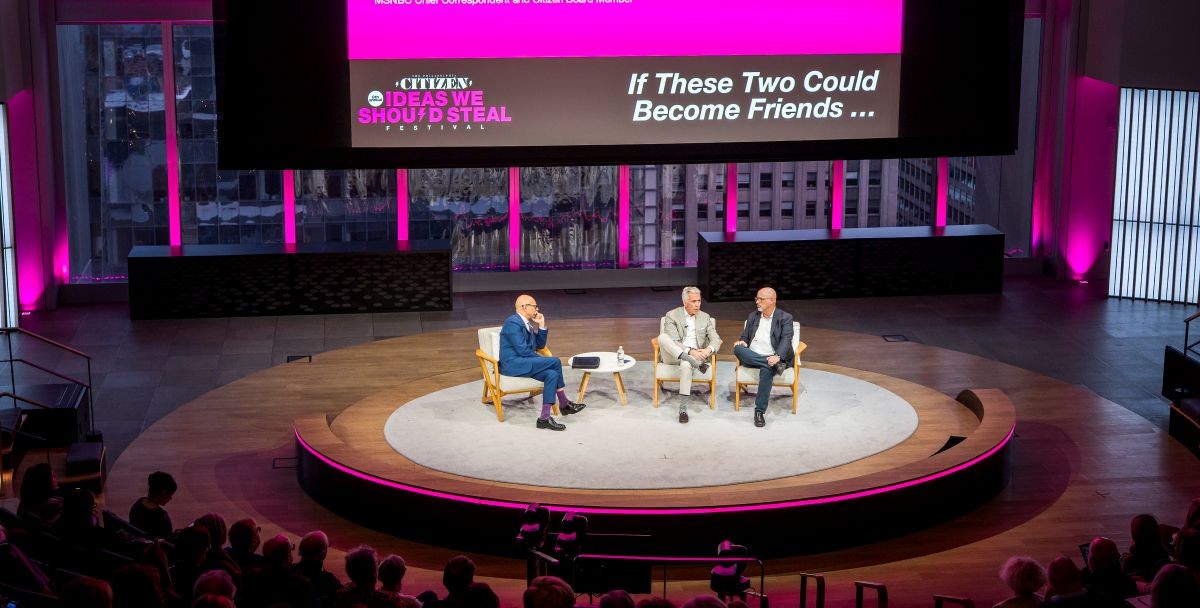
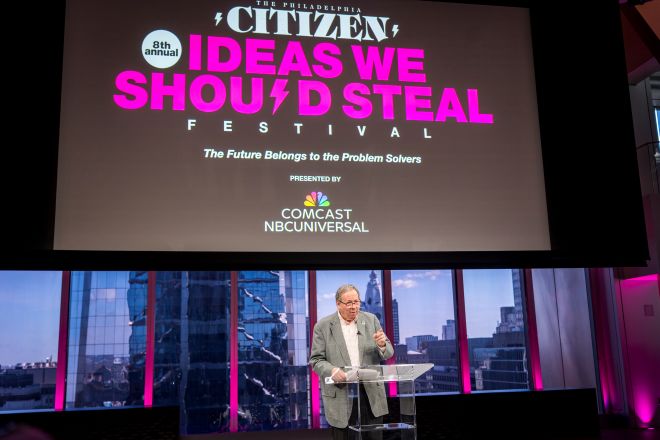
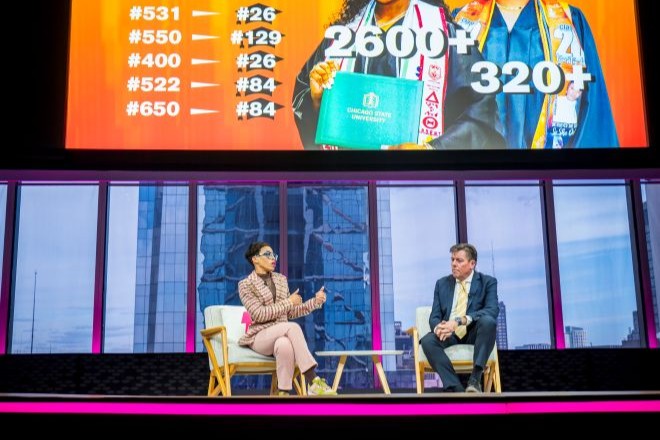
So said Michele Howard, chief program officer for Hope Chicago, an education and economic empowerment nonprofit, at The Citizen’s 8th annual Ideas We Should Steal festival presented by Comcast NBCUniversal on November 14.
Howard’s message — of taking ideas that work, experimenting with new ones, and discarding what fails — reflected the ambitions and scope of the Festival, and its audience of around 400 civic problem solvers and do-gooders.
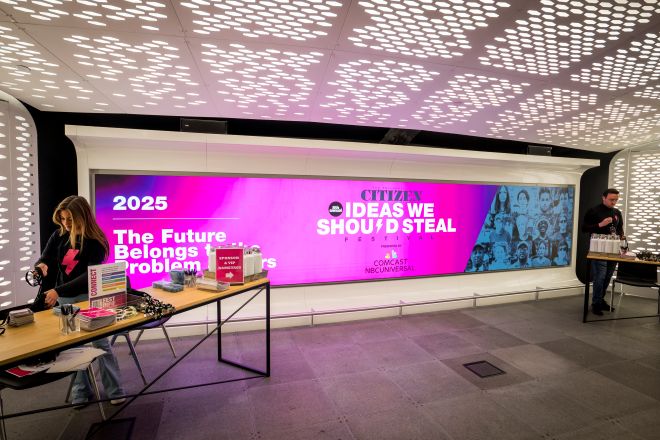
Howard was talking about education and economic mobility with the United Way’s Bill Golderer. But throughout the day more than 17 speakers took to the stage to share solutions for everything from potholes and women’s sports to housing and bringing back bipartisanship. Though the topics were varied, they shared a similar message: We can take action to solve the problems Philly faces. Or, as the theme of this year’s event stated: The Future Belongs to the Problem Solvers.
See below for the ideas worth stealing from each panel, along with photos and videos of the event.
America’s Working Class is Worth Fighting For
Sean O’Brien, president of the International Brotherhood of Teamsters, kicked off the day with a pronouncement about blue-collar voters: “The working class is up for grabs.”
It was a sentiment echoed throughout a discussion that took place a few weeks after working-class voters helped the Democratic Party dominate in the first election since Donald Trump’s return to the White House. Ali Velshi (MS NOW host and Citizen board member) moderated a conversation between three experts from different fields: O’Brien (labor); Congressman Brendan Boyle (elected office); and Joan C. Williams, author of Outclassed: How the Left Lost the Working Class and How to Win Them Back (academia).
The panelists discussed why the working class no longer feels a strong allegiance to the Democratic Party — but, also, why Republicans don’t have a firm grip on their votes either. According to Williams, a professor at UC-San Francisco, the political shift is a product of a declining economic status and opportunities within the middle class. “Steve Bannon famously said that ‘politics are downstream of culture.’ But culture is downstream of economics. That’s what huge amounts of sociology show,” Williams said.
Boyle, who grew up in Northeast Philly and has represented the district in Congress for a decade, concurred with that analysis — and put it in blunt words. “It’s not a surprise they would feel discontented,” he said. “They think both parties suck.”
Ideas we should steal:
- Get corporate money out of politics! O’Brien points to the influence of Big Tech in Washington as one reason the working class has been left behind. Supporting a reversal of Citizens United is something that one of last year’s speakers, activist/actress Debra Winger, has been working towards.
- Williams said that political parties have a chance to unite the working class and young voters, due to both groups’ dissatisfaction around the economy.
Women’s Sports Can Grow a City
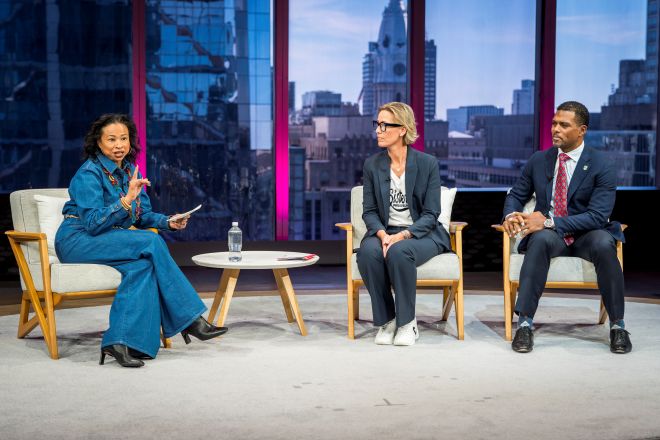
Jason Wright played seven seasons in the NFL, but growing up, he said, his athletic heroes were Lisa Leslie, Allison Feaster, and other basketball players in the WNBA. Why? His family had season tickets to the Los Angeles Sparks, something they could not afford with other professional sports teams in the area. “For that affordable price point, my dad could bring us together as a family,” said Wright in a conversation with Comcast’s Dalila Wilson-Scott and Philly Sisters’ Alexandra Niedbalski-Sykes.
Fan accessibility continues to be one driving force behind the skyrocketing growth of women’s sports, which are expected to generate $2.5 billion in revenue by 2030, an increase of 250 percent over today. Wright, the managing partner and head of investments at Project Level, is trying to stoke this momentum. He laid out why, from a business perspective, women’s sports are an exciting product, including:
- Women athletes have twice the reach on social media as male athletes and are generally viewed as more trustworthy on more topics that are relevant to marketers.
- Among fans, there is little overlap between season ticket-holders in women’s sports and men’s — suggesting they are a “growth engine for all of sports” with net new participants, said Wright.
- Beyond that, 90 percent of C-suite executives who are women played sports in high school, a statistic that shows “the opportunity for women’s sports to drive broader economic impact.”
Niedbalski-Sykes, the co-founder of the Philadelphia Sisters, spoke to the rapid evolution of the business surrounding women’s sports. “You know, six years ago, women’s sports were almost seen as a charity,” she said. Fast-forward to today: Philly alone is welcoming not one, but two professional basketball leagues – the WNBA in 2030, along with Unrivaled, coming later this year. Niedbalski-Sykes had a role in bringing both to the city. “We sold 5,000 [Unrivaled] tickets within like 20 minutes,” she said. “Here in town, we don’t have to go hundreds of miles to see women’s sports now.”
Ideas we should steal:
- Let’s bring even more women’s teams to Philly.
- Support women’s sports bars and watch parties.
A Housing Plan Needs To Become Actual Housing
Housing affordability conversations animated this year’s election and the results spoke for themselves: People want more affordable places to live. The problem, which used to be limited to large, coastal cities like New York or San Francisco, is spreading across the country and is driving policy, like Cherelle Parker’s signature H.O.M.E. plan.
Bruce Katz, senior advisor for the National Housing Crisis Task Force and founding director of the Nowak Metro Finance Lab at Drexel University, laid out Derek Thompson and Ezra Klein’s Abundance approach to building more housing by looking to cities like Atlanta for proven solutions.
“This system is broken. It is ossified. It is atrophied. It needs to be completely unheeded,” Katz said. “It’s not governing by think tanks. It’s not governing by research. It’s governing by doing.”
Ideas we should steal:
- Embrace an Abundance mindset when it comes to housing.
- Look to other cities for ideas that work, like Atlanta’s Urban Development Corporation.
Declaring War On Trash Can Clean Up The City
Pam Harris, president of New York City’s Sanitation Foundation, the nonprofit arm of NYC’s Sanitation Department, took the stage to discuss a successful education campaign that reached 150 million people and increased awareness of the Sanitation Foundation’s work to reduce trash by 30 percent.
The secret to their success? Tapping into civic pride. The campaign featured real New Yorkers — not actors — from neighborhoods across the city talking about why clean streets mattered to them. They repeated the slogan “don’t do New York dirty.” Accompanying the campaign — which was featured on TV, radio, buses and social media — was a public art project that asked sculptors to create massive versions of commonly littered items like apple cores and cigarette butts.
The ads got citizens to change their perception of what it means to be a New Yorker. At the end of the campaign, 91 percent agreed “if you’re proud of New York City, you don’t litter,” Harris said. This year, The Sanitation Foundation conducted New York’s first comprehensive litter study.
“Pride can really be a catalyst for behavior change,” Harris said. “New York City will never be truly clean until every New York understands that they have a role to play.” I think we can all agree that’s true in Philly as well.
Ideas we should steal:
- Bring back comprehensive litter studies. (Philly hasn’t had one since 2019.)
- Organize a street cleaning.
- Adopt a slogan that helps us clean up Philly. In 2020, we suggested “We Talk Trash. Don’t Trash Philly.”
The Future of American Politics is Now
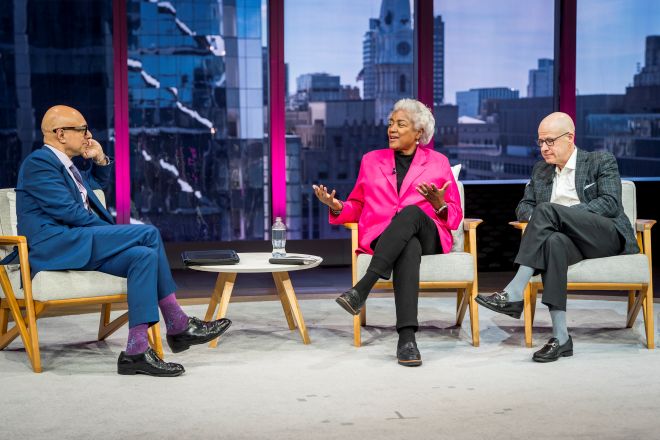
Former Democratic Party Chair Donna Brazile and Washington Post Columnist Max Boot, author of Reagan: His Life and Legend, joined Ali Velshi to discuss where Democrats and Republicans can go in this current political moment, when American voters disdain both parties — and each other — more than ever.
Boot helped set up some context by talking about how Reagan tapped into groups previously thought of as Democratic-strongholds by being aspirational and giving people hope — something Brazile agrees the electorate is hungry for. She points out how in more recent history people voted for Obama’s first term because he was promising hope and change … and then voted for Trump in 2016 because he also promised to disrupt the system.
“People want change. They’re tired of the status quo,” Brazile said. “The American dream is no longer affordable, and we have too many of our fellow citizens living on the outskirts of hope. How do you let so many people live on the outskirts of hope?”
Ideas we should steal:
- Vote. Seriously. The 2025 elections saw some of the highest turnout for an off-cycle election year in history. If you want change, vote for it.
- Take action to strengthen Democracy. Voting isn’t the only form of civic participation. Brazile shared how, as a young organizer, she fought to get a local playground and Martin Luther King Jr. Day recognized as a holiday — both acts of civic participation. “Citizenship requires us to have an act of faith in our own ability to govern ourselves,” Brazile said. “We can change things. We can move in a different direction, but it’s up to us.”
You Can Fix The Damn Potholes
In 2025, The City of Cincinnati partnered with a local accelerator to fund a competition (with a cash prize of $5,000) for innovative ideas to address potholes. Urban planner Nathaniel Weyand-Geise had the winning idea: Using GPS data and built-in accelerometers inside smartphones to create a centralized system for pothole reporting. His idea is to “gamify” the app as well, allowing citizens to participate in tracking potholes for the chance to win prizes. The City of Cincinnati is now working on a pilot to implement his technology.
“Potholes are subtle things that really affect your quality of life,” said Weyand-Geise, whose idea builds on like-minded technologies that have been tried in cities such as Boston. “Let’s be inspired and build on their success — and make it better.”
Ideas we should steal:
- Follow Cincinnati’s progress, and then consider bringingWeyand-Geise’s idea to Philly.
- Explore other ways to solve potholes.
The Key to Economic Mobility is Hope
When Michele Howard was the scholarship manager for Chicago Public Schools, she saw that oftentimes high schoolers “didn’t know what to do” when it came to post-secondary education or career paths, but they “did know that they didn’t have enough money to do it.” With more than 20,000 seniors at any given time — Howard jokes their graduating class is “like a small town” — there weren’t enough dollars to go around. Even those who did get scholarships didn’t always get enough to cover their needs.
Enter Hope Chicago, where Howard is now chief program officer. Their model offers students renewable scholarships that cover tuition, room and board, books and any fees. They don’t just help students, however. One parent or guardian of the graduating seniors at the five Hope Partner Schools receives scholarship assistance or other resources to help them pursue secondary education as well. The first cohort saw 30 percent more students choosing to go to college; the second saw another 30 percent go to college, and then another 30 percent the year after that. They also offer wraparound support services to make sure students get to college and finish once they start.
Howard discussed Hope Chicago’s revolutionary approach — and how it improves economic mobility — with Bill Golderer, president and CEO of United Way of Greater Philadelphia and Southern New Jersey. “We’re not saying to them, we’re giving you a scholarship,” Howard said. “We’re saying, this is economic mobility.”
Ideas we should steal:
- Support getting more students to attend — and complete — secondary degree programs.
- Adopt a two generation approach for education and economic mobility programs.
Philadelphia Can Learn From Appalachia
Dreama Gentry, president and CEO of Partners for Rural Impact, talked about lessons learned from helping students who grew up in low opportunity areas in Appalachia be “prepared for college … prepared for a career … prepared for military service,” she said.
“They should have a choice of what they’re doing, because to me, that is the American dream,” she said. “We have to reclaim that American Dream for young people.”
For example, PRI helped one high school in Kentucky take its graduation rate from 68 percent to 97 percent. Now, Gentry works with leaders in areas as diverse as Utah and New York City to adopt similar programs to improve economic mobility for high school students.
Ideas we should steal:
- Recognize that place plays an important role in a student’s ability to be economically mobile. Gentry pointed to Raj Chetty’s Opportunity Atlas, which charts what parts of the country students have the best chance of making it out of poverty, as a key tool that helped them develop their programs.
- Support young people “cradle to career,” Gentry said. “Schools alone can’t do it.” Other community and nonprofit partners are needed to create wraparound supports.
Even Political Enemies Can Become Friends
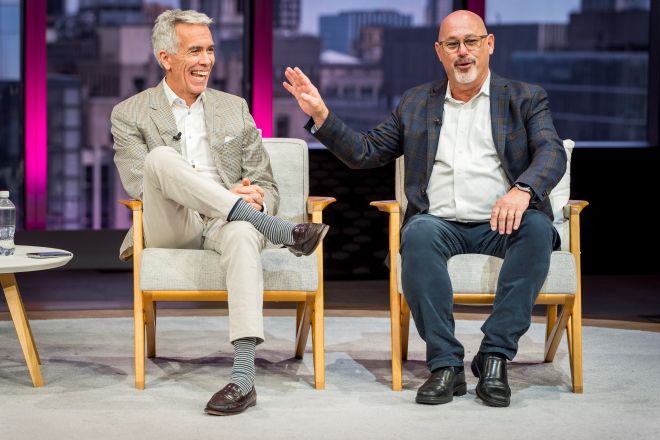
Former Tea Party Republican Joe Walsh and gun safety advocate Fred Guttenberg, whose daughter was killed during the Parkland school shooting, used to be enemies, regularly engaging in Twitter battles that would devolve into name-calling. Now, they’re good friends.
In a panel moderated by Velshi, they offered a guide on how to disagree productively, offering much needed advice for politicians squabbling in Congress and everyday citizens frustrated by social media that serves them either ragebait or an echo chamber.
“People in this country right now are pulling apart, not together,” Guttenberg said. “We don’t all have the same brain. We don’t have to agree on everything, but we have to be able to talk.”
A key to their approach: Take conversations offline. It was easy for Guttenberg and Walsh to trade insults when they were tapping away at their keyboards, but when they met in-person for drinks — at Walsh’s suggestion — they got to know each other and realized that, while they don’t agree on many things, they do have a lot in common. Without the internet, they stopped questioning one another’s motives and talked to each other as humans.
Ideas we should steal:
- Don’t go into conversations trying to change people’s minds. “Sit down with somebody you disagree with and say, I don’t give a damn if I find common ground. I want to understand why that Trump supporter supports Trump,” Walsh said. “I just want to understand it.”
- Make a friend who doesn’t share your views. “We’re all on the same side of preserving our democracy and getting back to a world in which we can be friends with people who don’t share all of our views, and be great friends with them, share meals with them and love them,” Velshi said.
- Put down the phone and talk to people IRL.
There’s No Republican or Democratic Way to Be a Mayor
Subscribe to the How To Really Run a City podcast for more episodes.
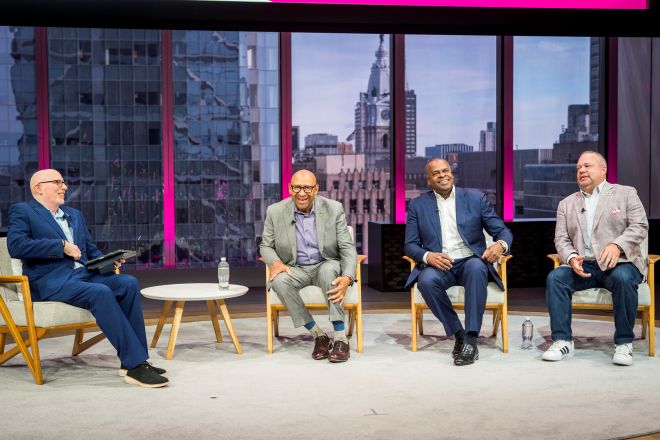
In our live recording of the How to Really Run a City podcast, Citizen Media Group President and CEO Larry Platt, former Philadelphia Mayor Michael Nutter and former Atlanta Mayor Kasim Reed chatted with five-term Rochester Hills, Michigan, Mayor Bryan Barnett.
They discussed the importance of leading a city with joy, how Democrats fumbled the government shutdown and how “there’s no Republican or Democrat way to fill a pothole.”
“The moment you put your foot on the sidewalk. People are looking to see … how’s the mayor doing today? Is the city upbeat? Is it grumpy?” Nutter said. “There’s a public impact to this job.”
Ideas we should steal:
- Vote for local leaders who are focused on getting things done.
- Bring back bipartisanship.
- Lead with joy.
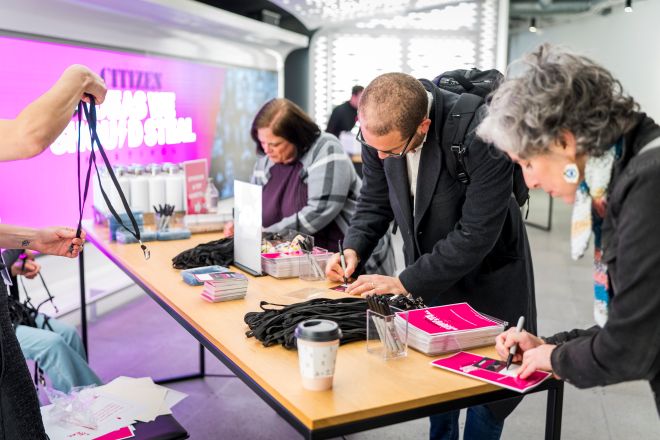
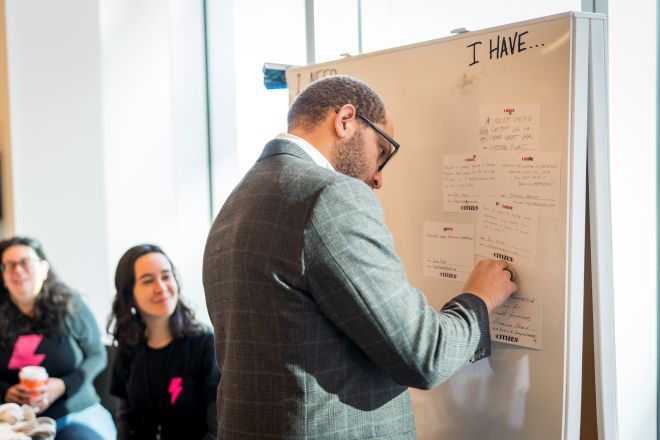
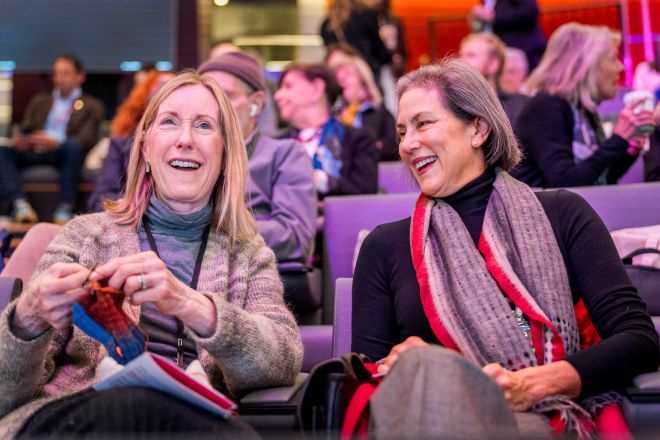
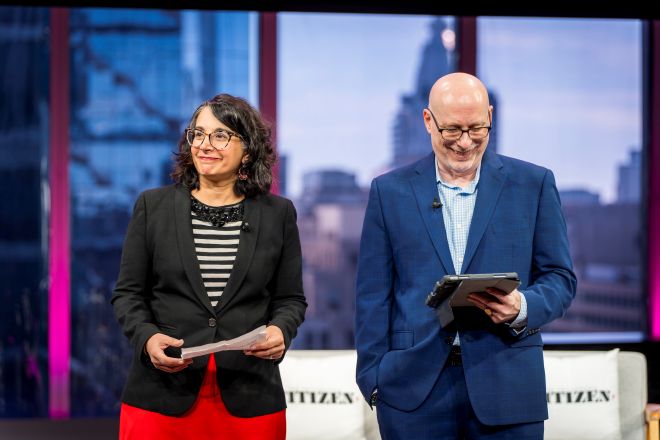
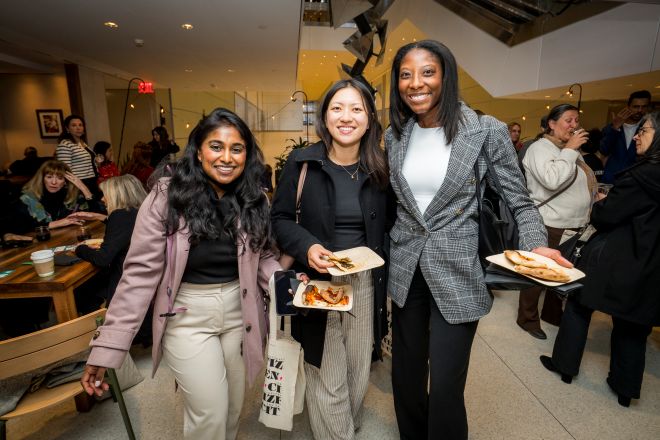
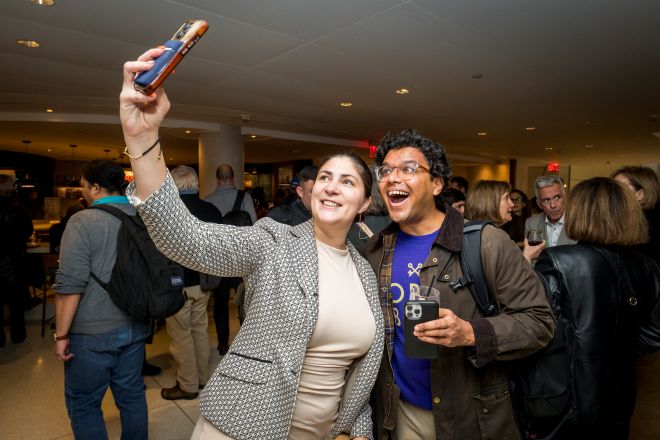
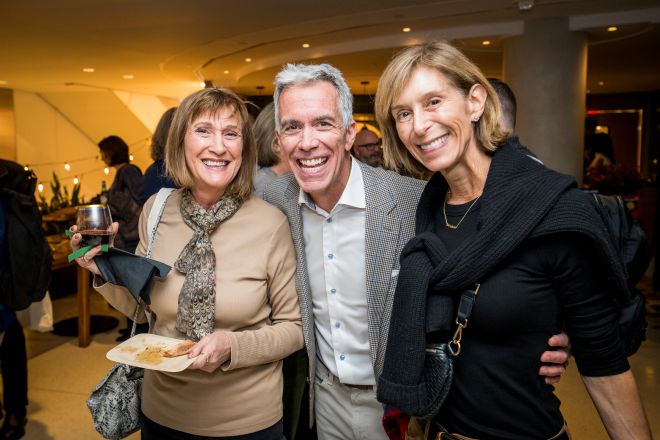
Watch a full playlist here, and see photos of the festival below:











 PREVIOUS CITIZEN EVENTS