


While the Obama Presidential Center in Chicago doesn’t open until Juneteenth, it’s already being reviewed in The New York Times, the Chicago Sun-Times, and everywhere else. (My favorite? This one by Christopher Hawthorne, an architecture critic who writes a great newsletter, Punch List.)
Much is being made about how the Center is arriving nearly a decade after its commissioning, at a time when our politics — really, our entire world — has shifted. It’s a throwback to a pre-Trump, pre-AI America. Apparently, the Center has boxes of Kleenex on hand for all the people crying.
But something else has shifted a lot recently: the conversation about architectural and urban planning aesthetics. Questions about what architecture should look like have become unusually heated lately.
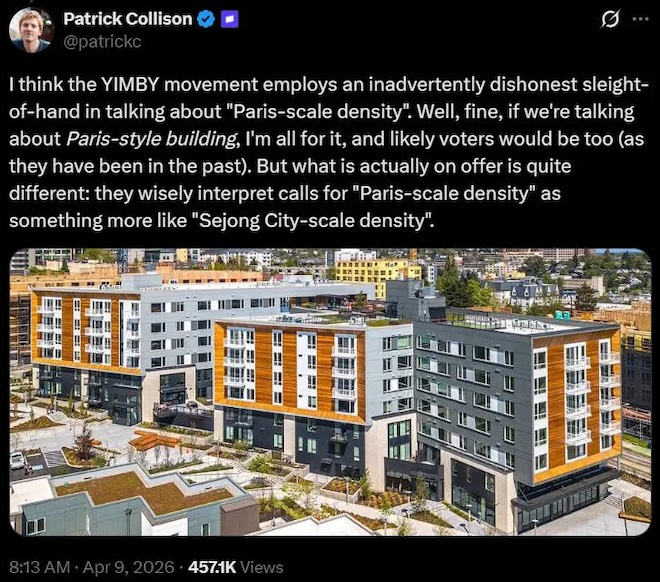
My sense is that there’s increasing discomfort with basic modernism in architecture. A growing chorus of people are tired with the prevailing design aesthetic that we’ve been living with that somehow went from the Lever House to boxy, panelized 5-over-1 buildings that you find everywhere these days.
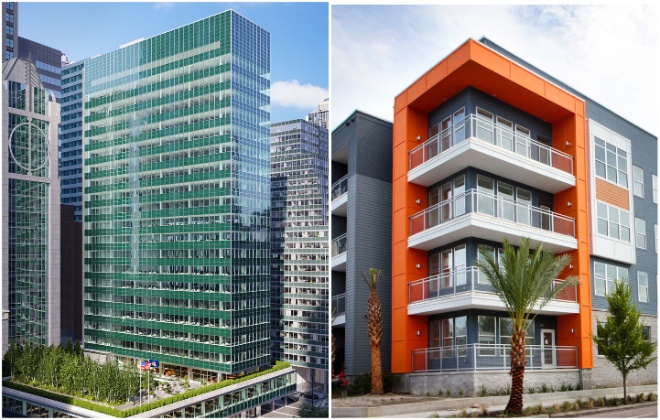
This vibe is coming from all different directions. On one side: Donald Trump. He signed a first executive order promoting classical architecture as a lame duck president in 2020, then after Biden rescinded it, reinstated it on his first day of office in 2025. And then in August 2025 Trump issued another executive order on making federal architecture beautiful again through classical design. His administration has gone on to target Brutalist icons, such as the HUD and FBI headquarters, as part of the government’s plan to sell off buildings and consolidate office space.
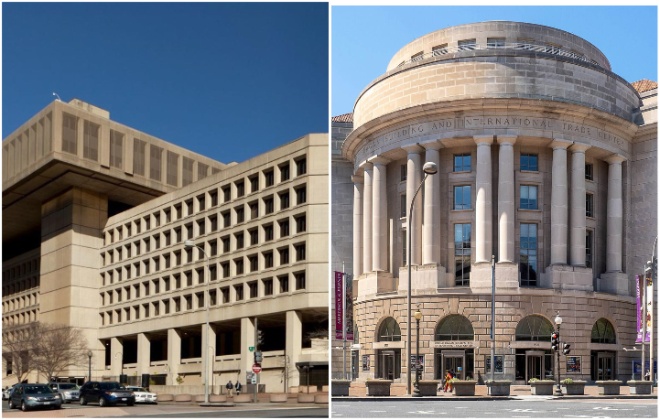
And his renovation of Washington, D.C., from the soon-to-be-blueish reflecting pool at the Lincoln Memorial to an oversized East Wing ballroom, reflect a vision of opulence and monumentality that rejects the simplicity and functionalism of modern styles.
On another side, there’s increasingly an intellectual dissatisfaction with blah contemporary design: Stripe co-founder Patrick Collison and economist Tyler Cowen, issued a “call for new aesthetics” back in December, asking what movement might define the 21st century the way Bauhaus defined the 20th. They wrote:
We’re more than a quarter way through the new century and we can now ask: what is the aesthetic of the twenty-first century? Which are the important secessionist movements of today? Which will be the most important great works? Today, futuristic aesthetics often mean retrofuturistic aesthetics. So, what should the future actually look like?
The duo offered to fund artists, architects, and designers working on new aesthetics, and they were promptly flooded with hundreds of responses within weeks.
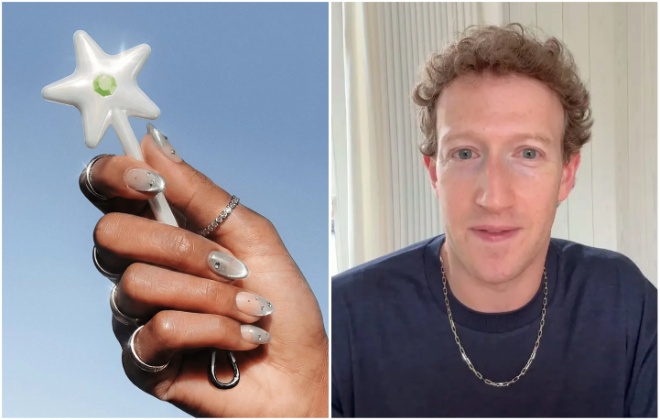
Side bar: It’s also worth noting a break emerging between tech culture and modernism. Products like the Cash App’s wand signal a drift away from the clean, minimal aesthetic that Silicon Valley made its default. Mark Zuckerberg’s transformation — from the gray t-shirt uniform to a more louche, chain-wearing self — reads as a small cultural indicator that modernism had become too cold to feel human, let alone relatable.
And finally, there’s a burgeoning strain of urbanism that is not just calling for more pedestrian space or housing that better reflects today’s demographics, but for older, timeless architectural styles over modernist styles.
California YIMBY’s Eduardo Mendoza has argued that aesthetics matter to housing politics in measurable ways — that people support new development more when it looks coherent, detailed, and contextually appropriate. (Worth noting that Collison also funds CA YIMBY.)
A similar approach can be found in the U.K., where Create Streets is marshaling surveys of what streets people prefer to contend that modernist architecture is, broadly, unlikable.
The three examples emanate from different places. For Trump, the aesthetic push comes from a desire to convey and amass power, to reconnect with traditional Western aesthetics, and a rejection of the modernism-elitist alliance. For Collison and Cowen, I’m less certain the motive — a genuine boredom with contemporary aesthetics and desire to push boundaries? A frustration that we live in a time where art and AI slop are converging to no one’s benefit? A more philosophical disappointment in the lack of a new creative zeitgeist? For the urbanists, perhaps there is the hope that more traditional architecture will promote social cohesion, and that by restoring an aesthetic from the time before cars destroyed our cities we can get back to a more utopian urbanism.
What to make of this?
The case for easy
I’ll be honest that I find parts of this conversation depressing. I grew up in a 1980s 42-story apartment building in the second-densest zip code in New York City —110,000 residents per square mile — and I fucking loved it.
This experience makes me biased toward density and late-20th-century architectural styles. And I likewise believe that most people’s architectural preferences are based on their personal experiences and the media treatment of built environment stereotypes.
So when I read writers contending that we should embrace pastiche and Pre-War styles to match people’s innate preferences, I’m skeptical. Yes, many people prefer McMansions over 42-story buildings because that’s what they’ve grown up around. But it’s not an immutable preference.
And here’s what I find most puzzling about the aesthetics push coming from the YIMBY world specifically: it contradicts the movement’s own deepest argument. YIMBYs have made a career out of arguing against people’s primal desires to keep others out of their neighborhoods — contending that those preferences, however sincerely felt, cause real harm and can be changed through education and policy. If you can shift public opinion on density and development, why would aesthetic preference be the one thing that’s fixed and must be deferred to?
I would agree with Matthew Yglesias who has written in The Argument that we’ve largely grown nostalgic that everything was better once before, and that some counter-programming could be useful:
We are living in a somewhat backward-looking, nostalgia-oriented time period — one where narratives of decline are pervasive, and undeniable signs of progress are dismissed.
Under the circumstances, one might ask whether negativity toward contemporary architecture is not part of the problem. Maybe America needs a movement to celebrate current styles and push back against reflexive veneration of traditional vernaculars.
Writers such as Samuel Hughes (an editor at Works in Progress, a magazine that is part of Stripe) argue that architecture plays an important civic role, and we owe it to the public to make “easy” architecture rather than the challenging kind. Unlike a painting you can choose not to buy, buildings impose themselves on everyone who lives near them. I don’t disagree that contextual architecture — work that finds ways to be in conversation with its surroundings — is genuinely valuable.
But the argument tips at some point. You can only take the idea that architecture shouldn’t offend anyone so far. The goal of preserving neighborhood character is the same cudgel used by NIMBY groups to slow down development and prevent change. It uses the language of civic consideration to justify a veto. It privileges incumbent preferences.
The case for hard
Much as people want what they grew up with and what they’re used to, there will always be a small percentage of people who need to push back against the status quo. If it’s human nature to want trees and small-scale streets and decoration, then it’s equally part of human nature to want to progress beyond the ideas of our parents — to strike out, formally and literally, on our own.
Some of the greatest buildings in the world exist precisely because of this desire to be different. The Guggenheim Bilbao transformed a languishing industrial city into a cultural magnet and set a standard countless cities sought to copy. The Eiffel Tower, the Sydney Opera House — deeply controversial when built, now among the most beloved structures on earth.
This is not an argument for novelty for its own sake. But buildings that challenge the status quo, that have a unique design aesthetic, shouldn’t be mandated away.
It’s also important to consider how time factors into all this. Time changes how we think about architecture. McMansions, derided for decades as intolerably gauche, are now the latest fave of Gen Z “Tuscan Moms.” By contrast, when I grew up in the 1980s, our modern building felt cool, and brownstones seemed kind of frumpy. I would be willing to bet that a lot of people will love boxy 5-over-1s in 50 years in the same way that A-frames or midcentury ranch houses, once seen as the epitome of bad, cheap design, are desirable these days.
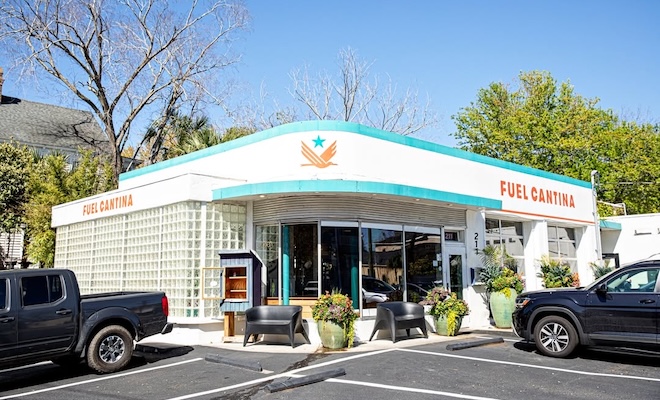
How much of the adoration of older architecture is simply a love of things that are old and quirky, and which make us feel connected to the past? Consider our affection for repurposed gas stations and vintage fast food joints. Our opinions about any building — including the Obamalisk — might look very different in 50 years.
What should drive a movement?
Part of the problem with Trump’s classicism and the Collison-Cowen call is that they treat aesthetics as something that can be mandated or summoned by intention alone. But the great movements in architectural and design history didn’t emerge because a committee decided it was time for a new aesthetic. They emerged because conditions changed.
Bauhaus arose from a specific historical rupture — industrialization, the disruption of craft hierarchies, a genuine question about what mass production meant for beauty. Modernism spread because it solved real problems: cheap materials, fast construction, new forms of urban density. The aesthetics followed the conditions.
What are the genuine condition changes of right now? Of course, AI. But I’ll name one other: zoning reform.
Slowly, unevenly, but fundamentally zoning reform has the potential to reshape what kinds of buildings are possible. And yet so far, the results are disappointing — we’ve largely produced variations on familiar themes rather than genuinely new typologies.
When I was in Miami last year, I saw 1111 Lincoln Road by Herzog & de Meuron from afar and became enamored with its transformation of the most abhorrent of building types — structured parking — into something sexy and social.
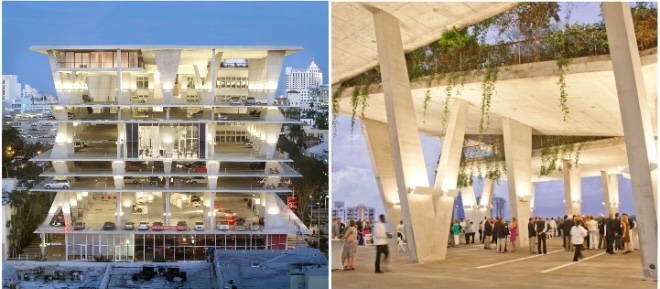
The building combines ground level retail, public parking, event space, and private apartments into one building that redistributes public, private, residential, and commercial purposes in surprising ways. That kind of imagination applied to the new freedoms zoning reform is opening up — mixed-use, missing middle, adaptive reuse of office towers — feels like the more interesting challenge than re-litigating whether cornices are good.
Back to the Obamalisk
All of this is not to defend the aesthetic rut we might be in. Modern design trends feel stale at this moment — even more so as AI slop makes every modern rendering icky.
Which is why the new Obama Center feels, oddly, so timely.
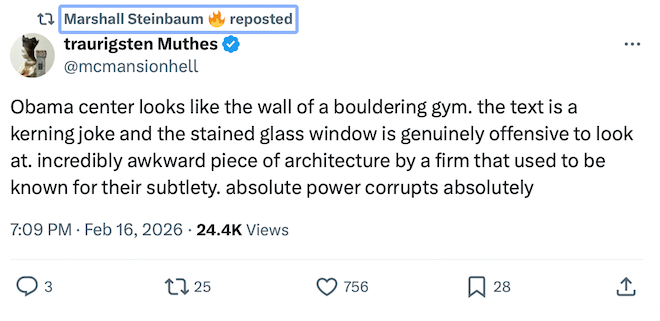
There was a lot of trolling of the project before it opened, like from Kate Wagner, the author of McMansion Hell who is now the architecture critic for the Nation, among others.
But now that the project is complete, many people are finding themselves surprised by how much they like it.
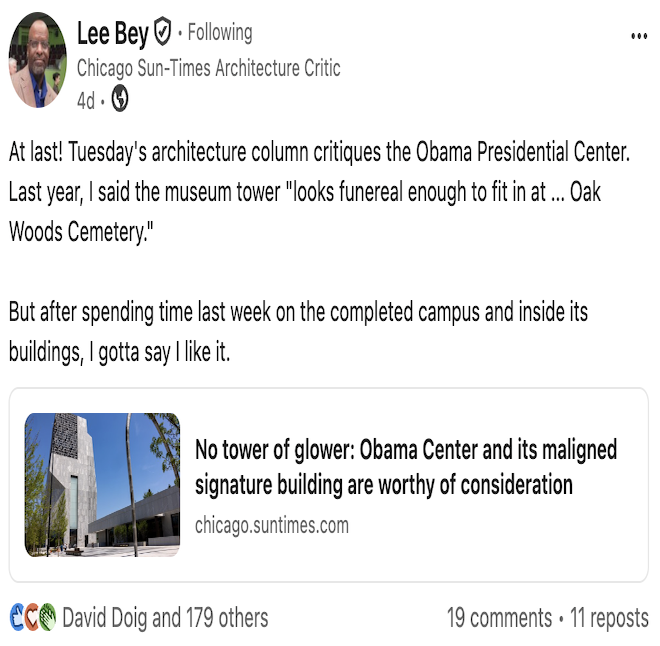
I wonder if people have changed their opinions upon seeing the main building in person after so many years of awaiting its arrival.
Or if it has arrived at the perfect time — not in the pre-pandemic era when modern aesthetics were safely championed, but at a time when many people feel a need for a new aesthetic without a clear direction of where to go. Who would have guessed that a building like this could point the way?
Diana Lind is a writer and urban policy specialist. This article was also published as part of her Substack newsletter, The New Urban Order. Sign up for the newsletter here.
 MORE FROM THE NEW URBAN ORDER
