




As some of you know, I’ve been posting quite a bit about Bloomberg CityLab in Madrid, an annual global urban innovation conference. So much about my time there impressed me and will stay with me — including the venue itself, a historic city with a modern, abundance mindset. But if I had to boil down the lessons that will last into and beyond the next year, I’d say it was these eight:
Art + life = Citymaking
Performing and visual arts were woven into several CityLab sessions — some more successfully than others. I really appreciated the sentiment to integrate culture into the conference. The artistic interludes left me feeling like citymaking itself is a kind of art, not just a job. Performances underscored the sense we are all involved in something quite profound, that local culture is not a sideshow but in many cases the point of urban life.
Two weeks later, I can’t get CityLab’s opener, Anthony Roth Costanzo — the leader of Opera Philadelphia, coincidentally an organization in my hometown — out of my head. I was shocked by Costanzo’s voice and so intrigued by the concept of Glass Handel that I’ve been listening to it ever since.
A new vocational pathway
CityLab’s two-day main event consisted of a series of panels and short keynotes. I appreciated one session focused on building the workforce we need. One example came from Boston, where a $37.8 million grant from Bloomberg Philanthropies will enable a Boston high school to double its enrollment capacity to more than 800 students and expand its curriculum to include new health career pathways that align to in-demand roles at Mass General Brigham.
Students will now have opportunities to explore careers in perioperative services, medical imaging, nursing, emergency services, and medical laboratory science, and gain certifications and college credits aligned to these pathways while they are in high school.
Hospitals like Mass General Brigham have hundreds of open positions that are not at significant risk of automation in the near term, and they offer long-term career ladders that the employer has a direct incentive to invest in. The broader point: for too long, US career-focused schools have had thematic vocational areas without real, concrete jobs attached.
At a time when everyone is nervous about the future of work, it is exciting to think about how this model might crack open a new vocational approach in the U.S. where employers help co-design (and fund!) schools, then train and eventually employ their students.
Empowering young people

I really appreciated the conference’s focus on young people — not just as the recipients of new funding or policies, but as advocates for themselves. Florence Namayanja, Mayor of Masaka, Uganda – a city where 70 percent of the population is under 30 — spoke about coming to office and finding a profound disconnect between young people and city hall. Her solution was a Youth Desk — a dedicated office headed by a young person, explicitly designed to make youth feel comfortable walking into the mayor’s office, giving feedback and sharing ideas.
The first output was a youth convention, which surfaced a clear demand: internships, mentorship, and pathways into city employment. The desk identified individual talents and began embedding young people across city departments, where some have since been formally recruited into decision-making roles. She then connected this to the Youth Climate Action Fund: When she became mayor, she inherited a massive waste backlog. Young people initially volunteered to clean the city alongside her, but through the YAF, those informal volunteers were formalized into associations that now hold city contracts for garbage collection. She described them as having become “business co-creators and co-governors of their own projects” — a shift from civic volunteers to civic entrepreneurs. Too often youth engagement is one-off and disconnected from true engagement and decision-making.
Harnessing AI
Throughout the conference, projects and policies using AI came up. For example, London’s Mayor Sadiq Khan has not only created an AI and Jobs taskforce, but will be offering free AI training to Londoners later this year. We also heard a presentation by Jigsaw, an incubator within Google, about an AI-powered civic engagement tool that is intended to close the “listening gap” — the difference between the number of people who are heard and those who want to be heard.
Using technology that emerged from online commenting platforms, Google is seeking to create more dynamic ways of surveying people about their communities and then making that feedback legible to local leaders.
Daniel Ramot, co-founder and CEO of Via, also showed off how AI can help increase the return on investing in transit by creating dynamically routed microshuttles instead of more frequent buses along fixed routes.
I was really struck by MIT Senseable City Lab’s Carlo Ratti, who described returning to William H. Whyte’s foundational 1970s research on how people use public space (originally filmed on Super 8), and reanalyzing it alongside contemporary footage from the same New York, Boston, and Philadelphia spaces using AI.
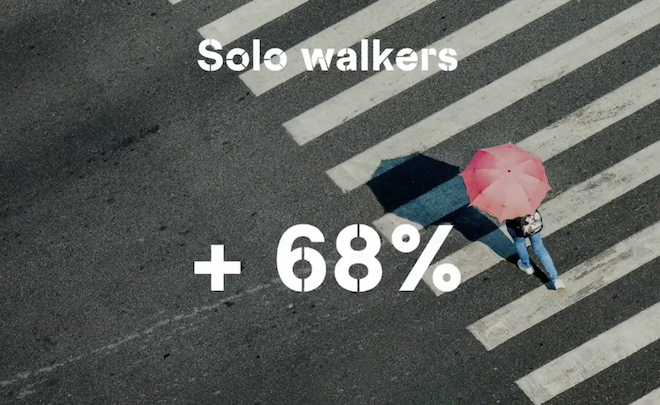
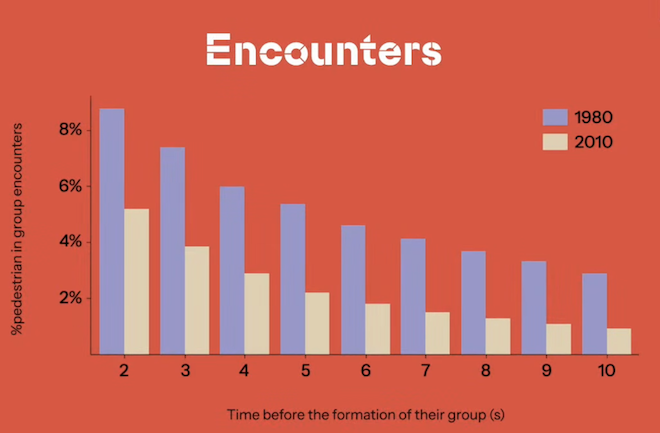
The results were striking and unsettling: People now walk 15 percent faster through public space; solo walkers have increased 68 percent; lingering and spontaneous social interaction have declined dramatically. (If you want more on this topic, I published an interview with Ratti’s collaborator a year ago here.)
They say you can’t manage what you can’t measure. I think AI’s ability to make measurement faster and cheaper is going to really help us manage our cities in ways we’re just beginning to grasp.
The upside of single room housing
In the U.S., there’s a growing movement to get developers to build family-sized apartments, not studios and one bedrooms. In other countries, they’re rethinking the potential of single rooms.
London’s Deputy Mayor Tom Copley described a surge in co-living applications (40 percent coming in 2024–25 alone). A bit like Los Angeles’s ED1 program, London is fast-tracking projects that have at least 20 percent affordability, relieving those projects from some design standards and fees. If the market wants to provide co-living, it seems London wants to enable it so long as it adds more affordability.
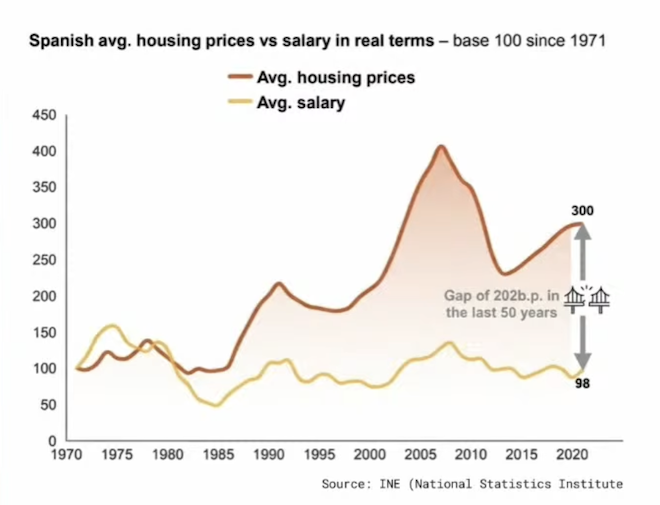
Meanwhile, Anna Bedmar, co-Founder and co-CEO of Habitacion.com is enabling people to buy a room — not a full apartment. Their customers are young professionals in their late 20s and 30s who want to build some equity, sell their share, and use that capital toward their next step. She framed it explicitly as a wealth-building tool — a way to get onto the asset ladder during a stage of life when full homeownership is out of reach.
Could these ideas be grafted on to our existing housing stock to provide either more community or asset-building opportunities? Seattle’s ReSpace is starting the conversation about co-homeownership, room by room. I think these examples point to a sign of what is to come.

We still need an American infrastructure bank
We heard from the head of the European Investment Bank, which brings not only money but expertise for an array of infrastructure — transportation, renewable energy projects, resilience infrastructure, and more. The bank doesn’t have an exact comparison in the U.S.
For at least 20 years, there have been various calls for an American national infrastructure bank and some statewide examples. But the narrative of using capital to make improvements, reinvesting profits into reserves for the bank to accomplish more work … It all made me very envious. The European model also makes clear that it’s not just about the money, but technical assistance and the ability to invest beyond election cycles.
The future is late
There was a panel on night work. Usually discussions about cities and night time focus on the nighttime entertainment economy of bars and music venues.
But this panel noted that more and more work is going to happen at nighttime due to extreme heat during the day and yet transportation, accessing health care, and child care are all extremely difficult for night time workers. Not surprisingly, these workers deal with a host of health issues, including sleep problems. These “invisible engines” of our cities deserve to be treated better and will require new collaborations across city departments — health, safety, transit — to address their needs.
The power of a paradigm shift
I would have to be emotionally dead inside if I didn’t find myself charmed by Bjarke Ingall’s presentation about “utopian pragmatism.” If utopia is a place too perfect to exist in reality, and pragmatism is dealing with the hard constraints of the actual world, utopian pragmatism is the design mindset that asks: Given this real site, this real budget, these real constraints, how do we make this small piece of the world as close to our dream world as possible? He walked through several examples of this work.
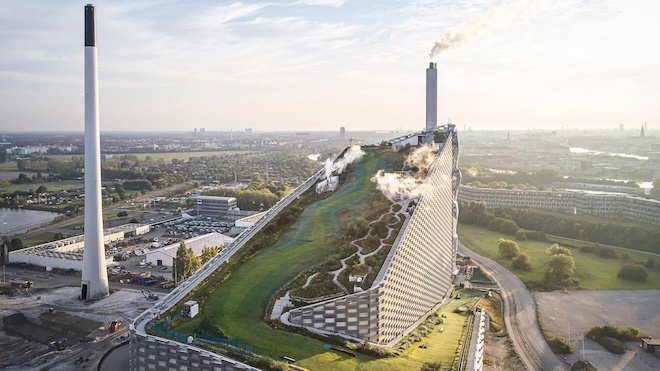
Copenhill — a waste-to-energy plant with a ski slope atop it.
A factory in Norway — sourced with local timber, heated by geothermal energy, powered by local hydroelectricity and photovoltaics. BIG negotiated with the fire department to clear only a 5-meter perimeter, so workers inside the factory look out through the surrounding forest.

At the other extreme of scale: a one-room hotel with 300 birdhouses outside it, designed so guests wake to birdsong and feel immersed in nature from every angle.
The final and most ambitious project was Gelephu Mindfulness City, Bhutan — a new city commissioned by the King of Bhutan to create economic opportunity and prevent the brain drain of young Bhutanese to Australia and Canada.

The brief was extraordinary: design a city from scratch, grounded in the nine parameters of Gross National Happiness (based on Buddhist principles), that is also capable of attracting international investment and functioning as a modern economy. The airport arrival hall, built from locally sourced timber with traditional Bhutanese carvings throughout, means passengers waiting for luggage are surrounded by tropical forest and living craft heritage rather than the standard fluorescent box.
In this spirit of hopefulness, Vitali Klitschko, Mayor of Kiev, spoke with artist Es Devlin in a moving session about leadership during wartime. Klitschko was once a professional boxer who returned to Kiev and is leading his city during an unimaginably dire time. He did have a parting message.
“Each finger is strong. But if the fingers come together, they will be many times stronger.” In other words, they form a fist. A fitting metaphor about how collaboration can strengthen our work in improving cities. I am taking that message — and utopian pragmatism — with me.
Diana Lind is a writer and urban policy specialist. This article was also published as part of her Substack newsletter, The New Urban Order. Sign up for the newsletter here.
 MORE FROM THE NEW URBAN ORDER