

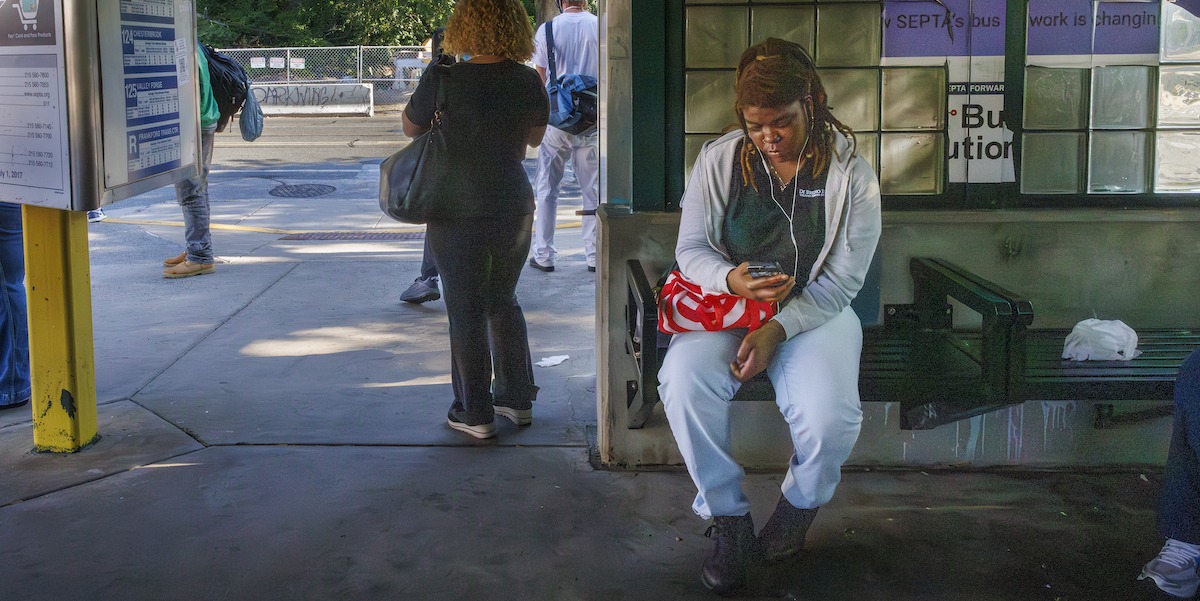


There’s no debating whether Harrisburg’s severe funding cuts to SEPTA are a racial justice issue. Paired with the incoming fare increases, the Black residents who make up more than half of ridership are now paying twice. First, through the federal, state, and local taxes they pay each year that already support the system. Then again, through higher fares, longer commutes, and reduced access to jobs, healthcare, childcare, and more.
This is what Anne Price and her team at the Maven Collaborative call “quiet violence,” or the unequal tax structures and broader forms of economic extraction that disproportionately siphon resources from Black people and Black women, in particular.
Rectifying the inequities exposed by the SEPTA crisis won’t just repair the harm that’s currently unfolding. It’s an investment in a more just and prosperous future for everyone.
Other advocates and academics refer to this race-based financial strain as a “double tax,” which I’ll use here because the racial impacts of SEPTA’s most recent service cuts are very loud: 32 bus routes eliminated, 16 shortened, and thousands of riders left stranded and late for their lives and livelihoods. “Racism and classism in my opinion are at the heart of the never-ending attacks on public services, with transit smack in the crosshairs right now,” said a protestor at a recent demonstration.
Double tax and economic inequity
In a recent Philly Inquirer reel, every rider interviewed and nearly everyone seen waiting for a bus is a person of color. Vanetta Marshall, a Black home-visiting nurse and former 31 bus rider, says she’ll now have to take her online classes “on the bus, as opposed to being home trying to study” because of the two hours added to her commute to work. She also feels forced into buying a car earlier than planned — which may upend her financial stability — because of how the SEPTA changes are affecting her daily life.
Her patients will feel the consequences too. “Patients, they need care,” she says. “Whether it’s pediatric or adult, you have to visit their homes because everybody can’t get to the hospital. So it’s important that we [as healthcare workers] are able to get around.”
It’s always good practice to write in an active voice and name the perpetrators causing any harm. Here, I want to center the communities most impacted by this public problem and highlight the solutions policymakers should pursue — solutions that prioritize equity over austerity and keep Philadelphia running for its people. Still, accountability matters, and the blame lies squarely with politicians guided by rural and suburban tunnel vision. These lawmakers not only tanked a funding bill from House Democrats that included Republican members’ priorities, but they also continue to treat our majority-Black city with hostility, despite Philadelphia’s outsized contribution to the state budget.
Public transit isn’t a luxury: It’s a lifeline that serves as a foundation for economic freedom, mobility, and opportunity.
“Our region subsidizes everybody else, but we have limited power to get what we need from the state,” as Jon Geeting wrote in The Citizen last week. “One of the central mythologies of Republican politics in PA is that the good and virtuous people of the hinterlands subsidize the bad nasty people in the cities — an exact reversal of fiscal reality.”
Rural places are not monolithic, as journalist Sarah Smarsh reminds us, but their demographics do tend to trend very white, especially in Western PA. That’s why we have to call out anti-Blackness in all forms including the narrative that White people pay into the system while Black people take from it. This false yet unrelenting stereotype has shaped racist policymaking since at least Reconstruction, and it surfaced again in speeches and social media content during the transit debate, whether spoken outright or implied.
Black women always pay the highest cost
An economy and society cannot be race-neutral when beliefs, practices, and systems reproduce inequity by design. Philadelphia’s transit funding crisis illustrates a double tax on Black residents, not only through our money but also on our time and health. Ms. Marshall’s story shows how SEPTA’s service cuts are already stealing hours from people who have a job, are attending school, or wish to pour into a personal life. As The Maven Collaborative notes, “Black people, in particular, face a ‘time penalty’ in various aspects of life, as they experience a disproportionate burden of limited free time. This inequity, along with broader economic and societal inequities, contributes to what is known as the ‘fatal stress of oppression’ — or the theft of peace.”
Angela Peoples, co-founder of The South and a contributor to the Maven report, outlines how the quiet violence of double taxation produces inequitable health outcomes. It’s stressful for everyone in a major city when misguided state legislators ruin access to reliable public transportation, but consider, for example, the pregnancy of a Black woman who’s over 35: She’s automatically considered high-risk because of the likelihood of experiencing hypertension, which is linked to the reality of disproportionate stress by race (and gender) and can lead to preeclampsia. This means twice as many doctors’ appointments, double the cost in copays, double the cost in transit fees or gas to receive healthcare, and twice as much time off work.
“And that has nothing to do with anything but the fact that I’m a Black woman in America and therefore I am at higher risk for complications in pregnancy,” Peoples states.
Better outcomes for all
Public transit isn’t a luxury — it’s a lifeline that serves as a foundation for economic freedom, mobility, and opportunity. Robust, sustained investment is essential to reducing inequities, which is why shortsighted austerity measures like this summer’s SEPTA cuts must end.
Philadelphia needs a concrete commitment to transit funding that protects routes, expands service in underserved neighborhoods, and ensures affordability. This starts with a dedicated, multi-year funding formula at the state level, so SEPTA can plan for our city’s shared future instead of having to cobble together stopgaps during each new crisis.
State authorization of regional funding options is another pathway forward, giving areas like Southeast PA the ability to invest additional funds in better service. Continual equity audits of the state transportation budget should also be considered, requiring funding proposals to show who benefits, who bears the burden, and how racial disparities will be reduced. Notably, this hasn’t been done in Pennsylvania since 2020.
Though the federal policymaking landscape is deeply fractured, progressive tax law at the national level can push Pennsylvania and other states toward greater equity and stronger public investments. Reducing the federal tax exemption on inherited wealth and reinstating the credit for state-levied estate taxes would prompt many state governments to follow suit and raise revenue that could be directed toward public goods like transit, as explained by the Congressional Caucus on Black Women and Girls.
Finally, centering the Black community in the transit debate now and always means confronting the policy choices that protect white comfort and convenience while stripping stability and security from Black Philadelphians and other people of color.
Rectifying the inequities exposed by the SEPTA crisis won’t just repair the harm that’s currently unfolding. It’s an investment in a more just and prosperous future for everyone.
Kendra Bozarth is an editor, writer, and communications strategist specializing in narrative change for economic justice.
The Citizen welcomes guest commentary from community members who represent that it is their own work and their own opinion based on true facts that they know firsthand.

MORE ON SEPTA CUTBACKS