



When I walked into the School of Design at the University of Pennsylvania for my first day as a graduate student in city planning in 2003, I felt happy and excited. I wanted to become an urban planner to empower everyday Philadelphians to shape their communities. Pursuing this goal at such a prestigious institution made the experience all the more meaningful.
Yet I couldn’t help but notice how much I, as a Black woman, stood out — a worry confirmed just a couple of days into the semester. I learned that after I left a celebratory event, a classmate claimed that Penn admitted me and a handful of other Black students only because of affirmative action.
Listen to the councilmember read her story here:
The comment stung. None of us had spent enough time in the program to judge who was smarter or most deserving. Still, my classmate’s words confirmed what I’ve faced in academia and other White spaces: White people, especially White men, receive the benefit of the doubt, opportunities, and respect. Black women, on the other hand, must fight for their place at the table (or the classroom), and even then, our presence is assumed to be a handout.
Perhaps unsurprisingly, throughout graduate school, I had no choice but to go the extra mile, and then some, just to be taken as seriously as my White classmates. That’s why I regularly stayed in the lab far past midnight. I did this even when I was pregnant.
Diversity “prized at Penn”
Penn used to proclaim that “diversity is prized at Penn as a central component of its mission.” Yet my alma mater has never done enough to ensure the neighbors living in its shadow truly benefit from Penn’s world-class research, education, amenities, and jobs. The few programs that did exist, though beneficial, were nowhere near matched by the responsibility that Penn has to make up for its own negative impacts — razing the Black Bottom, mishandling the remains of MOVE Bombing victims, fueling rapid gentrification, and so much more.
So when, in early February 2025, Penn became the first higher education institution in Philadelphia to proactively erase diversity, equity, and inclusion from its nondiscrimination policy, it felt like an additional slap in the face. But it turned out this was just the first betrayal.
Most recently, Penn Carey Law announced plans to shutter its Office of Equal Opportunity and Engagement and “pause” the Dr. Sadie T.M. Alexander Scholarship, a “full-tuition scholarship in honor of the life and legacy of Dr. Alexander, the first Black woman to graduate from Penn Carey Law School,” who “with resilience and determination, knocked down doors of race and gender that would not willingly open, paving the way for future generations.” Penn had created this scholarship after the murder of George Floyd and Professor Amy Wax’s racist diatribes; its purpose was to support law students studying and planning to practice racial justice.
I call on President Jameson and Penn’s Board of Trustees to stop cowering and start leading by taking a stand for diversity, equity, and inclusion.
This irony stands out, especially since Penn often invokes its founder, Benjamin Franklin, who famously stood up to a tyrannical king and won. Penn tramples Franklin’s legacy every time it abandons its core values to kiss Trump’s ring.
It’s not too late for Penn to choose a different path and once again become a global leader striving toward diversity, equity, and inclusion. The university must restore shuttered DEI programs and resources as well as stand up for marginalized folks on campus, even when it is not politically convenient.
How Penn can fight
Once we get back to this baseline, Penn must embark on a collaborative process with diverse stakeholders to significantly expand and strengthen DEI on campus.
I do not deny that President Trump wields tremendous power, but Penn has proven that it can fight when it wants to. And with its $22 billion endowment and politically powerful trustees and alumni, the university already has the resources to do so.
The university’s appropriately fierce defense of its international students shows exactly what they should be doing when it comes to DEI. Amid threats to students who travel from other countries to study in the U.S., Penn is providing its international students with additional resources, support services, and clear communication. It condemns the President’s harmful actions and goes out of its way to help those affected.
Penn’s willingness to fight also shone when it came to saving money for itself. In 2015, the school stopped taking part in former Mayor Ed Rendell’s program requiring them to pay Payments In Lieu of Taxes (PILOTs). The university persuaded Harrisburg to pass a law safeguarding Penn’s tax exemption — shortchanging our young people out of millions of dollars of public school funding annually.
Penn also needs to make things right with its neighbors — especially the families displaced from the Black Bottom. During 20th-century urban renewal, Penn and the City of Philadelphia forced Black and Brown residents out of their homes to expand Penn’s campus. We are still waiting for Penn to make restitution for this injustice, as well as take responsibility for fueling gentrification across West Philadelphia. This must include meaningfully investing in home repairs, affordable housing preservation, and other interventions that keep longtime working class, Black and Brown neighbors in their homes.
Unions fight on the front lines for diversity, equity, inclusion, and workplace justice. As Philadelphia’s largest private employer, Penn must stop efforts to block unionization and bargain fairly with unions. Our diverse neighbors who keep the school running deserve job security, stable benefits, fair salaries, and protection from harassment and discrimination.
Last year, Penn President Larry Jameson declared that the university’s motto, “Laws without morals are useless,” urges us to do “what is good and practical, and also what is right.”
To prove these are not empty words, I call on President Jameson and Penn’s Board of Trustees to stop cowering and start leading by taking a stand for diversity, equity, and inclusion.
When the Trump administration becomes a thing of the past, Black and Brown Philadelphians will still be here. We will not forget that the university sold us out to save its own skin.
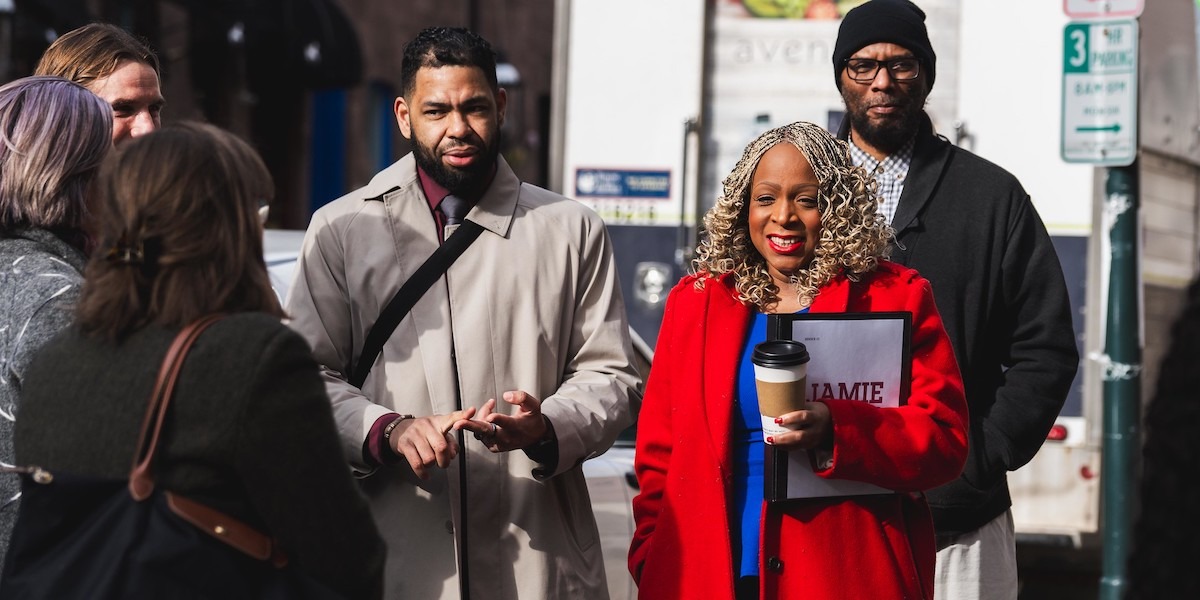
Jamie R. Gauthier represents West and Southwest Philadelphia as the City Councilmember for the Third District. The only elected official in the City of Philadelphia with a planning degree, Gauthier chairs both Council’s Committee on Housing, Neighborhood Development and the Homeless, and the Committee on the Environment.
The Citizen welcomes guest commentary from community members who represent that it is their own work and their own opinion based on true facts that they know firsthand.
 MORE ON RESTORING DIVERSITY, EQUITY, AND INCLUSION