


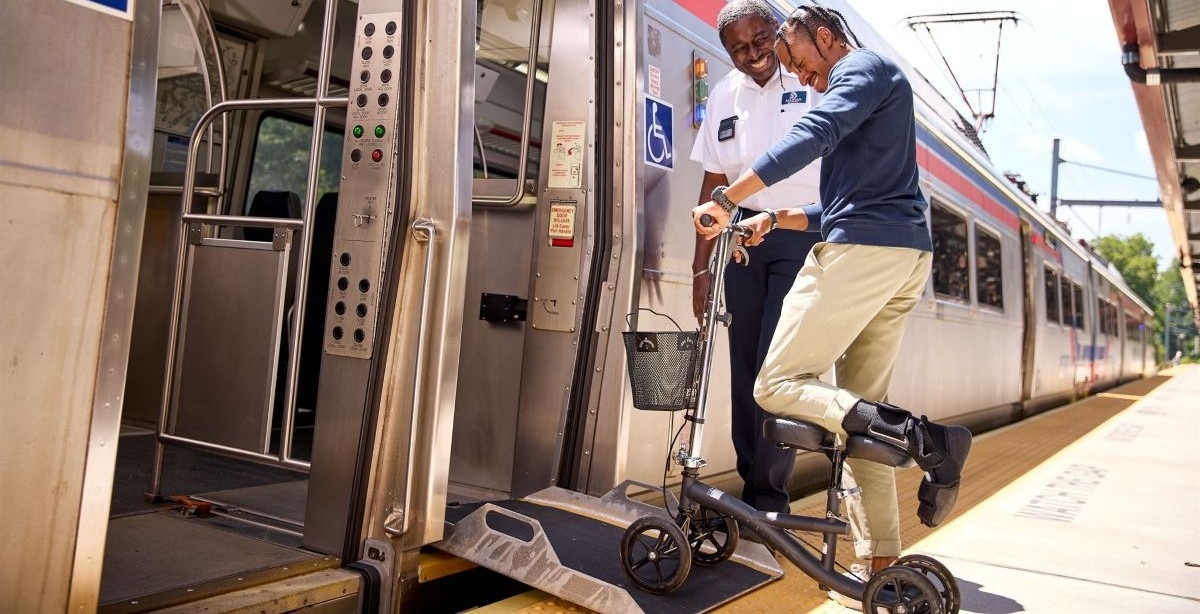


In June, SEPTA announced that due to a lack of permanent funding passed by the state legislature, nearly half of its services will have to be cut or reduced. This comes after months of protest for SEPTA funding, with many Philadelphians emphasizing how vital SEPTA is to the transportation of people across Philadelphia. Many people who spoke up about the effect of these SEPTA cuts were students or those who use SEPTA to get to work.
However, a community often left out of these discussions is people with disabilities. As a Philadelphia school district high school student whose mom uses a wheelchair and relies on SEPTA, I have a firsthand account of the vital role SEPTA plays in the transportation of those with disabilities. Cuts to SEPTA for non-disabled people means being forced to walk, bike, or drive a car to their destination. For many people with disabilities, like my mom, there is no other option. They will essentially be stuck.
Individuals with disabilities make up around 16 percent of Philadelphia’s population, one of the highest disability rates of any major city across the U.S. Although not regularly documented, it is estimated that 12 percent of the total SEPTA users in the past decade have had some form of disability. This is no surprise as SEPTA has become a crucial form of transportation for those living with disabilities because of its accessibility features, including ADA-compliant fixed-route buses that are equipped with elevators for wheelchairs, some accessible stations, and reduced fare programs. SEPTA also has a program called SEPTA Access, a paratransit service where contract carriers give rides to those with disabilities or senior citizens who can not navigate regular fixed-route buses due to functional limitations. With cuts to programs like these, disabled people will be left stranded with no other accessible form of transportation at their disposal.
Cuts to SEPTA for non-disabled people means being forced to walk, bike, or drive a car to their destination. For many people with disabilities, like my mom, there is no other option.
The hardest hit by SEPTA cuts
SEPTA has been projected to eliminate 50 bus routes, five regional rail lines, and one metro line, as well as shorten 16 bus routes and reduce other services. These cuts will be devastating to those who rely on these accessible buses and rail lines, especially if located in areas where there are higher disability rates. With cuts to certain bus routes, people like my mom could have no nearby buses to take. This will require them to figure out complicated routes around the city, which itself is difficult due to generally inaccessible sidewalks.
SEPTA has also announced that it will be increasing fares for paratransit riders by 35 percent. As 22 percent of those in poverty in Philadelphia are people with disabilities, reduced fare prices are necessary. With increases in fare, many people with disabilities may not be able to afford the services whose sole purpose is to help them in the first place. With cuts to essential bus routes, more people with disabilities will require the use of paratransit. However, according to SEPTA’s budget cut, 40,000 of SEPTA’s access paratransit trips will no longer be available. Cuts to such an important service for individuals with disabilities, at a time of even higher demand, means more stranded people with no other way to navigate the city.
One of the main purposes of SEPTA is a way to get to work. One-third of working-age people with disabilities are employed. This statistic will only decrease with SEPTA cuts, further continuing the cycle of poverty and unemployment that many people with disabilities face. Healthcare is another aspect that disabled individuals struggle with, with 26.7 percent of them reporting being unable to get healthcare because of the costs. This situation too will only be exacerbated by increased fare costs and issues accessing nearby health clinics. There is also the isolation. Without accessible transportation, people with disabilities will have no option but to miss out on community activities and other everyday events, practically separating them from their peers.
Thankfully, there is still a way to prevent these cuts from being put into place. The cuts are estimated to go into effect in late August and again in January 2026. The power to prevent these cuts from going into place lies in our hands. Urge your state lawmakers to approve Governor Shapiro’s transit funding plan. Contact your Senators and State Representatives, and tell them about the importance SEPTA plays in Philadelphia transit. Individuals with disabilities have often been overlooked in funding policy conversations. In order to ensure equity, this needs to end now.
Leila Golzari-Hunt is a 10th grader at Julia R. Masterman High School.
The Citizen welcomes guest commentary from community members who represent that it is their own work and their own opinion based on true facts that they know firsthand.
 MORE ON THE SEPTA FUNDING FIGHT