



In Philadelphia during the pandemic, school staffs were asked to do far more than teach. When classrooms went virtual, they became tech support — walking families through logins, troubleshooting devices, and keeping kids connected. They delivered Chromebooks and Wi-Fi hotspots by hand, organized food distributions, mediated family crises, and made welfare checks when students vanished from the video grid. As SEPTA drastically reduced service and neighborhood resources went dark, schools became the fallback — the one open door when every other door felt shut. Any educator who lived through those months knows exactly what that felt like.
Listen to the audio edition here:
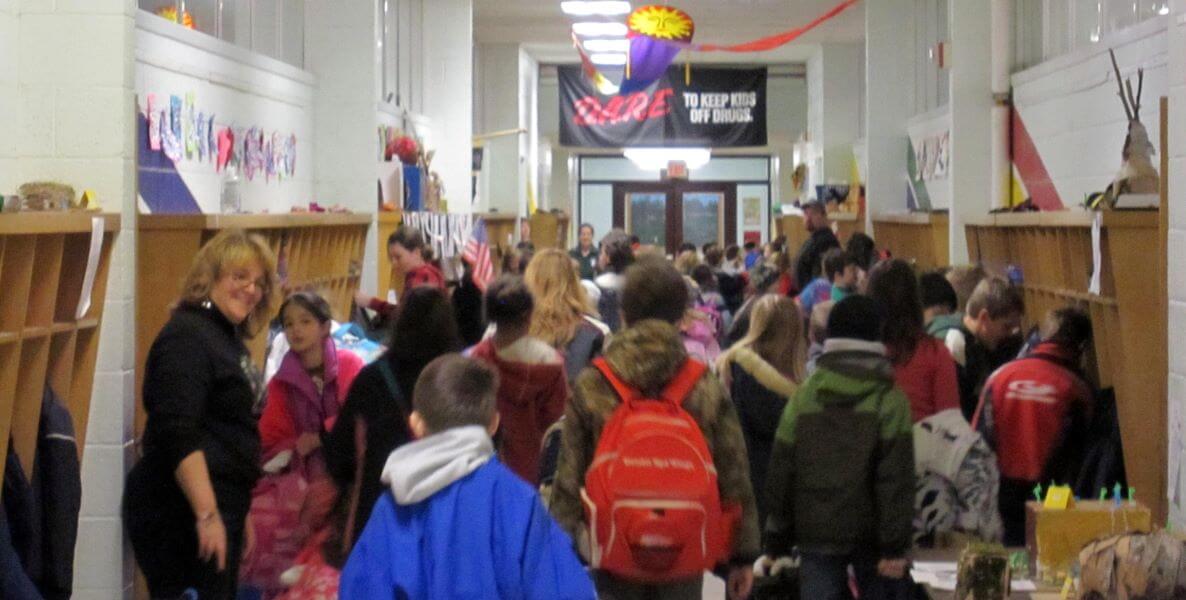
This isn’t just a story about emergency improvisation. It’s a mirror held up to our civic life. Across America, we have quietly outsourced the work of a village to the local school. Philadelphia has been among the hardest hit: When rec centers thin out, churches struggle, civic groups fade, and neighborhood associations lose steam, the unmet needs do not disappear. They cross the threshold of a school building at 7:30am.
The weight schools carry
We treat schools like the Swiss Army knife of American life. We ask them to teach, feed, counsel, supervise, diagnose, discipline — and occasionally save. When shootings devastate a block, schools comfort the survivors. When parents are overwhelmed by shift work and instability, schools offer routine, hot meals, and often the only consistent adult presence a child will see that day. Then, when schools strain under that load, we declare them “failing,” as if the problem were pedagogy rather than the impossible scope of the assignment.
Let’s name what’s happened: Schools have become triage stations for a fraying social order. They were never designed to be a city’s food system, mental health provider, family court liaison, and digital access point. And yet, that’s exactly what we’ve asked them to be.
For much of the 20th century, children in Philadelphia grew up inside a lattice of mediating institutions: churches that mentored youth, unions that stabilized families, neighborhood associations that created belonging, and local journalism that connected residents and held leaders to account. None of it was perfect. All of it mattered.
Today, much of that lattice is brittle. Church attendance has dropped. Membership in civic clubs has plummeted. Local journalism has withered. The result shows up before first period: students arrive carrying the vacuum left behind — less adult mentoring, fewer third spaces after dismissal, thinner neighborhood bonds. What once lived in the commons now lives in the classroom.
When classrooms closed, we didn’t just lose instruction; we lost the food system that kept children nourished, the trained adults who notice early warning signs of abuse, and the steady daily rhythm that makes kids feel secure. Yes, test scores fell. But the deeper loss was relational and communal. What we measured as “learning loss” was, in truth, an institutional collapse that schools could not fix alone.
The work of raising young people belongs to a village — and too many villages in our city have gone quiet. Rebuilding them will take time and trust, but it is possible, and it is the most school-supportive thing we can do.
The work of rebuilding
The good news is that Philadelphia is not standing still. The Mayor and City Council have begun the slow, necessary work of rebuilding the scaffolding around schools. Large-scale renovations of public rec centers are underway. Investments in “third spaces” — like the new walking bridge over the Schuylkill and expanded park access — are giving families safe places to gather and kids somewhere to be after dismissal besides a couch or a corner.
Nonprofits are stepping up as well. Kingsessing Heals has emerged as a vital source of support for victims of trauma here in the Southwest. Mural Arts Philadelphia continues to use art to knit neighborhoods back together, turning blank walls into shared stories and safe, watched spaces. These efforts prove what’s possible — but we need to scale them citywide and sustain them for the long haul.
Here is where Philadelphia should go next—boldly and on purpose:
- Make third spaces a first priority. Fund rec centers and libraries for extended hours and reliable staffing so kids have safe, structured places to land every afternoon.
- Build a neighborhood-based mental health network. Place clinicians and family support workers where trauma is most acute, and make referrals frictionless for schools.
- Back the mentors. Provide stable funding to churches, block associations and youth groups that form character and social trust. Small grants to the right local leaders pay outsized dividends.
- Strengthen local accountability. Support journalism and civic organizations that connect residents, illuminate problems early, and turn neighbors into co-problem solvers — not just spectators.
These are not luxuries or “nice to haves.” They are the supports that let schools do what only schools can do: teach. Every dollar invested upstream in community capacity prevents $10 of downstream crisis in a classroom.
Stop asking schools to do it all
There are people in this city working themselves to the bone to build back our institutions — crews repairing playgrounds, librarians opening doors, pastors mentoring teens, teaching artists painting hope onto cinderblock walls, social workers answering the phone after midnight. Help them. Support them. Expand what they’ve started. If we want better schools, we must shoulder the civic work that schools were never meant to carry.
Philadelphia will not achieve educational equity by demanding that educators become counselors, pastors, caseworkers, and clinicians all at once. The work of raising young people belongs to a village — and too many villages in our city have gone quiet. Rebuilding them will take time and trust, but it is possible, and it is the most school-supportive thing we can do.
Every investment in neighborhood institutions is an investment in classrooms. Every hour a child spends in a safe third space is an hour a teacher can spend on teaching. Every act of civic renewal lightens the load on a school that has been carrying too much for too long.
We say we want great schools. Then let’s build the great city around them.
Brandon McNeice is Head of School & CEO at Cornerstone Christian Academy in Southwest Philadelphia and founder of Tack Educational Consulting. A 2025 Klingenstein Fellow, his writing has appeared in Plough, Front Porch Republic, and Well-Schooled. He writes on education leadership, institutional renewal, and civic life.
The Citizen welcomes guest commentary from community members who represent that it is their own work and their own opinion based on true facts that they know firsthand.
 MORE ON PHILLY PUBLIC SCHOOLS