

Is our long regional nightmare about to be over? There are signs of compromise in Harrisburg. Governor Josh Shapiro floated a $49.9 billion compromise budget, a spending increase of 5 percent rather than the 8 percent he’d been seeking. And he and House Majority Leader Matt Bradford indicated they’d be open to a SEPTA fix that their side originally resisted — tapping into the Public Transportation Trust Fund, which pays for transit-related capital projects. (Republicans say $1.1 billion of it is unallocated).
These are good signs. Shapiro’s shuttle diplomacy, I’m told, has been tenacious, with a carousel of midnight phone calls back and forth between Bradford and Senate Majority Leader Joe Pittman. It’s too early for celebration or postmortem, but let’s assess where we are and how we got here.
Listen to the audio edition here:
As you might imagine, I heard from a good amount of folks after weighing in on the stalemate over SEPTA funding a couple of weeks ago. From southeastern PA liberals — biting their nails at the agency’s draconian cuts — there were some attaboys. From elected officials, there were some “don’t look at me” missives — the problem is those other guys. And there were some really thoughtful conversations with folks close to the room where it’s all happening (or not), all of which have made me rethink some of my earlier impressions.
Here are some preliminary takeaways, including some nuances I’ve recently been educated on:
Context, context, context
While I was told my critique of Mayor Parker’s silence on SEPTA funding was by and large accurate — she hadn’t even publicly spoken on the topic until August 15, after touting her bipartisan Harrisburg connections during the 2023 campaign — there are those who hold that her low profile has actually been smart politics. Having the Mayor banging on doors in the Capitol Rotunda — or worse, holding pressers there — does little to persuade Republicans in the western part of the state. In fact, it could actually reinforce the canard that funding SEPTA is essentially a bailout of Philly, as opposed to what it is: an investment in economic growth statewide.

Similarly, members of both parties tell me that, compared to the Mayor, our Council — particularly City Council President Kenyatta Johnson — has had more of a presence on this matter behind the scenes, despite my assertion that the public has heard “crickets” from Council when it comes to the dying art of public political persuasion. Yes, Council members — and Democratic Party stalwarts as a whole — early in the summer were assuring their constituencies that Shapiro wouldn’t let SEPTA falter; after all, he came to the rescue last year, right? But at least Johnson led a Council delegation in June to Harrisburg, including Republican Brian O’Neill, in which they actually spoke to Republicans like Pittman.
As for the Governor, his challenge has been made more complex because, while the House Dems are in lockstep, Republicans Pittman, Senate President Pro Tempore Kim Ward, and Senate Appropriations Committee Chair Scott Martin haven’t always been on the same page, as when Ward seemed to unilaterally offer up a six-month temporary budget. That said, there are tools in Shapiro’s toolbox he strangely hasn’t used to try and break through the logjam.
Shapiro and the art of the ordeal
Behind the scenes, I’m told the Governor has been active and principled. Publicly, though, he’s seemed oddly passive. He has rightly refused to negotiate in public, but has continued to assert that his role is to bridge the differences between the House Dems and Senate Republicans. Isn’t that a bit too politically precious for these times?
Sorry to traumatize by analogy, but hasn’t Donald Trump’s leadership style taught us anything? He doesn’t even touch 40 percent in the polls, yet would never deign to see himself as just another party sitting at the negotiation table. Can you imagine Trump not bullying all sides — and particularly his own party — into making a deal? Shapiro is at 60 percent in the polls, the Dems owe his coattails their slim House majority, and yet he has seemed to defer to them instead of forcing a deal that would ultimately benefit him and his party.
What explains this? One theory is that Shapiro has his eyes set on the presidency and can’t afford to alienate a progressive bloc he’ll need in the ’28 primary. Unlikely, when you consider that Shapiro’s practical moderation is likely to be a key differentiator for him in three years. Remember, even in the “Great Awokening” days of 2020, it was Joe Biden, the moderate of a decidedly progressive candidate class, who ran away with the nomination. When it comes to influence, there is still no comparison between MAGA’s impact on Republican outcomes and the progressive thumbprint on Democrats.
Common ground might be easier to find for Nikil Saval and Judy Ward, neither of whom are in leadership. But at least they’re modeling its pursuit. That’s something, no?
No, the roots of this dispute have to do with more recent history. Think back to Shapiro’s first budget, when the Republicans thought they had a deal with the Governor — who was funding public education at historic levels — for a school vouchers program. Shapiro couldn’t bring along his own House Dems — one of whom told me he was “asking us to cross a third rail”, ie, the teachers union — and he was forced to veto his own provision from the budget. Republicans felt betrayed; Shapiro seemed weakened.
Well, as I’ve chronicled, Shapiro no longer needs the legislature to enact school choice; he can now do so unilaterally, and shape it to his egalitarian values while he’s at it. Part of Trump’s One Big, Beautiful Bill allows states to opt-in to federal funding of school choice. It’s not only free now; it also comports with what some 70 percent of a key Democratic voting bloc — African Americans — tell pollsters they want. I’ll do vouchers if you fund SEPTA would have been a bold move, no?
That would require the Governor pissing off his House Dem friends, who have been in lockstep. But might he have been able to compensate by picking off some Republican support? After all, there’s a schism among Republicans statewide. Party members in the western part of the state are more energized by culture issues like abortion, guns, and wokeness; the grievances of Central Pennsylvania Republicans, on the other hand, are more about how a bloated government, run by all those damn elites, has failed to deliver for them.
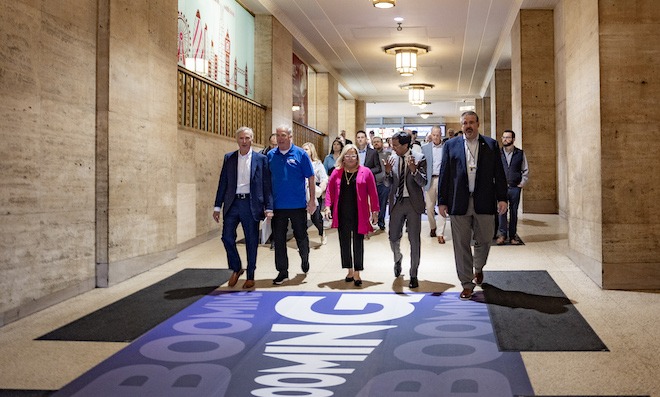
It just may be that, with an election looming, there would be no way of moving any Republican votes Shapiro’s way. But if the Dems would just stop talking to the already converted in Philly and actually listen to those whose votes they’ve been hemorrhaging, enough of that constituency might have been ripe for the picking. Nowhere near a majority, mind you, but enough to put some pressure on a few Republicans who realize that funding SEPTA helps their voters, too.
But you don’t do that by telling those voters that what they’re feeling is not what they’re feeling. And you don’t do that by attacking Northeast Republican State Senator Joe Picozzi, who favors funding SEPTA, but has also proposed ways to make the agency more efficient and customer-friendly. If you’re Shapiro — a lifelong political reformer — you do do that by conceding that SEPTA has been badly managed.
Just consider the decade-long debacle of its star-crossed Key Card program — years late, hundreds of millions over budget, a product that has rarely worked. Remember when the kiosks were so confusing SEPTA had to hire folks to stand alongside them to school riders in this bold new technology that other cities seemed to have no problem adopting? Defending bad policy implementations like that is part of why Democrats lose.
Playing honest broker, though, would be a political winner, no? Might requiring SEPTA to fund part of its own stabilization have gone a long way to getting a deal done much sooner? Pit bull litigator George Bochetto this week sued SEPTA on behalf of riders and activists, and he reminds us that SEPTA literally has a $400 million fund with that very word in its name — “Stabilization.” SEPTA’s former CEO has referred to the fund as a “rainy day fund”; SEPTA says it’s not, that it’s really a pot of money that allows the agency to pay its bills while waiting for federal and state payments to come through.
Well, if the state is taking too long to pay, that just might be something a can-do governor could speed up, no? Wouldn’t it be a show of good faith — let alone of political acumen — if SEPTA’s stabilization fund contributed, I don’t know, $50 million to solving the crisis, instead of continuing to run ads touting its service during Phillies radio broadcasts?
Reform, moreover, is Shapiro’s brand, so how about taking a look at SEPTA’s board and asking: Why so many lobbyists, pols, and former pols? Where are the folks who have actually run things? Or why not consider a bipartisan commission to make the agency work better for regular folk? It doesn’t have to be all slash-and-burn, like Musk’s DOGE calamity. It can be more like then-VP Al Gore’s Reinventing Government reforms in the early 90s, which, after careful study and ongoing smart implementation, reduced the size of the federal government to its lowest level since JFK was president — while improving customer service.
Hasn’t Donald Trump’s leadership style taught us anything? He doesn’t even touch 40 percent in the polls, yet would never deign to see himself as just another party sitting at the negotiation table.
Not coincidentally, Bill Clinton remade the political map based on those types of reforms. He posted historic progressive wins while earning Republican and Independent support by mixing economic populism with conservative values. Let Gavin Newsom head the resistance today by (hilariously) trolling Trump. That will do nothing to bring multicultural working class folks back into the Democratic fold — because Newsom is fighting Trump, not fighting for them.
Performative politics, an oxymoron
When impasse hits, warring sides tend to return to their respective corners. It’s deeply psychological; there’s comfort in playing to your base, where you can feel the love. So that’s how we get the sneering “and now you come to be” resentments of Senator Pittman, but also those Philly pressers with Unite Here activists alongside the Governor. Positions become entrenched; feelings get hurt. Listening to the other side becomes the harder thing to do.
I’ve expressed some policy disagreements in the past with Democratic Socialist State Senator Nikil Saval, but to his credit he’s eschewed the performative virus of our politics. He and State Representative Ed Neilson, chair of the House Transportation Committee, brought Republican State Senator Judy Ward to Philly for a SEPTA tour, taking public transit to a Phillies game. Saval and Neilson may have been laying it on a bit thick. “She was, like, ‘I know SEPTA’s important,’” Saval recalls. “‘I need to know it’s going to be efficient and effective.’”
See what Saval did there? He listened. And then he returned the favor, visiting Ward in her district serving Blair, Fulton, Huntingdon, Juniata and Mifflin counties. “There are tons of old freight train rail lines there, with sinking infrastructure,” he says. “We went to an Altoona Curve game. And now, when we’re back in session, I’ll be asking, ‘What can we do to help those old rail lines?’”
That’s politics, folks. Recently, when a Republican in the western part of the state was publicly assailing Philly as a fiscal drain, I happened to be in the presence of Democratic Party boss Bob Brady. He didn’t respond with a white paper-like recitation of facts proving that Philly is an economic driver for the Commonwealth. He simply smiled — game recognizing game — when he heard the Republican’s lament. “Sounds like someone who wants something,” he simply said.
Transactional? Of course. But if it gets shit done? Would you rather be right, or effective? No doubt, common ground might be easier to find for Saval and Judy Ward, neither of whom are in leadership. But at least they’re modeling its pursuit. That’s something, no?
Speaking of dealmaking …
Where have all the business machers been? One insider cautioned me: Don’t make the mistake of thinking it’s solely up to the political class to wage and win the public argument. “Where are the Republican business owners telling Republican officeholders to fund SEPTA, or they’ll stop writing checks?” he said, and he was right.
Oh, there have been plenty of op-eds and lots of handwringing, but precious little bare-knuckled political power brought to bear. The state and Philly Chambers of Commerce and the Allegheny Conference have all said the right things. But do you get a sense that lawmakers think the business class — most of whom have political asks of their own, by the way — will be willing to go to war over reforming and funding mass transit?
If the Dems would just stop talking to the already converted in Philly and actually listen to those whose votes they’ve been hemorrhaging, enough of that constituency might have been ripe for the picking.
Which gets us to the dearth of creativity in this discourse. In his widely talked about speech that began with a long recitation from John Mellencamp’s classic song Small Town, Pittman handed Shapiro and Democrats a golden opportunity, which they didn’t seize. Mellencamp, as demonstrated on this podcast with Bill Maher, is to the left of even Saval. So why didn’t we see the “Indiana County Rally for Mass Transit,” featuring the aging rocker playing Pittman’s favorite tune?
That’s the type of political jujitsu Republicans — and especially Trump — have long perfected. They know politics is downstream of culture. Moreover, at least since war hero John Kerry ran for president and was promptly “swift-boated,” they’ve excelled at taking their opponent’s strengths and morphing them into weakness. Turn Pittman’s rhetoric around on him. Mellencamp, who explains to Maher how he spent much of his youth going out drinking every night and looking to get his ass kicked in bar fights, would have no doubt been game.
Clinton was adept at such political co-opting, but that was 35 years ago now. Instead of flexing those jujitsu muscles, Democrats today talk amongst themselves. That renders them flat-footed at best.
Shapiro has been publicly disciplined, but not so his party. Last week, State Representative Malcolm Kenyatta said the quiet part out loud. In an Inquirer piece headlined “How Democrats hope to use SEPTA cuts to flip the state Senate for the first time in 31 years,” Kenyatta talked calculatingly of his side’s machinations. “These folks,” he said, referring to Harrisburg Republicans, “I think, are going to pay a short-term political price. I hope everybody, when they go to the Eagles game and can’t leave without waiting for an Uber for six hours, recognizes who did this.”
Okay, note to Kenyatta: It’s not good politics to be publicly wishing misfortune upon your constituents in the hopes that you’ll benefit from it. Machiavelli this guy ain’t. Don’t get me wrong: Kenyatta is a talented political figure, but no wonder he even lost his home base of Philly to John Fetterman in the ’22 US Senatorial primary. You want to know what wins elections? The answer to this question: Who’s on my side?
When AOC-aligned Congressman Greg Casar holds an eight-hour hunger strike in pursuit of better heat laws for workers — “that’s just skipping breakfast” quipped one social media commentator; when Newsom’s trolling of Trump glides right past the plight of the average voter; and when Kenyatta fantasizes about capitalizing politically on the frustration of fans waiting to leave the Linc? That’s when an answer to just whose side you’re on starts to really take shape.
 OUR MOST RECENT COVERAGE OF THE SEPTA CRISIS