


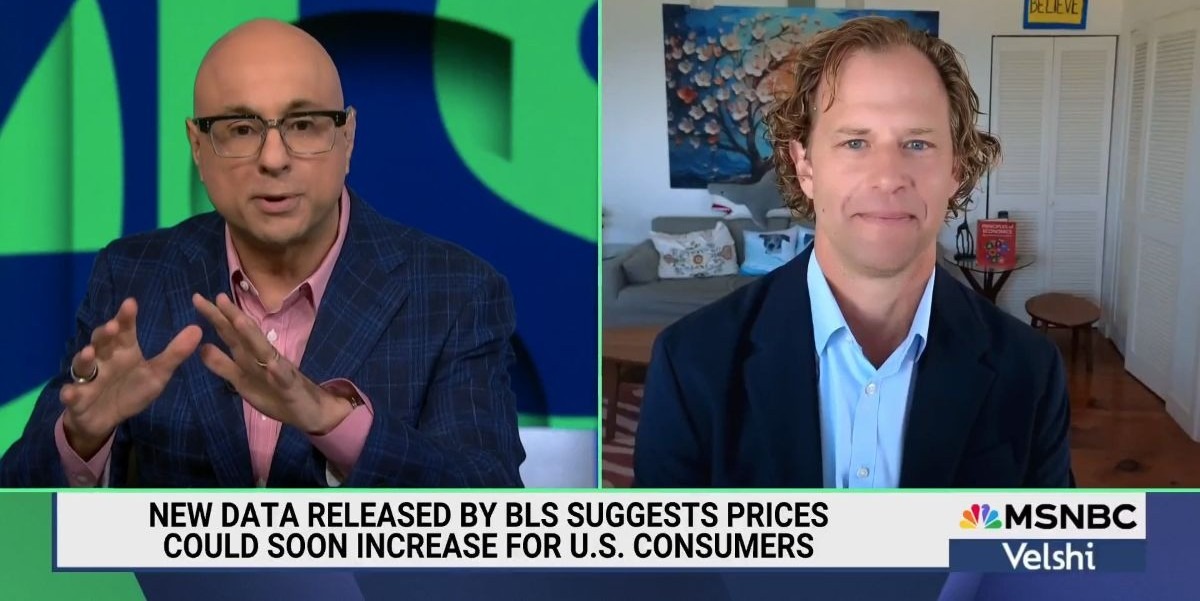


Month by month, our economic forecast is looking increasingly grim. In July, wholesale inflation rose faster than it had since the pandemic, and the producer price index jumped 0.9% from June to July – more than four times what economists expected. Ali Velshi explains the signs that domestic producers, manufacturers, and business owners are feeling the effects of Donald Trump’s tariffs. Next up ? Consumers.
To reiterate, foreign companies and governments do not pay tariffs. The American companies importing goods from overseas do, and as the price of goods increases, those costs are passed on to consumers. So far, companies have been absorbing rising import costs and pre-ordering inventory to delay increasing retail prices. Economist Justin Wolfers joins Velshi on the show to explain what happens next.
When a Samsung washing machine arrives in the U.S., Best Buy pays the tariff. From there, they could decrease profits by not passing it on; they could charge the consumer more for the appliance; or they could not pay the tariff at all, thereby decreasing the number of available washing machines. That’s basic economics.
“Foreign companies aren’t bearing a penny of the imports,” Wolfers says. “There is no doubt Americans are paying the tariffs at this point.”
LISTEN: ALI VELSHI AND JUSTIN WOLFERS DISCUSS WHO PAYS TARIFFS
WATCH: VELSHI AND WOLFERS ON WHO PAYS MORE
 MORE FROM MSNBC’S ALI VELSHI