

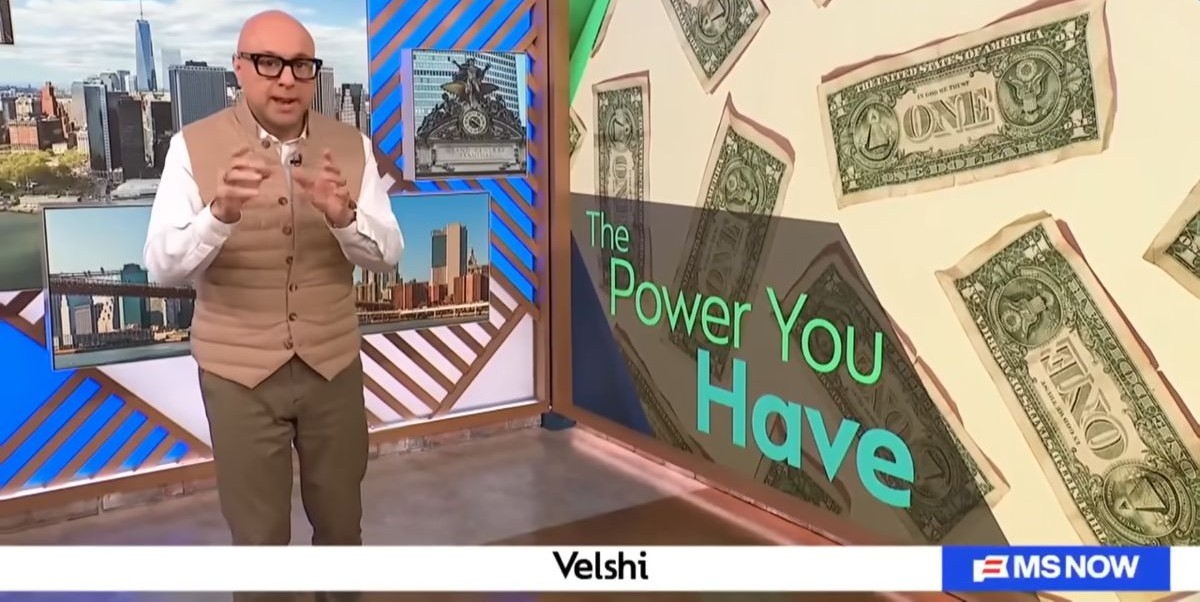


What can Americans do in the face of violent immigration crackdowns, violations of due process, and federal aggression to Constitutionally-protected speech and protest? Though our institutions are failing to meet this moment, Americans have what Martin Luther King called the “power of economic withdrawal.” Ali Velshi covers the history and effectiveness of economic boycotts, a powerful tool for social and political change.
Behind every enforcement action is an ecosystem of private contractors, vendors, landlords, transportation companies, data brokers, technology firms, and more that make ICE and CBP’s work possible. When a company chooses to do business in a community, it enters an implied social contract. If it negatively impacts the stability of the community in which it operates, that contract is broken. These businesses can be held accountable by Americans choosing where to spend (and not spend) their money.
History demonstrates that boycotts work. The Montgomery Bus Boycott is the clearest example of economic withdrawal accomplishing social change. South Africa’s decades of apartheid ended with global boycotts.
Months of pressure and premium subscription cancellations resulting in Spotify removing ICE ads from its platform. Avelo Airlines is no longer providing deportation charters for ICE. Pressure is on Home Depot to protect its customers who work as day laborers from ICE operations, and Target has been facing increasing scrutiny and calls to take a public stand (following a year of declining sales after eliminating diversity, equity, and inclusion initiatives) as U.S. citizens working in its stores were forcibly detained last week.
Americans can voice their opposition to the federal government’s aggressive immigration crackdown and the corporations that work alongside the Trump administration in enabling it by engaging in economic withdrawal.
“Show up, ask questions. Spend you money like it matters, because it does. Refuse to let harm hide behind contracts and logistics and plausible deniability,” Velshi says. “Refuse to be told that nothing can be done. Do this where you spend your money, and on how you invest your 401k. Democracy does not survive on good intentions or mission statements. It survives when people decide their silence is no longer an option.”
LISTEN: VELSHI ON BOYCOTTS AS POWER
WATCH: THE CORPORATIONS ENABLING ICE
 MORE FROM MSNBC’S ALI VELSHI