


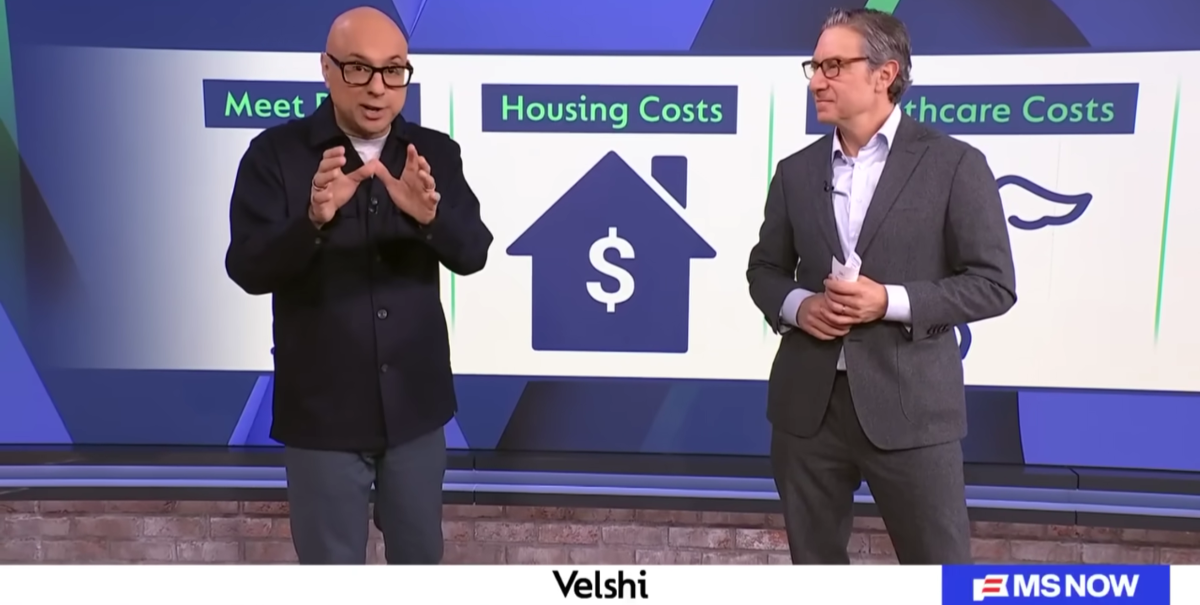


According to Investopedia, “affordability” was the most-searched financial term of 2025. Elected officials from both parties are increasingly focused on the cost of living. This week, Ali Velshi and Investopedia editor-in-chief Caleb Silver bring back Betty, a a hypothetical working mother, to examine how affordability issues are impacting Americans.
Betty and her son hypothetical son Bobby share a rented apartment, but she wants to buy a home. As Silver explains, however, home prices have appreciated like no other cost in America. Housing now consumes between 33 and 35 percent of Americans’ budgets, and upward of 40 to 60 percent in high cost of living areas. Between high mortgage rates and high prices, it’s difficult to get into even a starter home, and competition for rentals plus the added pressures of speculative housing investors are pushing stable housing outside the realm of affordability for people like Betty.
Utility bills are high, in some places increasing as much as 10 percent, with pressures like AI data centers pushing up electricity prices. Grocery bills have increased nearly 18 percent since 2022. Tariffs haven’t impacted some goods and services like apparel thanks to retailers discounting goods in anticipation of a shrinking consumer base. It’s unclear how long that will last.
Without action by Congress, healthcare subsidies for ACA plans, which cover tens of millions of Americans, are expiring in January. Betty will be forced to choose between not having healthcare coverage and paying out of pocket for medical care, or paying at least double and possible triple her premium for health insurance.
Right now, Silver explains, investors and asset holders are in the best position in this economy. But because of the high cost of living for the average American like Betty, buying in to those advantages is unaffordable.
LISTEN: HOW COST OF LIVING IMPACTS AMERICANS
WATCH: ALI VELSHI AND CALEB SILVER TALK AFFORDABILITY
 MORE FROM MSNBC’S ALI VELSHI