



Here’s something that might surprise you: I think a lot about senior citizens.
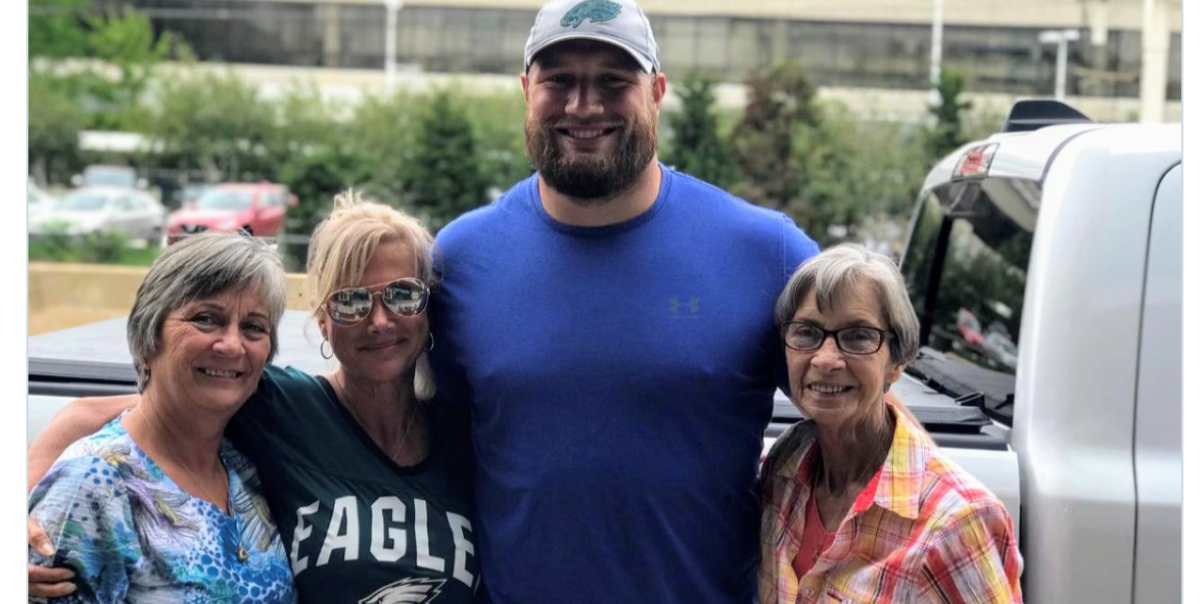
Before my grandma passed away, we had a close relationship, including our running joke about her long-time support of the Dallas Cowboys. I never met my paternal grandfather, but in some ways his shadow looms large in my life: Before I was even born, he died by suicide. It’s a tragic and haunting milestone in my family’s history, one that gets me thinking about how isolated seniors can feel.
That’s why, as we head to play the New York Giants, I felt encouraged to learn about DOROT, a nonprofit addressing social isolation among older New Yorkers – and alleviating youth loneliness in the process.
You might remember that a few years ago, the former Surgeon General, a doctor named Vivek Murthy, called loneliness an epidemic. The World Health Organization (WHO) found that “Loneliness is linked to an estimated 100 deaths every hour — more than 871,000 deaths annually” (you can download their full report here). They arrived at that statistic considering that loneliness can worsen conditions like inflammation, heart disease, and stroke, depression, anxiety, high blood pressure and more. It’s ironic – and sad – that at a time when we’re technically connected to other people 24/7 by our phones and social media, we’re feeling more alone than ever.
The promising news though, as the WHO report went on to say, is that the opposite of loneliness has profound positive impacts: “Having strong social connections can help you live longer. People who are socially connected are often healthier.” We have to get back to what is most important, what really matters, how to have a face-to-face conversation, how to have personal relationships,
But even before the era of smart phones and these latest reports by health officials, DOROT recognized the loneliness that often plagues older people – as their peers or partners die, or they’re less mobile and less connected to employment and socialization. DOROT was started 49 years ago by recent graduates of Columbia University in New York. The young adults, some of them having studied social work, noticed older New Yorkers sitting alone on benches around and near campus, and decided to do something about it. They organized a holiday package delivery program, delivering packages and spending time with seniors several times a year. Ultimately, they formalized their efforts into a nonprofit, calling it DOROT – the Hebrew word for generations.
Today, DOROT, which serves seniors of all races, religions, and socioeconomic status, does more than just holiday food deliveries. It pairs rigorously-vetted volunteers, like students in middle school, high school, and college, to regularly meet with a matched senior. The original goal was to help alleviate loneliness for the seniors with intergenerational interaction – but turns out, the young volunteers benefit just as much. Last year alone, DOROT served 6,697 older adults and welcomed 8,215 volunteers who dedicated 49,225 hours of their time to help.
“When the world is kind of falling apart around us, it’s really reassuring to see that there is in fact a level of humanity, of compassion and empathy where we can really make a difference in people’s lives.” — Mark Meridy
“I’m very proud of the fact that we serve everybody, and that not only are we able to break down the age barriers and bring people together of different ages – we’re able to bring people together with very different lived experiences. People who would’ve never ever had an opportunity to meet one another get to know one another, to become friends,” DOROT Executive Director Mark Meridy told The Citizen.
DOROT also provides programs exclusively for seniors at their center in Manhattan, like art and dance classes and concerts. Since the pandemic, they’ve been offering Zoom and telephone programs too. One is called University Without Walls, and it connects seniors from 35 states around the country with the opportunity to speak in groups with staff from all of the museums in New York, for guided learning opportunities. If one week is about the work of Matisse, DOROT will send a book of relevant artwork to participants, and the museum staffer will lead the group through conversations about the art at hand.
Then there’s DOROT’s Caring Calls program, which is simple – it’s a weekly conversation between a DOROT volunteer and a senior – but has had profound effects in alleviating loneliness. Meridy says one of the most beautiful parts of the DOROT pairings are when intergenerational duos become friends, sometimes for years, beyond their DOROT interactions.
Meridy, who has been at DOROT since 2009 and has spent his entire career in the aging field, oversees an impact department that’s rigorous in its data collection and survey work. He says the data backs up the anecdotal feedback. “Yes, it’s really important to provide housing, food, income security and healthcare – all of those things are critical,” he says. “But if older adults don’t have anybody to talk to, loneliness can lead to increased levels of depression, it can lead to early onset of Alzheimer’s with some older adults.”
And he has seen the impact just as positively on the young people who come to DOROT to get off of their phones and forge genuine connections.
“When the world is kind of falling apart around us,” Meridy went on to say, “it’s really reassuring to see that there is in fact a level of humanity, of compassion and empathy where we can really make a difference in people’s lives.”
If you have an organization like DOROT in your area, consider reaching out to volunteer. If not, maybe consider visiting a senior in your neighborhood or in your apartment building. At a minimum, go ahead and pick up the phone and call your grandparent or any elders in your family today, to talk about your life, ask them questions about theirs. Maybe talk about current events or movies, music or sports – whatever team they root for.
 READ LANE’S OTHER COLUMNS HERE