


Few things in my life have made my heart expand like becoming a dad. When I held each of my children for the first time, I was overcome with emotions. Gratitude and joy were top of the list. But it also made me go into high gear when it came to feeling protective. When you care about a child — your own or anyone else’s, whether you see them every day or love them like crazy from a distance — all you want to do is keep them safe. It’s the least our kids deserve from us.
Listen to the audio edition here:
But when it comes to getting kids mental healthcare, there can be way too many obstacles. Long waitlists. Expensive fees that insurance often doesn’t cover. Having to find a ride or public transportation to get there. Having to take time off from work to get your child to an appointment — which can be especially challenging for, and penalizing to, parents from lower-income families.
That’s why, as the Birds head to play the Chiefs in Kansas City this weekend, I was moved to learn about The Children’s Place on Wheels.
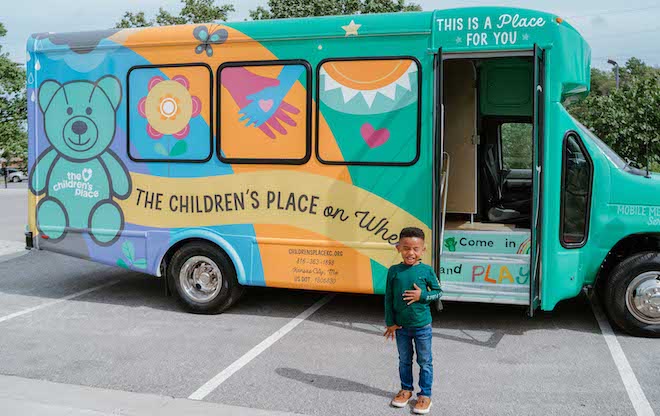
The Children’s Place is a trauma treatment center for young kids in Kansas City that has been around since 1978. In January of this year, they launched The Children’s Place on Wheels — it’s a kid-friendly bus that quite literally meets kids in need where they are: at schools and daycare centers.
Children’s mental health — via bus
On the outside, it’s green and blue, purple and yellow, with a giant teddy bear, stars, flowers, and the words “THIS IS A PLACE FOR YOU” over the entrance. Inside, it’s full of toys and resources that experts know are effective in helping kids who’ve experienced trauma process and heal. There are dress-up clothes and sand therapy, a toy kitchen and a cozy nook.
“All of those things are ways that kids show, or want to be shown, nurture,” Candis Boily, Director of Outpatient Counseling and Family Support, told my friends at The Citizen.
Most of the kids who come on the bus have had an average of what experts call four adverse events — that can be anything from neglect and abuse to having parents who’ve been incarcerated or gotten separated or divorced … The range of adverse events is wide.
“We know how resilient kids are. And when we can teach them the skills now, then if life might continue to be adverse, they already have those skills within their body and their body remembers that.” — Candis Boily, The Children’s Place
Boily went on to say that the idea for the mobile unit came from recognizing the barriers in the KC community. The team at The Children’s Place knew from their experience with Covid that online therapy is just not as effective as in-person play therapy with kids. Being in the same space matters. But even after distributing gas cards to try to help people get there, 30 percent of parents still had to cancel.
It wasn’t that parents didn’t want to get their kids the care they needed — it was the logistics. So the team at The Children’s Place looked around at parallels in programs like mobile dentistry and mobile cancer screenings, and decided to try the same approach with mental healthcare.
And it makes so much sense. I think about my first exposure to mental healthcare, and the number one thing that got me on the road to getting help was the proximity of the student mental health center at University of Oklahoma once a friend encouraged me to go.
Since the program started in January, The Children’s Place on Wheels has partnered with four host sites and provided children 300-plus hours of free therapy. They’ve also trained and taught 30 educators. And it’s all entirely funded by donors (you can see the list of them here), so parents don’t have to worry about footing the bill. Looking ahead, they hope to expand their fleet.
Mobile mental healthcare in Philly?
Philly already has some similar mobile units. But maybe we could do something like The Children’s Place on Wheels in the future, to help keep our most vulnerable kids in Philly — many of whom we know are exposed to the same trauma that the kids in Kansas City are facing — mentally strong.
I take a lot of comfort and hope in something else Boily told The Citizen about the mobile program’s specific focus on kids ages two through eight.
“A lot of our kids have gone through some things that, as adults, we’re [shocked by]. But what we know is how resilient kids are. And when we can teach them the skills now, then if life might continue to be adverse, they already have those skills within their body and their body remembers that.”
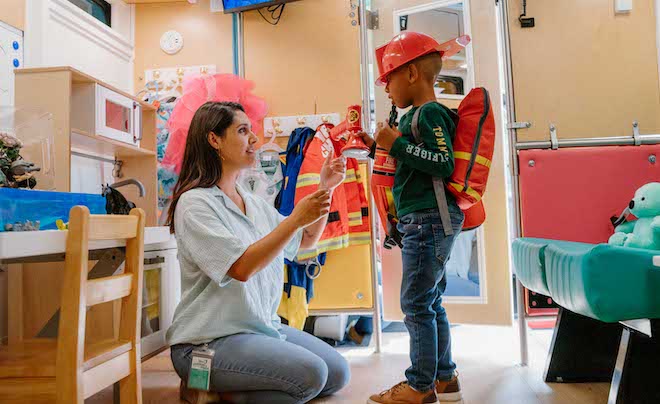
She went on to say that at the developmental stage they’re working with, “their language is play and their words are toys. We’re always thinking about how we get ourselves into a child’s world to help them heal. We want to give them the skills to be able to go out and be resilient and live the life that they need to live. Being able to restore that childhood leads to more successful teenagers and adults.”
I gotta say, too, that thinking about some of the problems Kansas City kids face made me think how much more alike than different all kids are — and how they all deserve a solid emotional foundation, wherever they live, whoever their parents are, and, yes, whatever team they root for.
That’s it for this week. Until next time, don’t forget to make time to reach out to someone you care about, take time away from your screens, and do what you need to find balance.

MORE ON MENTAL HEALTH