



Jocelyn Quarrell can confirm that attending the Super Bowl is a surreal experience.
She was in San Francisco’s Levi’s Stadium this February 8. Of course, she was thrilled to feel connected to both the Patriots and the Seahawks — she lived in Boston for a period of time and now, as a West Coaster, she was happy to see the Seahawks win — and yes, Bad Bunny’s half-time show was much cooler in person.
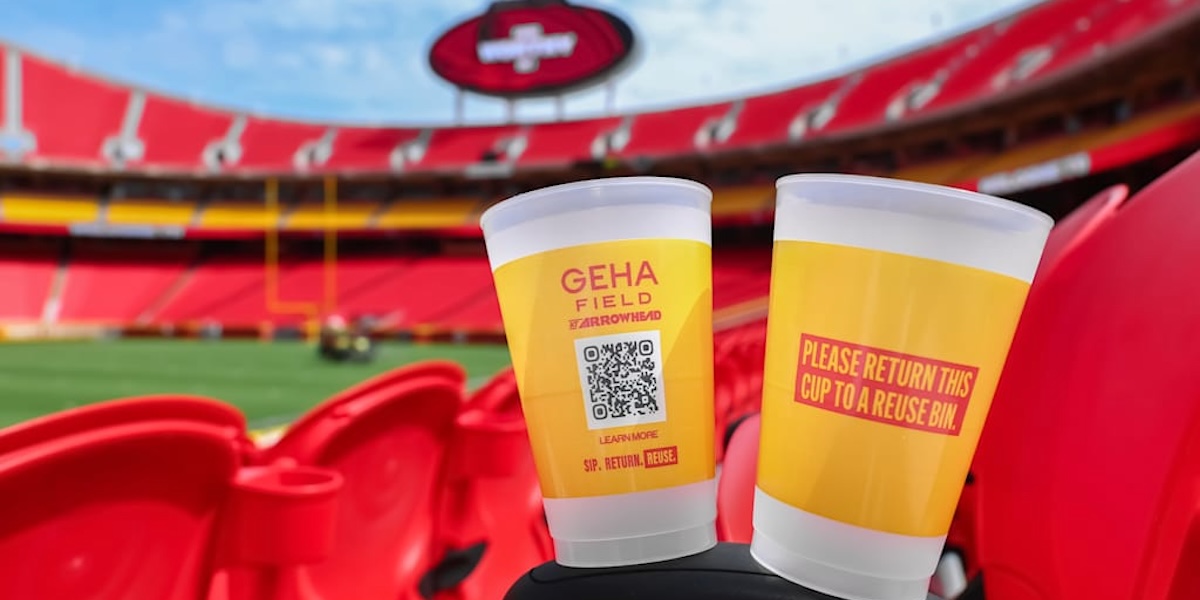
But Quarrell wasn’t there for the game. Her Portland-based company, Bold Reuse, supplied washable, reusable cups for the event. Partnering with Pepsi and the 49ers on a pilot program from 2025 to 2026, they’d diverted more than 32,000 cups from landfills. That continued for Super Bowl LX.
“The intersection of sustainability and athletics, in particular professional athletics, is really, really powerful.” — Jocelyn Quarrell, Bold Reuse
And the Niners weren’t the only team using Bold Reuse’s services. The company has partnered with 20 other professional sports teams, including the NBA’s Portland Trail Blazers and the NFL’s Kansas City Chiefs and Chicago Bears to bring washable, reusable foodwares to their events. Game by game, the company is chipping away at the waste created by the behemoth of single-use products stadiums create.
It’s necessary work. On average, a single pro football game generates 80,000 pounds of trash. That adds up to about 44 million pounds per season — and doesn’t even include garbage generated from other events football stadiums host, like concerts or festivals. (Nor does it count trash from NBA, MLB, MLS or any other sporting events.)
So, game days are always epic — but also epically wasteful. Could Philadelphia’s stadium district follow suit? Between MLB All-Star Weekend, six FIFA World Cup matches, not to mention myriad celebrations of America’s 250th, Philly is likely to have an above-average trash year.
Plus, our teams already tout their eco-friendly bona fides, especially the Eagles, who use the sun to power Lincoln Financial Field and painstakingly recycle their refuse. If ever there were a year for Philadelphia to embrace reuse rather than tossing cups and baskets in the trash — or more likely on the ground — 2026 is it.
Bringing reuse to stadiums
In 2022, the city of Portland enacted a food-only composting ordinance that banned compostable forks, spoons, cups and other dishes from their citywide compost collection, usually because these types of products need to be processed by industrial commercial plants that Portland (and many cities) doesn’t have access to.
This was a wrinkle for the Moda Center, home of the Portland Trail Blazers, which had been using compostable food containers for more than 10 years.
The arena started looking at other options and came across Bold Reuse, launched by Quarrell and Heather Watkins in Portland in 2011, which was distributing reusable dishes to schools and corporate campuses. This would be their first time in a professional sports venue.
On average, a single pro football game generates 80,000 pounds of trash.
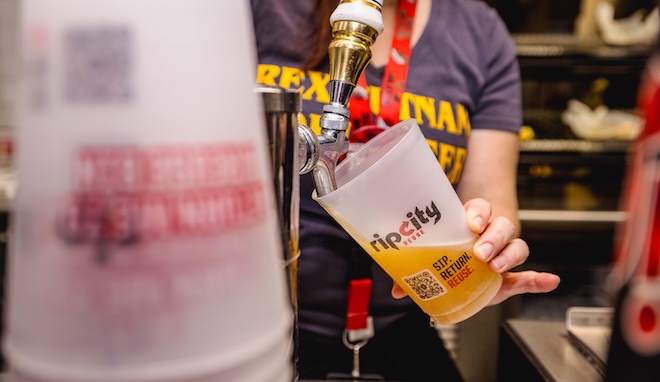
The Moda Center piloted the reusable cups on the premium suite level in 2022 before expanding throughout the stadium in 2023. A report from Upstream, a reuse-focused NGO, estimated the venue avoided using more than 800,000 single-use cups alone between the start of the partnership and April 2025. Soon, other teams and entertainment venues were reaching out.
The company now partners with major sports venues around the country, and has made appearances at the WNBA All-Star Game along with, as previously mentioned, the Super Bowl. The experience “really became a case study for the whole industry,” says Quarrell. “We are continuing to look for communities that are ready for reuse, that have a stadium that’s ready to sign on and start working with us.”
Sustainability, economics, fan experience
Advocates make a three-pronged case to pitch reusable cups and food baskets to stadiums: sustainability, financial savings and improved fan experience.
The case for sustainability is obvious. Bold Reuse replaces disposable cups and paper food baskets with durable plastic cups and food baskets that can be washed and reused up to 300 times before being retired and recycled locally. That process ensures that fewer single-use items end up in landfills.
Financially, it’s also pretty clear that it’s cheaper to use the same cup repeatedly, than to continually buy new ones. The Oregon Convention Center, which implemented reusables with Bold Reuse in 2023 after seeing the success at Moda, has diverted 70,000 single use items from the landfill — that’s 70,000 disposable items they didn’t have to buy. Bold Reuse’s 2026 annual report found 43 percent of their customers reported reduced waste hauling costs after making the switch. Others found the cups presented new sponsorship opportunities, with one venue securing a $125,000 sponsorship to make the switch.
When it comes to the consumer side, well, everyone in Philadelphia knows how awful it is to eat Crab Fries out of a soggy, paper boat. Eating (or drinking) out of sturdy dishware is a better fan experience. Plus, the cups can feature QR codes that direct fans to games or other ways to interact with the venue. (Think: when you’re asked to scan a QR code on the Jumbotron at the Phillies game to participate in a pre-game lightshow or during Jhoan Duran’s entrance, but cup-sized). Some folks appreciate the sustainability aspect, too.
“They can unlock a really unique opportunity to delight the consumer,” says Candice Lawton, executive director of Circular Philadelphia. “Stadiums want those consumers to be returning for games. They want that retention. They want to have new ways to bring new fans and new folks into those spaces — and being able to be part of new food and dining experiences can be a pathway to doing that.”

“I get to go to these events, and it is so much fun to be able to look around the room and to see everybody enjoying their drinks in reusable cups,” Quarrell says.
Even with these advantages, switching to reuse can be difficult for stadiums. It’s a major operations change: Instead of collecting, bagging and sorting trash and recycling, reusable cups and food baskets require washing, drying and restocking.
Bold Reuse assists here too. They’re full service: dropping off and picking up wares before and after events — a system that is actually pretty similar to how the places processed single-use items. The only difference is stadium workers set items aside for pickup instead of tossing them in a dumpster. Naturally, Bold Reuse uses a fleet of electric vehicles to service their clients.
“When we’re talking to new potential stadiums, their primary concerns are really how is this going to affect our operations? Is this going to require additional hours on my team?” Quarrell says. “We can implement reuse and actually work with the facilities teams to drive optimization that requires no new labor hours for their teams.”
The other challenge is helping fans adjust. Until now, most reusable food containers at event venues have been things like commemorative cups, popcorn bins or those adorable little ice cream Phillies baseball cap dishes, which fans are encouraged to take home when the game ends. (Although how many times have you seen them left under seats at the Bank?) But for reuse to work, fans can’t take home the cups.
The Oregon Convention Center worked with Bold Reuse to make sure the design was sleek, but not so cool that guests would bring them home. They made sure to have clear “Return me” messaging on the cups. The collection receptacles and the foodware are the same color — which helps link them visually for the guests. So far, Bold Reuse’s return rates for events hover between 83 and 89 percent. (Other venues, like those Lawton has been to in France, require a small monetary deposit when guests get a cup, that consumers recoup upon return. )
“The biggest cultural shift was helping guests understand that the cup or basket is not a souvenir; it is part of a reuse loop,” says Cindy Wallace, executive director of the Oregon Convention Center.
Reusable cups, Philly stadiums
If you go to Neshaminy State Park today, there’s a copse of more than 1,500 trees and shrubs that didn’t exist there 18 years prior. Eagles players and staff came out over several years, beginning in 2008, to plant the trees as part of an effort to offset 100 percent of the emissions from team travel. The team has long been committed to sustainability — both inside and out of its stadium. In addition to the trees at Neshaminy, they’ve planted sea grass for turtles, restored mangrove forests in Puerto Rico and supported researchers and bird sanctuaries. Because, you know, Go Birds!
The Eagles are one of only two teams in the NFL to have a LEED Platinum-certified stadium, with a hydrogen refueling station for the team’s passenger system and 10,456 solar panels, among other green tech. They’ve been talking to other World Cup host stadiums ahead of the event about how they can implement their own sustainable policies.
“We have a constant drive towards what’s next,” says Norman Vossschulte, the team’s vice president of fan experience and sustainability. “We have a responsibility to the City of Philadelphia, to the Commonwealth of Pennsylvania, and, quite frankly, to Planet Earth.”
Could that include reusable food containers in the stadium? They’re intrigued, Vossschulte says, but they “haven’t pulled the trigger on it yet.” They’ve received a request to have some reusables in premium spaces during the World Cup, and are in talks with the local food and food service supplier Aramark (which supplies food to the stadium), along with venues and companies that have made the switch.
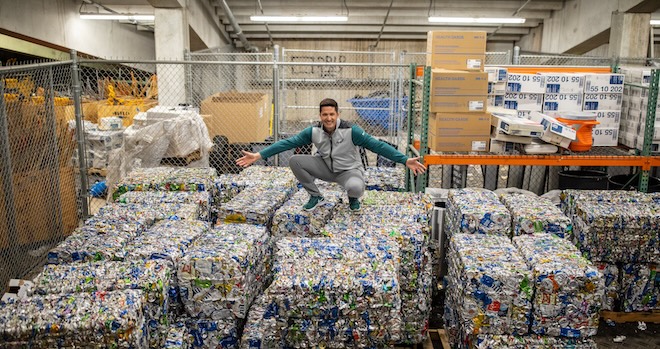
Vossschulte says they want to be thoughtful before they make any changes. The Eagles have a robust recycling program — 75 workers rip open every one of the Linc’s hundreds of garbage bags on game-day to hand separate out recyclables — and he and his bosses want to consider the impact of water usage for washing the dishes and the environmental effects of hauling dishware from wash centers to the stadiums and back again for every game.
“We really like to ask the right questions,” Vossschulte says. “We are certainly researching and looking into it.”
It’s great when a team takes the lead, but cities and states can take action, too. New York City now requires stadiums to divert waste into compost. Other cities have offered venues tax breaks for implementing waste diversion and recycling programs.
Circular Philadelphia’s Lawton believes policy change is key. “Every business and organization has some set of competing priorities. When they have a requirement that they have to meet, it can obviously elevate a particular priority or goal,” she says.
There’s an opportunity here, too, when it comes to legacy building. That’s part of why Quarrell wanted her cups at the Super Bowl — to leave a mark on the nation’s marquee sporting event.
Legacy. Now that’s a word being thrown around in Philly lately, as locals and planners wonder what will be left after the city’s celebration of the country’s 250th,. Since it’s too late for us to build a new world-class museum or debut a host of life-changing domestic inventions, we could, at least, do something to mitigate the footprint we’ll be making with nightly fireworks and endless promotional materials. We are one of the cities where Earth Day got its start, after all.
“The intersection of sustainability and athletics, in particular professional athletics, is really, really powerful,” Quarrell says. “This is a movement that’s really accelerating right now, and people are excited about it, and the future is really bright.”
 MORE SUSTAINABLE SOLUTIONS