

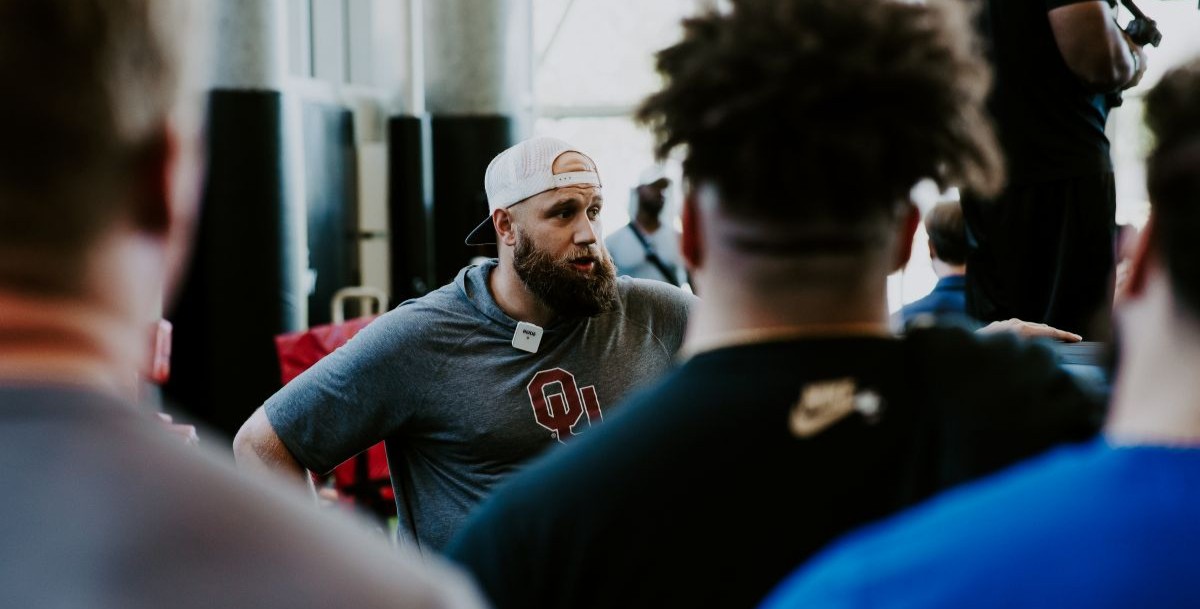


Hey y’all, and happy bye week. I wanted to take this time as we’re nearly halfway through the season to reflect on something incredible happening in our community. I’ve written a lot about the youth mental health crisis, and the struggles parents often face to find their kids the care they need. But right in the heart of West Philly, our very own Children’s Hospital of Philadelphia (CHOP) has been serving kids in crisis 24 hours a day, 7 days a week, from their state-of-the-art Behavioral Health and Crisis Center.
Listen to the audio edition here:
CHOP opened the doors to the Center, at 54th and Cedar Avenue, in February 2024 to meet the needs of kids in crisis — those having psychotic or manic episodes or dealing with suicidal ideation — and the families who want to get them help. They recognized a real problem in Philadelphia — not only were there too few resources for kids experiencing mental health crises, but the emergency room is not as well-suited to treat mental health as it is to treat physical health. And in the less than two years since they’ve been around, explains Dominic Adams, the Senior Director of Operations of Behavioral Health Services at CHOP, they’ve treated 3,500 patients in their walk-in crisis area, and had close to 900 admissions to their in-patient unit.
Part of what I really admire about CHOP’s entire approach to mental health is how they emphasize that it’s an issue that affects all of us — and there’s no shame in that. “Mental health is health,” Dr. Catharyn A. Turner II, Medical Director of Acute Inpatient Psychiatry and attending psychiatrist at CHOP, says. I love that attitude.
“I think one of the things that people sometimes confuse is mental illness and mental health — those are not the same thing,” Turner says. “Everyone experiences mental health, and it’s on a continuum that goes from struggling to flourishing. When we talk about mental health, we often focus on the mental illness side — but those two things are not the same. And it’s really important to understand that everyone has mental health, and some people have mental illness.” Most importantly, she says, “We have evidenced-based treatments for pretty much everything that might be a struggle for someone with a mental illness issue.”
At the BHCC, kids and their parents can expect to get more than just a referral to another resource: They will be evaluated by a mental health professional, and families will receive education and advice. While the goal is to try to keep kids in their regular routines and environments, the BHCC is equipped to admit patients if necessary, with families weighing in at all times on treatment plans, and CHOP working across specialties to get children additional care they may need beyond their mental health. So if a kid comes in and it turns out his labs reveal he’s low in, say, iron or vitamin D, the BHCC will start them on treatment for that as well.
“The BHCC is meeting two fundamental needs,” Dr. Turner says. “It provides ICU-level care, that acute inpatient care for kids who are suicidal, or acutely psychotic, or manic and are not able to stay safe in the community — and it combines that with family-based care, which is how we do everything at CHOP.” So it isn’t just a kid being hospitalized; their family also gets educated, the family gets to know what’s going on, the family makes decisions about their child’s treatment with the team.
Part of what I really admire about CHOP’s entire approach to mental health is how they emphasize that it’s an issue that affects all of us — and there’s no shame in that.
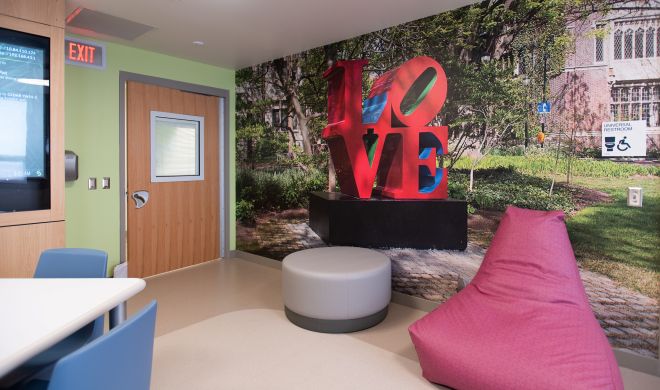
Kids and families can literally walk in, drive in, take public transportation — the BHCC is that accessible. It’s also not intimidating. The decor is new, clean, bright — that CHOP signature look. Security guards wear polo shirts and khakis, not police-looking gear. Kids can expect to have a mental health evaluator sit and talk with them about issues. Someone will talk with them not only about what the psychiatric or behavioral health issue is, but how is the family doing overall? Are they able to meet their basic needs? If not, CHOP will help families find community partners to meet their needs not only from a mental health standpoint but from the bigger-picture health standpoint. They can help families sign up for health insurance, or find resources that are free or don’t require insurance. They come up with return-to-home plans. They think of the big picture, and the little details: If a family comes in and doesn’t wrap up until 3am, CHOP will help them find a safe way home.
Knowing that I’m coming from the sports world, Dr. Turner drove home the importance of taking care of our mental health like this. “Not paying attention to your mental health means that you’re not paying attention to your whole body,” she says. “Think about an athlete. An athlete who’s completely healthy is much less likely to be injured; an athlete with any illness is much more likely to get injured. Just like when you have a cold you’re more likely to get injured, the same goes if you’re depressed — you’re more likely to get injured. Our brain does not distinguish between mental health and health; our brain knows us as being healthy or not being healthy. An athlete who can do visualizations, can imagine themselves winning, can imagine themselves running in a touchdown or hitting that three-pointer — that’s all part of the ethos of sports.”
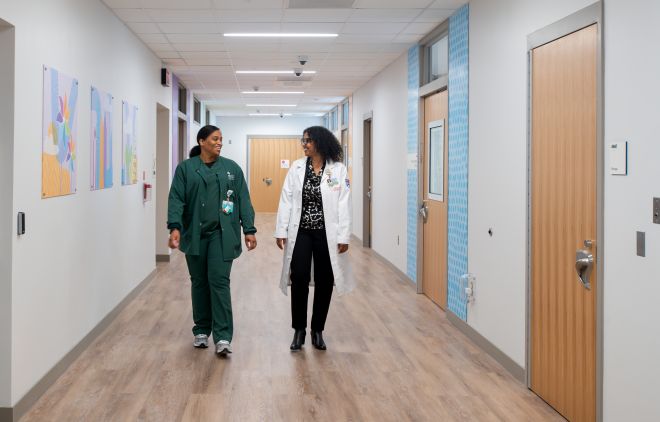
The other aspect of the BHCC I really related to: the collaboration that goes into it. “Teamwork is what we do. We literally couldn’t do this job without being a part of a team,” Dr. Turner says. “We are all working together to think about what kids need in order to be successful. All of us — nurses, behavioral health clinicians, psychiatrists, psychologists, licensed professional counselors, licensed social workers, teachers, art therapists, recreational therapists, psychopharmacologists.” I can relate to the power that comes from teamwork — and setting goals.
And CHOP emphasizes the latter, too. “We teach kids to value themselves through their own culture and identity lens, through a lens of agency, we help them build relationships, we help them find meaning,” Dr. Turner says. “Because a lot of times kids come to us, they feel hopeless. And we really encourage kids to have an aspirational goal. We want them to know that they have this huge team when they’re in the hospital and they’re gonna have a team when they leave the hospital too.”
Adams, on the operations team, says CHOP has worked hard to spread the news about the BHCC, working with the School District of Philadelphia and pounding the pavement in communities to get the word out. One day recently, the CHOP team was out in Malcolm X. Park handing out swag and spreading the word. One mom was in disbelief — she shared that her son was struggling, but any time she called the police for support, her son would just run away. “You mean to tell me you have a facility right there?” she said. “And so we helped that parent, we gave her directions, and we gave our team a heads-up that this parent was coming in and they were able to walk their kid to that facility that evening and get their kid evaluated,” Adams says.
I love that anecdote because it shows how when we all work together to help our kids, when we think about all of the things that shape them and their lives, we really can change their lives for good. So if your child is struggling, please don’t hesitate to head to 54th and Cedar to get them the care they — and you — deserve. Like a warm embrace, CHOP’s doors are always open for you.
 MORE FROM LANE JOHNSON’S SEASON OF STRONG MENTAL HEALTH