


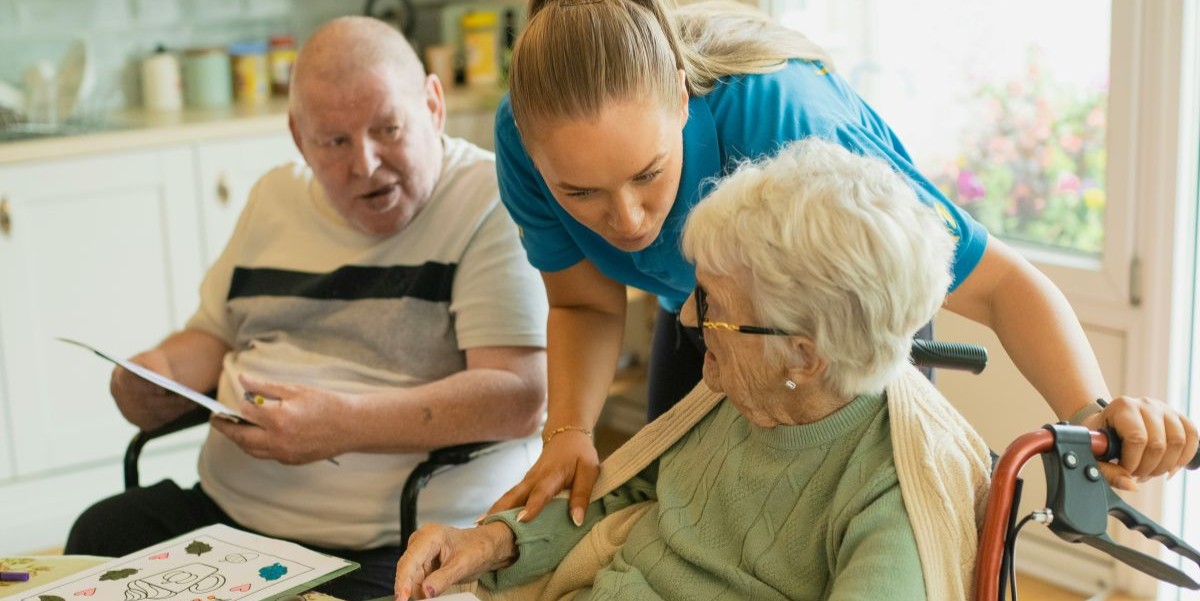


More than 400,000 Pennsylvanians, from seniors to children with complex medical needs, rely on in-home care every single day, which means their independence is not automatic. Their independence is only possible with support, and that support system is breaking.
Listen to the audio edition here:
Each month in PA, more than 112,500 in-home care shifts go unfilled. That means thousands of people are left without the care they need to live safely and independently. The problem is only getting worse.
At Liberty Resources, we recently made the painful decision to end our in-home care services through Liberty Home Choices across Philadelphia, Montgomery, Chester, and Delaware Counties. This was not a strategic decision. It was not something we wanted to do. It was something we could no longer sustain within the current system.
Our mission has always been clear: to provide quality care for those who need it, regardless of income or circumstance. But PA’s continued neglect of the in-home care system has brought us to a point where continuing to provide that care in this form is no longer possible.
The reason for this crisis is not complicated. PA pays in-home care workers far less than neighboring states. As a result, providers across the Commonwealth cannot hire and retain enough workers to meet growing demand.
In Southeastern PA, Medicaid reimbursement rates for home care are often too low to support livable wages along with required training, benefits, compliance, and scheduling, so workers leave.
The solution is as clear as the cause. Governor Shapiro and legislative leaders must increase reimbursement rates for in-home care providers in the state budget.
They leave for better paying opportunities, including jobs at places like Wawa or Sheetz, not because they lack commitment, but because the system does not value their work in a way that allows them to live. When workers leave, shifts go unfilled. When shifts go unfilled, consistency breaks down, and independence begins to disappear.
For many seniors and people with disabilities, independence is not possible without an in‑home caregiver to help with daily essentials like getting out of bed, preparing meals, managing medications, and getting to appointments.
Home and community-based services are part of the infrastructure that allows people to live where they choose. More than 75 percent of older adults say they want to remain in their homes and communities as they age, but without adequate support, people are often forced into nursing homes or hospitals, not because they want to be there, but because the system leaves them no other option.
The cost of that shift is not only personal; it is financial. Institutional care costs nearly double what it costs to receive care at home. As access to home care shrinks, pressure grows across the health care system and public budgets.
Stabilizing the system requires significant new investment in the state budget. Independent studies estimate that raising base wages to sustainable levels would cost more than $800 million. The cost is significant, but the cost of continued inaction is higher.
Institutional care costs nearly double what it costs to receive care at home
Liberty Resources remains strong. We continue to operate, serve, and advocate as Philadelphia’s center for independent living. Our commitment to independence, access, and equity has not changed. But because of the Commonwealth’s continued inaction in the face of rising costs, providing in-home care under the current structure is no longer possible for us.
We are not alone. Providers across rural, suburban, and urban communities are facing the same impossible decisions in a system that does not reflect the true cost of care.
The solution is as clear as the cause. Governor Shapiro and legislative leaders must increase reimbursement rates for in-home care providers in the state budget. Local Democratic leaders, including Speaker Joanna McClinton and House Appropriations Chairman Jordan Harris, have been advocating for increased funding, and several Republican legislators are also speaking up. Advocacy must now turn into action.
Addressing this crisis will require real investment. We understand the gap cannot be closed in a single year, but continued inaction is already costing the Commonwealth far more.
This is not just a workforce issue. It is about whether people can remain in their homes. It is about whether independence is protected or taken away. Right now, too many Pennsylvanians are at risk of losing it.
Steven Mack is the Director of Communications and Development with Liberty Resources Inc., a nonprofit, consumer-driven organization that advocates and promotes independent living for persons with disabilities.
The Citizen welcomes guest commentary from community members who represent that it is their own work and their own opinion based on true facts that they know firsthand.
 MORE ON IMPROVING HEALTHCARE