



Malinda Bradley knows how important transportation is for helping people get (and keep) their jobs.
As the workforce development services coordinator for Goodwill Industries of Michiana, which serves Northern Indiana, Southwest Michigan and parts of Chicago, Bradley has helped job seekers who face barriers to employment complete 90-day job training programs in a variety of fields.
But for years, there was a barrier to the training (and, later, employment) itself: Many participants lacked access to reliable transit.
That all changed in 2021. Goodwill Industries of Michiana partnered with Commuters Trust, a public-private partnership run by the City of South Bend, Indiana that subsidizes bus passes and rideshare rides to residents to help them get to work and access essential services.
“They’re struggling. They’re not making a lot of money,” Bradley says. “That’s one less stress that they have to worry about. That’s $30 a month that they don’t have to worry about.” Since launching in 2018, the program has subsidized more than 200,000 rides. It’s been a game changer for nearly 1,000 people, who have used the program to pick up more shifts, reliably transport them to necessary medical appointments and more.
South Bend is obviously far smaller than Philadelphia; it also has a less robust public transit system. But as we learned the hard way this year, our public transit system is precarious, with an ongoing $240 million deficit. The 22 days of SEPTA cuts in August and September were filled with overcrowded buses and trains, panic over eliminated routes, students arriving late to school at a rate of 63 percent, and 54 percent absenteeism. The cuts also hit hard the 40 percent of working Philadelphians who head to jobs outside of the city.
Earlier this month, the transit agency tapped into PennDOT funds to keep its trains, buses, subways and trolleys running for two years. But there’s no clear plan for 2027 onward, and we must prepare for another doomsday scenario. Could a public-private partnership to make other forms of transportation more affordable like in South Bend be the answer for Philadelphia, too?
How does Commuters Trust work?
South Bend launched Commuters Trust in 2018 to help residents, especially those living in poverty, who were struggling to find reliable, affordable transportation options. With fewer than 104,000 residents, South Bend’s public transportation system was small, serving only about 5,000 people daily.
More than 83 percent of residents in St. Joseph’s County, where South Bend is located, commute to work using cars, which can be expensive not just to purchase, but to maintain. The costs of fuel, insurance and vehicle maintenance means the average American car owner spends $1,025 per month on their vehicle, per data from AAA. One third of low-income residents in South Bend cited reliable transportation as their primary hurdle to securing employment.
“When you’re addressing poverty, people will tend to talk about housing insecurity. They’ll talk about food insecurity, but if individuals do not have access to transportation, they can’t get to their jobs, they can’t get to where they need to go,” says Lynn Wetzel, a transportation program manager who works on the Commuters Trust program in South Bend’s Department of Innovation and Technology.
The 22 days of SEPTA cuts in August and September were filled with overcrowded buses and trains, panic over eliminated routes, students arriving late to school at a rate of 63 percent, and 54 percent absenteeism.
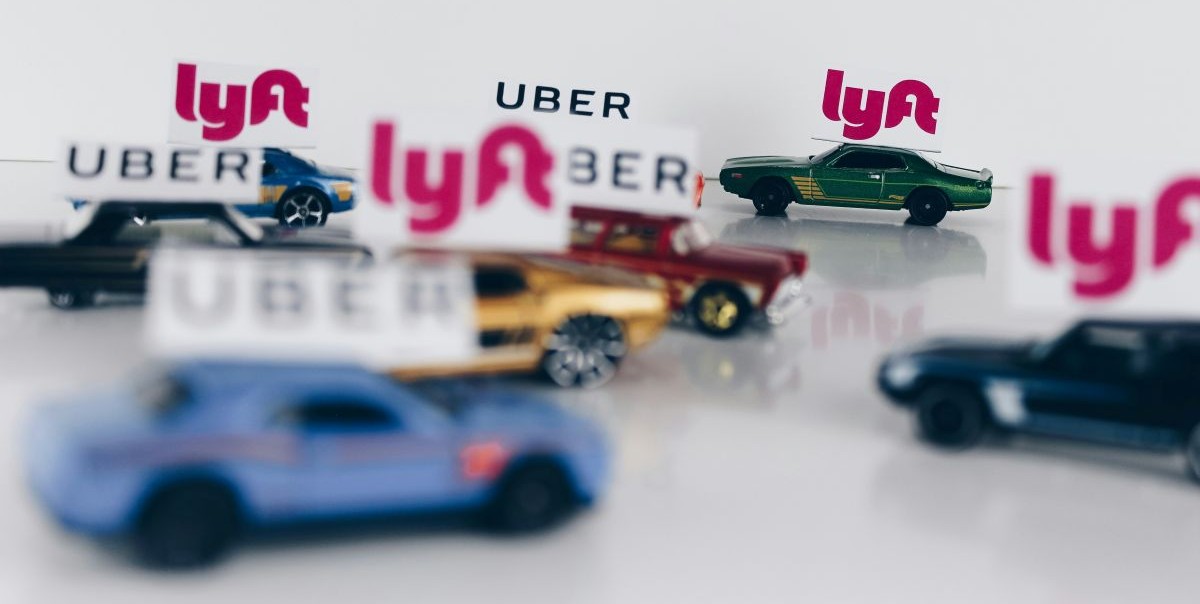
It would take years — and millions — to build out additional public transit infrastructure, but Uber and Lyft were already up and running. In 2018, South Bend applied for and won $1 million from the Bloomberg Mayor’s Challenge to develop the program. By 2019, they’d worked with South Bend Code Works to develop a web-based application and partnered with local employers, including the University of Notre Dame, to launch a pilot transportation-as-benefit program. During the four month pilot, 235 people signed up and took more than 3,200 rides.
Today, they have 12 employer partners and 10 nonprofit partners, including Notre Dame University, a major employer whose workers help spread the word about the program.
Commuters Trust offers South Bend employers who enroll two means of low-cost transportation for their employees and trainees: free Transpo passes (for the city’s bus system) through a mobile ticketing system, and free or flat fare (up to $5) Uber or Lyft rides to and from work or workforce training programs.
In 2021, the city expanded the program to local nonprofits with $180,000 from United Way of St. Joseph County (where South Bend is located) and $60,000 of the Bloomberg funds. “We realized that not only do people need discounted rides to get to and from work, but there are also people that are training that actually need access to subsidized transportation as well,” Wetzel says. Some local nonprofits offer job training programs; others offer medical and other essential services for low-income residents.
Since launching, Commuters Trust participants report a 59 percent reduction in travel-related stress and an average of $60 per month in savings, according to Wetzel. (That might not seem like much, but imagine how much an additional $60 per month could help with managing inflation-related price increases at the grocery store.)
Ninety percent of nonprofit partners say the program has improved access to healthcare and employment opportunities for the people they serve. Wetzel has seen the program help folks get to chemo treatments and pick up extra shifts at work. Some participants have used the funds they’ve saved to purchase their own vehicles.
Another benefit is more emotional. “They have their dignity and their ability to move around as they please without constantly asking family and friends for rides,” she says.
Creating a playbook for other cities
In the Philadelphia area, 24 percent of workers use SEPTA for their commutes. About 21,0000 students do the same. When the SEPTA cuts were active, outsiders looking in suggested alternatives: Book a rideshare. Hail a taxi. Carpool. Borrow a neighbor’s car. Rent a car. Buy a car. Work from home. Such remedies largely ignore the burdens of cost and time such options put on residents; there is, it turns out, no substitute for SEPTA. That said, we would be remiss to not get ready for the next inevitable funding crisis.
We’re dodging cuts for now, but Governor Josh Shapiro has given up hope for a long-term funding solution — at least during this contentious budgetary cycle, which is already three months late. Democrats and Republicans can’t agree on how much we should spend, let alone on what. Shapiro has told SEPTA no deal and instructed the agency to submit a one-time request to PennDOT for capital funds to keep the trains running for another two years. (Though, we should take “one time” with a grain of salt: Shapiro diverted $153 million in federal highway funding to SEPTA last year to avoid a budget crisis.)
Republican lawmakers remain loath to find a long-term solution. They’ll likely continue to resist Shapiro’s attempts, or — if they manage to take back the governor’s office in 2026 — table the issue entirely.
“When you’re addressing poverty, people will tend to talk about housing insecurity. They’ll talk about food insecurity, but if individuals do not have access to transportation, they can’t get to their jobs, they can’t get to where they need to go.” — Lynn Wetzel, a South Bend transportation program manager
Philly already has taken a step towards sharing the commuting costs with workers: SEPTA’s Key Advantage program partners with employers like Penn, Wawa and the City, who get an 80 percent discount on fares, which they then pass on to their workers for free commutes. An estimated 69,000 employees are eligible. (To keep the program going, more employers need to sign up).
But that doesn’t apply to every worker in the city, and it doesn’t help those who must drive to work because their offices are not near regular public transit. That’s where a public-private partnership for rideshares can come in. It’s not like it’s that costly: South Bend estimates cities of any size need about $350,000 to get it started. That’s a much bigger deal to somewhere like South Bend (2025 budget: $423,414,212), than Philly which has a $6.8 billion budget for next year.
“When you think about transit planning, I think it is really difficult to fill those transportation gaps within a short period of time, and also a relatively small budget,” Wetzel says.
South Bend has created a playbook to help other cities design and implement programs similar to Commuters Trust. It details how to assess a community’s transit needs, walks through how they identified partners and funding sources and laid out their implementation challenges. It also makes recommendations on how to set up a cost share model where the city and employers split the costs of the benefit, something they have used with the program.
“This could be for cities. This could also be for hospital systems or universities, who are thinking about starting something similar,” Wetzel says.
The playbook is free. Anyone can go online and download it. Maybe, before SEPTA’s next budgetary death spiral, City Hall (and Harrisburg) should at least take a look?
 MORE ON SEPTA FROM THE CITIZEN