



As we continue to celebrate the nation’s 250th anniversary, Philadelphia’s civic institutions are working together to share one of our city’s most important contributions to the American experiment: a vision of civic life built around freedom of conscience.
We believe this collaboration is itself an important part of the anniversary’s legacy. Freedom of conscience is protected by Constitutional guarantees, but a culture of freedom also depends upon institutions that cultivate understanding, build relationships across differences, and help each generation recognize its responsibilities to the next.
Philadelphia has an extraordinary institutional inheritance to draw upon in this work.
Long before the Declaration of Independence and Constitution were written here, William Penn envisioned Pennsylvania as a place where people of different religious traditions could live together under a common civic order.
Penn did not invent freedom of conscience. The principle had a long history in religious and political thought, and Quakers had experienced firsthand the consequences of religious persecution. Pennsylvania’s distinctive contribution was an ambitious, if imperfect, effort to organize a political community around greater religious toleration and liberty of conscience.
Pennsylvania’s protections attracted people of different religious traditions, while the colony’s institutions helped give practical expression to those ideals. Religious freedom nevertheless coexisted with exclusion, slavery, and the displacement of Indigenous peoples. The distance between principle and practice was considerable.
Yet the Commonwealth’s experience helped shape the broader American constitutional commitment to religious liberty. Our city’s institutions have a particular responsibility to preserve that history, examine its contradictions, and share its continuing relevance with Americans of all backgrounds.
Throughout 2026, the National Constitution Center, Drexel University, Interfaith Philadelphia, and other civic, cultural, educational, and faith institutions have worked to make freedom of conscience a defining theme of Philadelphia’s anniversary celebrations.
One of the most visible expressions of that commitment came on July 3, when the National Constitution Center awarded the Liberty Medal to His Holiness Pope Leo XIV in recognition of his lifelong work promoting religious liberty and freedom of conscience and expression.
Working with Interfaith Philadelphia, the Center brought together religious leaders from across the city, representing different faith traditions, alongside Mayor Cherelle Parker and Governor Josh Shapiro. As Pope Leo addressed the gathering live from the Vatican, Philadelphia became the setting for a national and global interfaith moment.
As the world looked toward our city for America’s 250th, Philadelphia’s religious and civic leaders stood together in celebration of a principle rooted in our founding history: People of different faiths and convictions can remain fully themselves while sharing a common civic life.
That commitment extends well beyond a single event.
Through Religious Freedom: Then & Now, Interfaith Philadelphia is working with historic congregations throughout the year to explore the city’s religious heritage and the practice of religious pluralism today. Lectures, dialogues, workshops, a Religious Freedom Walk, and a Passport to Understanding invite Philadelphians and visitors to encounter different religious traditions and deepen their understanding of their neighbors.
As America’s 250th anniversary continues, Philadelphia should measure its success not simply by how well we commemorate the past, but by what we strengthen for the future.
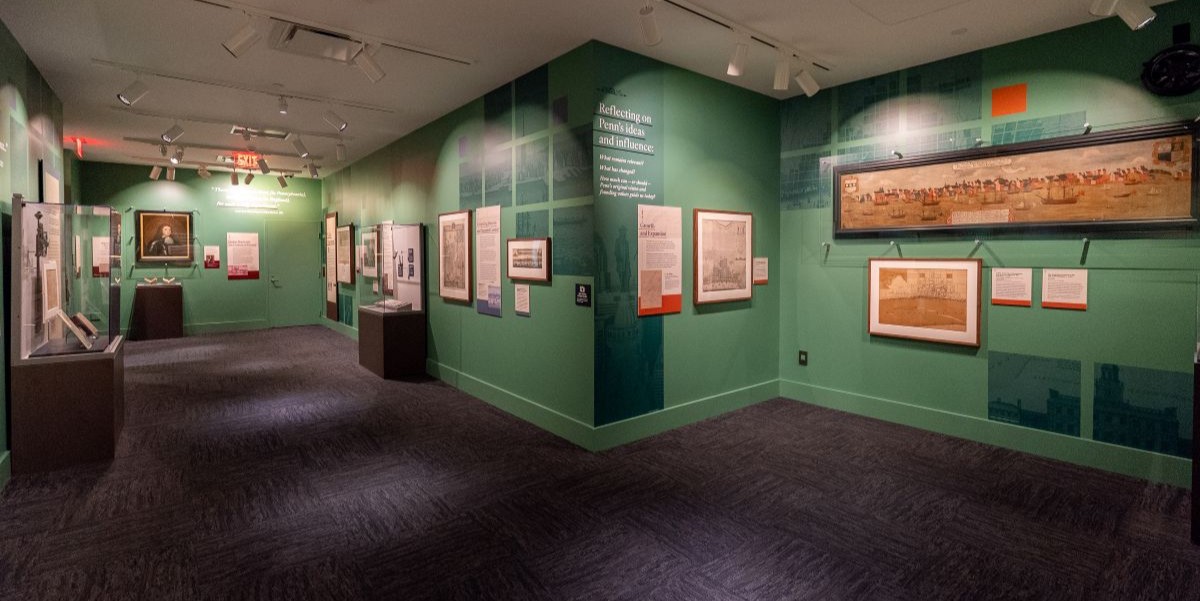
This fall, the National Constitution Center and Drexel University carry that story forward through Pennsylvania’s Founding: How a City and a Colony Shaped America’s Civic DNA, opening September 30.
Developed in partnership with Drexel and curated by its Lenfest Center for Cultural Partnerships and Atwater Kent Collection, the exhibition brings together rare documents and artifacts from local institutions including the American Philosophical Society, Library Company of Philadelphia, Haverford College, Philadelphia Museum of Art, and City Archives.
Initiated by local funders and supported by the William Penn Foundation, Poor Richard’s Charitable Trust, Connelly Foundation, and Syde Hurdus Foundation, it brings together Philadelphia’s scholarship, collections, philanthropic leadership, and the Center’s national platform to share an essential chapter of the American constitutional story.
For both of us, working together on this exhibition has reinforced something we believe deeply about Philadelphia: Our city’s civic history is a shared inheritance, and our institutions have a shared responsibility to make it accessible and meaningful to the public.
The Center connects Americans of all ages to our Constitutional history through education, scholarship, and dialogue. Drexel and our collecting institutions preserve and interpret the historical record. Interfaith Philadelphia cultivates relationships across religious traditions. Our philanthropic partners help make these public experiences possible.
Each institution contributes something distinctive. Together, we can do something none of us could accomplish alone.
In December, we will gather again at the National Constitution Center with Interfaith Philadelphia and partners from across the city to celebrate this work and consider what Philadelphia’s legacy of religious freedom asks of us today.
As America’s 250th anniversary continues, Philadelphia should measure its success not simply by how well we commemorate the past, but by what we strengthen for the future.
Freedom of conscience is part of our city’s civic inheritance. But inheritance creates responsibility. Civic DNA may be inherited; civic culture must be renewed.
That is the work Philadelphia’s institutions have undertaken together in 2026. And it is work that must continue long after the anniversary is over.
Vince Stango is Interim President & CEO of the National Constitution Center.
Rosalind Remer, PhD is the Senior Vice Provost for Libraries, Collections & Archives at Drexel University and the Founding Director of the Lenfest Center for Cultural Partnerships.
The Citizen welcomes guest commentary from community members who represent that it is their own work and their own opinion based on true facts that they know firsthand.
 MORE SEMIQUINCENTENNIAL EVENTS