

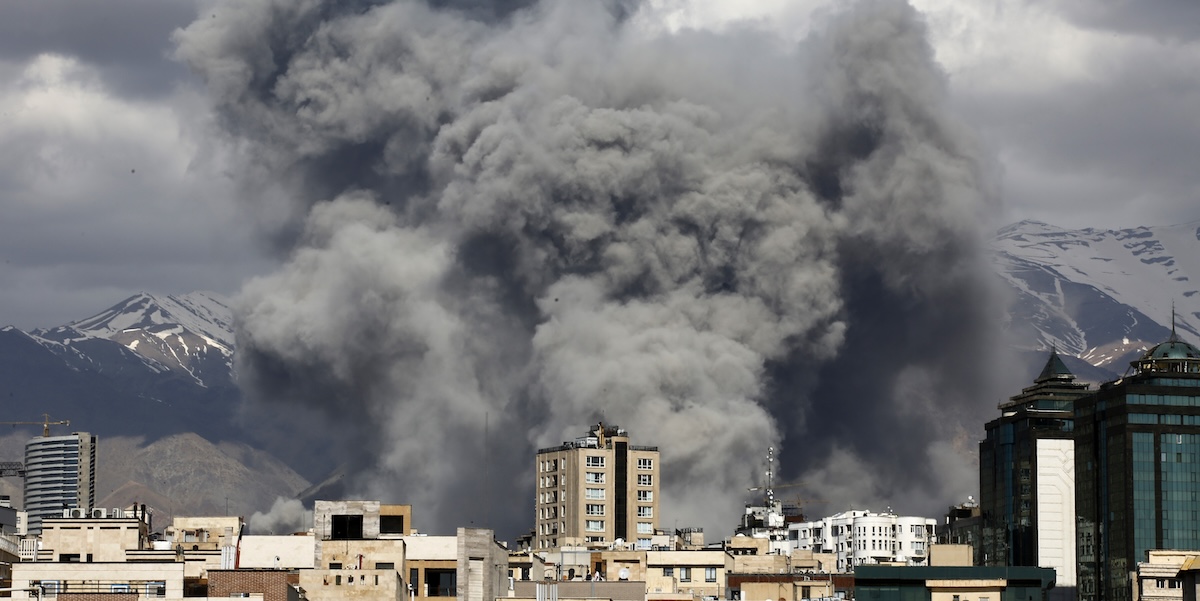


After spending a portion of my college years in the early 2000s protesting the Iraq War, I find it deeply infuriating to watch our country marching into another war in the Middle East. Since college, I spent the better part of two decades building a career in sustainability and the circular economy, convinced that smarter systems were the arc of history that would replace artificial scarcity with sustainable abundance. And yet here we are again with another war in the Middle East, another geopolitical scramble over oil and power, while at the same time, the very policies that claim to strengthen America are plunging our nation and the world into an economic crisis born of political incompetence.
A transition that needs steady ground
The circular economy and the green energy transition are, by nature, long-game projects. We are in what practitioners call the “middle transition” where we are making strides to evolve past the old extractive model, but have not yet arrived at a fully regenerative one. But we are moving. Renewable energy is scaling. Reuse and refurbishment are gaining traction. Businesses like mine are providing the technology to exhibit that circularity can be scalable, profitable and practical. But progress of this kind is fragile when the political and economic environment swings wildly around it.
Tariffs, trade wars, and armed conflicts don’t just create economic disruption in the short-term. They also actively destabilize the conditions under which innovative systems like the circular economy can mature. A circular economy requires us to look at all the world’s resources collectively, acknowledging that no single country has everything it needs. It requires supply chains that can plan years ahead and investment environments that reward long-term innovation rather than short-term speculation. War and economic isolationism corrode all of this, simultaneously.
The scarcity myth that fuels conflict
What frustrates me the most about these recurring conflicts, after the devastating humanitarian toll, is that they are driven by a “scarcity thinking” mindset. For decades, politicians, and the economic interests aligned behind them, have convinced the public that there isn’t enough to go around — that we must fight over oil, minerals, and land because the alternative is deprivation. This fear is a powerful tool for those who hold the majority of the wealth and wish to maintain it for as long as possible.
A circular economy is, in the most fundamental sense, an argument against scarcity thinking. Its entire premise is that by using resources in the smartest way possible — recollecting, refurbishing, and remanufacturing — we can ensure they continue to be available. This creates a sense of peacefulness through greater resilience in communities and better reliance between countries. It gets us out of the bunker and back into the marketplace. The tragedy of the current administration’s zero-sum approach to trade and the broader political move toward war is that it reinforces the very scarcity that circularity seeks to solve.
What war costs the transition
We can’t think of geopolitical instability as a foreign policy issue removed from the work of building local, sustainable businesses because the costs are concrete and close. When consumers stop spending because of economic uncertainty, we feel it on our monthly P&Ls. When investor confidence collapses in the face of global uncertainty, the startups developing the next generation of circular systems lose their access to capital. When trade routes are disrupted, the materials that circular manufacturers depend upon — recycled feedstocks, refurbished components, secondhand goods moving through local and global resale channels — become unreliable or expensive.
I think about the innovators out there right now who are building the companies that could transform how we produce and consume. I also think of the entrepreneurs developing remanufacturing systems for industrial equipment, the engineers designing closed-loop supply chains for durable goods and the specialized recyclers processing materials that most cities still can’t handle. Every year of economic and geopolitical chaos is a year of delayed investment, deferred infrastructure, and lost momentum.
There is also a more direct connection. The green energy transition that utilizes solar panels, wind turbines, electric vehicles, battery storage, etc. depends on minerals and materials distributed unevenly around the globe. Precious metals like lithium, cobalt, nickel, and rare earth elements are resources that no single nation controls. A world organized around cooperation and comparative advantage can build supply chains for these materials that are resilient and fair. A world organized around economic nationalism and military competition cannot. When we fight over oil, we don’t just delay the energy transition; we model exactly the wrong approach to managing the resource dependencies of the transition we actually need.
A truer capitalism, a better peace
There is a misconception that the circular economy is somehow anti-capitalist. But I think it may be the truest form of capitalism we have left. At its core, capitalism is built on the constant flow of capital through the market. It’s about the person who borrows capital to start a business, their employees who then have the money to buy products, and the continuous cycling of that money back into the economy. The circular economy simply applies this logic to physical resources and innovation as well and asks, “Why keep extracting and discarding when we could keep circulating?”
The circular economy, applied globally and managed cooperatively, is one of the most powerful arguments for peace that exists. Instead of the fragile peace of deterrence that screams, “don’t attack us or we’ll retaliate,” it creates a durable peace of mutual dependence and mutual prosperity. When countries are bound together by supply chains built on shared resources managed for the long term, the incentives shift. Cooperation becomes more valuable than conquest.
A call for cooperation
So yes, I am troubled by this Middle East war, as I was troubled way back in college during the last one and all the others around the world in between. Every bomb dropped in a resource conflict is a vote for scarcity thinking. Every tariff imposed out of nationalist fear is a disruption to the cooperative infrastructure that sustainability depends on. Every year we spend managing geopolitical chaos is a year we are not spending accelerating the transition to a circular, renewable economy.
We need to keep doing the work of building circular businesses, advocating for smart policy, proving that reuse and refurbishment and renewable energy are not idealistic fantasies but practical, profitable realities. But we also need to push back, loudly and persistently, against the political and economic forces that keep us locked in scarcity thinking. That means protesting wars fought with the goal of taking another country’s resources. It means demanding trade policies built on mutual benefit rather than punitive competition. It means insisting that the “middle transition” we are in does not get derailed by the same old economic logic that made the transition necessary in the first place.
The circular economy is not just an environmental strategy. It is a peace strategy, an economic strategy, and a fundamentally optimistic argument that there is enough to go around if we are smart enough, and cooperative enough, to manage it well. That is the future worth fighting for. Not with weapons, but with the harder and more durable tools of policy, innovation, and mutual respect.
Nic Esposito is the co-founder of Circular Philadelphia and served as the City of Philadelphia’s Zero Waste and Litter Director from 2016-2020.
The Citizen welcomes guest commentary from community members who represent that it is their own work and their own opinion based on true facts that they know firsthand.
 MORE ON MOVING TO SUSTAINABILITY