





When it comes to the upcoming general election — November 4, although you can always vote early by mail! — Philadelphia voters may be aware of the more high-profile races, for District Attorney, for example. But this year’s general election also marks 10 years since we last elected five justices to our state appellate courts. This means, 2025 is a judicial retention election year.
Judicial retention is, in a most basic sense, putting judges currently on the PA Supreme Court, Superior Court and Commonwealth Court up for reelection. Only, it’s got a different name, because the judicial retention portion of your ballot is outwardly nonpartisan. More on that below.
What is judicial retention?
After serving a 10-year term, judges on the PA Supreme Court, Superior Court and Commonwealth Court — statewide roles, not county or city-based — must seek reelection through “retention elections.” Although a judicial retention election sounds a lot like a simple reelection, it is a bit different.
Candidates for seats on the PA Supreme, Superior Court or Commonwealth Court, initially run as members of political parties. Once elected, however, in an act of ostensible neutrality, if they want to stay on the bench beyond their first decade, they must shed their political affiliation and run as themselves, unlinked to a party. This makes judicial retention elections officially nonpartisan.
In the run-up to a judicial retention election, justices are prohibited from campaigning on how they would rule in future decisions. They can campaign only on their current record.
Also different: Voters vote “Yes” or “No” to retain justices to the PA Supreme, Superior and Commonwealth Courts. (For lower courts, voters’ only option is to check or not check a box next to the judge’s name.)
If the majority votes yes — which they almost always do — the judge stays on. But if they vote no, the governor appoints a temporary replacement that the PA State Senate must vote to approve. If the Senate approves the new judge, the judge serves until the next odd-numbered year, at which time an election is held to select a new (or the governor-appointed) judge to serve a 10-year term. If the Senate does not approve the governor’s choice, however, the seat remains vacant until the next odd-numbered year.
Judges on all three courts can, if retained, serve an unlimited amount of 10-year terms, but must retire when they turn 75.

SUPREME COURT OF PENNSYLVANIA
Seven justices serve on the Supreme Court of PA. Currently, five justices are Democrats, and two are Republicans. In 2025, three Democratic justices (and no Republican justices) are up for judicial retention. The Republican Party is eyeing PA’s general election as an opportunity to potentially flip the court.
If any of these three judges loses their retention election, Governor Josh Shapiro can appoint a temporary replacement. That replacement goest to the State Senate to seek two-thirds approval. Currently, the PA State Senate is Republican controlled. If all three justices lose their retention elections and the Senate approves none of Shapiro’s three nominees, the vacant seats will remain vacant. In this case, the Court will consist of two Democratic and two Republicans justices — an ideological stalemate. In that case, voters won’t be able to choose more PA Supreme Court justices until November 2027.
Observers have speculated that powerful Republicans like former Presidential advisor Elon Musk could throw money behind a campaign to get people to vote “No” on retention. Should this happen, it would be only the second time in PA history for a statewide judge to lose a retention election (really, the second, third and fourth times, since the first time a statewide justice received a “No” vote, it was just one judge.)
Here are the Supreme Court of PA judges up for judicial retention:
Christine Donohue
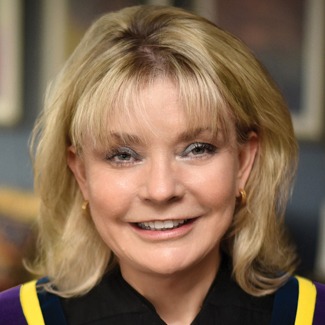
Justice Christine Donohue was elected to the Supreme Court in 2015, making this her first retention election. Donohue campaigned on ending bias against LGBTQ+ parents in custody matters, holding corporations accountable and protecting the rights of people who are injured. In 2020, Donohue upheld then-Governor Tom Wolf’s Covid shutdown orders and was part of the Court’s unanimous decision to uphold the results of the 2020 election.
Prior to the Supreme Court, she served on Superior Court from 2007 to 2015 and was an attorney in private practice.
Donohue has received endorsements from Emily’s List, PA Building & Construction Trades Council, PA AFL-CIO and a number of other unions. The PA Bar has praised her for treating litigants respectfully and being prepared and engaged during oral arguments.
PA Bar Association: Recommended for Retention
Christine Donohue’s campaign website, Facebook, Instagram, Bluesky, YouTube
Kevin M. Dougherty

When Justice Kevin M. Dougherty campaigned as a Democrat for the PA Supreme Court in 2015, he leaned on his record of advocating for treatment and rehabilitation (rather than detention) for at-risk youth as a judge on the Philadelphia County Court of Common Pleas. He was, however, quick to point out that he sent teenage leaders of flash mobs who violently attacked random citizens to juvenile detention facilities.
On the Supreme Court, Dougherty has worked on a behavioral health initiative, which reforms how state courts respond to people with mental health or substance abuse issues. He represented the Court on both the Statewide Dependency Court Improvement Program and the Autism and the Courts Initiative, which seeks to ensure the state’s judicial system better accommodates people on the Autism spectrum. He joined the two Republican justices on the court in ruling that mail-in ballots need to be dated, and requiring that is not a violation of the federal Civil Rights Act — a highly contentious issue in the state that previously split the court.
Dougherty is from South Philadelphia. His brother is convicted former labor leader John J. “Johnny Doc” Dougherty, who was the top fundraiser for his 2015 campaign.
PA Bar Association: Recommended for Retention
Kevin Dougherty’s campaign website, Facebook, Instagram
David Wecht
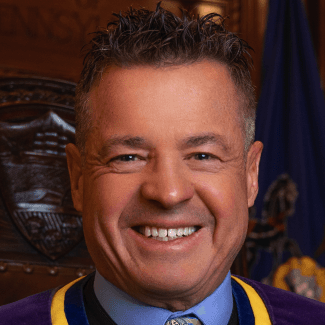
Like his ballot mates, Justice David Wecht was elected to the Court in 2015 as part of a Democratic sweep. During this campaign, Wecht is leaning on his record of preventing partisan gerrymandering, upholding Pennsylvanians’ constitutional right to a clean environment and protecting women’s access to abortions. He previously served as a judge on the Pennsylvania Superior Court and the Allegheny County Court of Common Pleas.
Wecht campaigned on improving judicial transparency in 2015. While on the Supreme Court, he authored the controversial decision overturning Bill Cosby’s conviction. In a 2024 case, he joined dissenting Republicans in arguing that provisional ballots should not be counted. He’s received endorsements from Nurses for America, the Fraternal Order of Police, IBEW and other unions.
PA Bar Association: Recommended for Retention
David Wecht’s campaign website, Facebook, Bluesky

SUPERIOR COURT OF PA
The 15-justice Superior Court of PA is one of the state’s two intermediate appellate courts (the other is Commonwealth Court, below) that hear cases before they can move to the PA Supreme Court. Primarily based in Harrisburg, the Court mostly hears appeals on criminal and civil cases in brief form — as opposed to oral arguments from the Commonwealth’s Courts of Common Pleas and also rules on matters involving children and families.
There is one Superior Court judge up for judicial retention this year.
Alice Beck Dubow
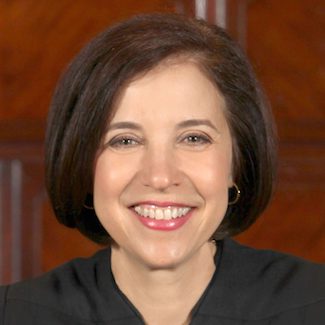
Judge Alice Beck Dubow was elected to the Superior Court as a Democrat in 2015 after eight years on Philadelphia’s Court of Common Pleas. Beck Dubow practiced law for more than 20 years and held roles as deputy general counsel for Drexel University and as Divisional Deputy City Solicitor. She clerked for Judge Edward G. Biester after Penn Law School.
In her time on the Court, Beck Dubow has ruled that a speeding driver who killed three people, including a two-year-old, while fleeing police should be resentenced to life in prison and that a former school policeman who sexually assaulted four students should also serve life in prison. She is married to Rob Beck Dubow, the City of Philadelphia’s finance director, and her mother, Phyllis Beck, was the first woman to serve on the Superior Court.
PA Bar Association: Recommended for Retention
Alice Beck Dubow’s campaign website
COMMONWEALTH COURT OF PA
Made up of nine justices, the Commonwealth Court is PA’s second intermediate appellate court. It hears cases on administrative and civil public law, including those on public sector legal questions and government regulation and cases involving statewide elections. Commonwealth Court has original jurisdiction over election cases and those where someone has filed a lawsuit against the Commonwealth — a rarity for appellate courts.
There is one Commonwealth Court judge up for judicial retention this year.
Michael H. Wojcik
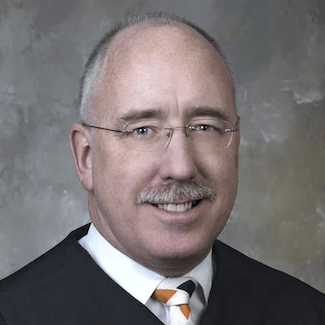
Judge Michael Wojcik was elected as a Democrat to the Commonwealth Court in 2015 after a law career in municipal, tax and assessment, election, civil rights and personal injury. He previously served as Allegheny County Solicitor and Solicitor to the Allegheny County Airport Authority.
In 2023, Wojcik disagreed that the Court had the jurisdiction to determine the constitutionality of the four articles of impeachment the state House approved against Philadelphia District Attorney Larry Krasner (who is up for reelection this year). The opinion marked a reversal of Wojcik’s previous opinion, when he joined four other justices who found the impeachment legally insufficient. The PA Supreme Court later tossed the case because it had improperly stretched across two legislative sessions.
PA Bar Association: Recommended for Retention
Michael Wojcik’s campaign website
 Every Voice, Every Vote funds Philadelphia media and community organizations to expand access to civic news and information. The coalition is led by The Lenfest Institute for Journalism. Lead support for Every Voice, Every Vote in 2024 and 2025 is provided by the William Penn Foundation with additional funding from The Lenfest Institute for Journalism, Comcast NBC Universal, The John S. and James L. Knight Foundation, Henry L. Kimelman Family Foundation, Judy and Peter Leone, Arctos Foundation, Wyncote Foundation, 25th Century Foundation, and Dolfinger-McMahon Foundation.
MORE ON VOTING IN PHILADELPHIA