



In 2022, York, Pennsylvania, weathered 22 homicides, a record number of slayings that gave the growing industrial city of 45,000 a higher homicide rate per capita than Philadelphia and Pittsburgh, the state’s biggest cities.
One particularly brazen incident shocked officials into action. On July 6, 2022, Shaheim Carr, 27, left a house near downtown York. Four men chased Carr into a breezeway and fired nearly 100 bullets. The shots killed Carr and sprayed gunfire into nearby buildings, including into the home of the mother of York’s City Council President Edquina Washington.
[This story was originally published by The Trace, a nonprofit newsroom covering gun violence in America. Sign up for its newsletters here.]
Among other incidents, the shooting prompted Washington to sponsor two gun-safety bills, despite pushback from gun rights supporters. One bill, approved last year, banned ghost guns, weapons that lack serial numbers. The other banned machine gun converters, including Glock switches, devices that modify handguns so that they can fire like fully automatic weapons. It was approved this September.
Before she pushed the two gun safety measures, Washington conferred with the Police Department and studied what was happening 100 miles east in Philadelphia. She learned that Philly had passed its own firearm restrictions. Now, York is among the handful of Pennsylvania jurisdictions that have been inspired by Philadelphia to ban ghost guns.
To Washington, the legislation felt urgent, in part because one shooting can affect many people in the tightly packed city. “Our community is very dense. You have house on top of house,” she said, recalling that Carr was shot near a church, corner stores, and a YMCA with a daycare.
Adam Garber, executive director of CeaseFirePA and a South Philadelphia resident, lauded Philly for influencing the passage of gun safety legislation beyond its borders. “I’m proud that Philadelphia is finding innovative ways to keep us all safe and that we can be a beacon to end this crisis across the commonwealth,” he said. “We often have more resources to explore these opportunities.”
“It sends a message to the residents of Philadelphia and York that their governments are sensitive to the violence that is occurring in their communities and they’re doing something about it.” — Larry Walthour, Shiloh Baptist Church
But the strategy of passing local laws to prevent gun violence is risky in Pennsylvania, a state with a preemption law, which gives it the sole authority to regulate firearms. Still, last February, the Commonwealth Court of Pennsylvania upheld Philadelphia’s ghost gun ban. Since then, the city of Reading enacted a ban, as did Pennsylvania’s capital, Harrisburg, and Delaware County, which also banned switches.
Now, though, local measures in York, Philadelphia, and elsewhere are subject to a lawsuit that’s before the state Supreme Court.
“I believe the safety and lives of our residents is way more important and worth the risk” of being sued, Washington said.
Statewide impact
The state Legislature’s inability to adopt gun reform laws opened the door for local lawmakers like those in Philadelphia and York to act on their own.
The most recent statewide failure came during sessions on September 30 and October 1, when the state House of Representatives voted down three gun safety bills while approving one. They approved a bill calling for background checks for the purchase of long guns, like rifles, sending it to the state Senate. But bills seeking to ban ghost guns and Glock switches were defeated by one vote; so was a measure seeking to allow courts to temporarily block gun possession by those deemed dangerous.
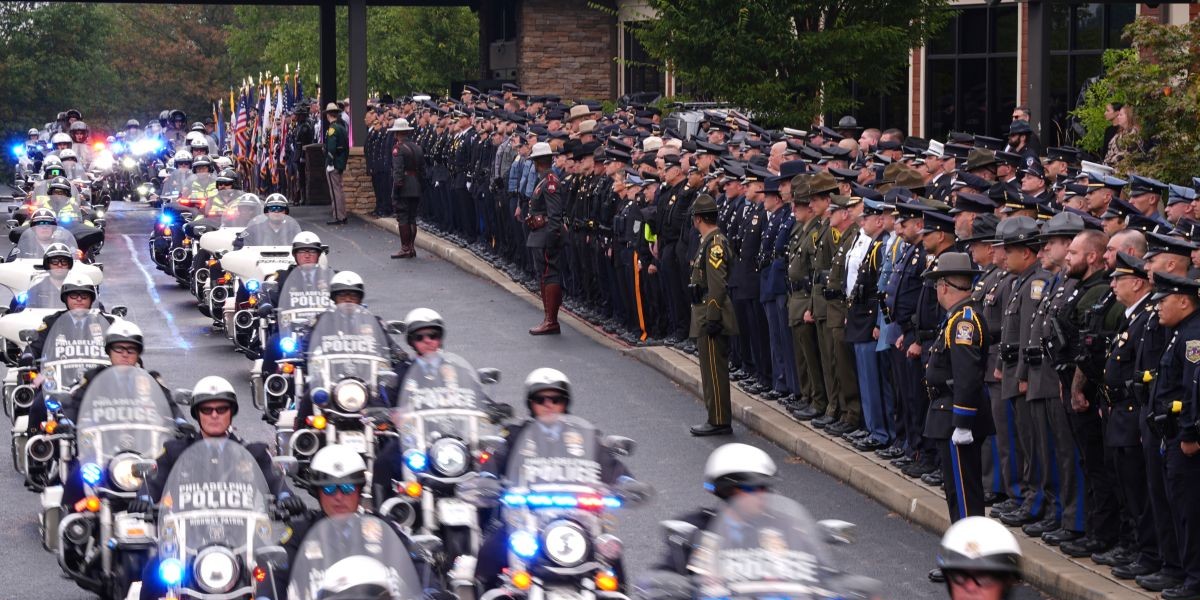
The bills, which also failed to win passage last year, came just two weeks after three police officers were fatally shot and two others were shot and critically wounded September 17 while trying to arrest a man in North Codorus Township, which is nine miles from York.
York is a politically blue, racially diverse city that has grappled with an elevated rate of gun violence for years. A 2021 York College study found that, compared to 19 similar-sized cities in 12 states, York had among the highest rates of gun violence incidents resulting in death between 2010 through 2018 — though like many other American cities, York is experiencing a decrease in gun violence. By 2024, there were five homicides.
“I’m not discounting anything they say with regard to safety. However, their policy change needs to come from Harrisburg.” — Craig Storrs, executive director of Pennsylvania Gun Rights
“I know several individuals, including family members of mine, who have been murdered by gun violence,” Washington told The Trace. “It is a problem, and it needs to stop. The safety and well-being of our community is one of my paramount things that I focus on.”
But those laws could fall like dominos if a lawsuit filed by Gun Owners of America, the Gun Owners Foundation, and others challenging their constitutionality succeeds.
Legal challenges to local gun laws
The suit, now awaiting oral arguments before the state Supreme Court, alleges that Philadelphia’s ghost gun ban violates the preemption law.
That law, which the state Supreme Court upheld as constitutional last year, states, “No county, municipality or township may in any manner regulate the lawful ownership, possession, transfer or transportation of firearms, ammunition or ammunition components when carried or transported for purposes not prohibited by the laws of this Commonwealth.”
Gun Owners of America, a national organization with two-and-a-half million members and supporters, opposes all regulations on gun ownership, said Val Finnell, the group’s Pennsylvania director.
“If we win that case, then that’s going to shut down all of these local ordinances that York has enacted, that Reading has enacted, and, of course, Philadelphia,” said Finnell. “Fundamentally, they just don’t have the authority to do this. They’re emboldened by what happened in Philadelphia. Now, everybody else is trying to follow.”
Finnell blames gun violence on people, not weapons. “We’re not for murder,” he said.
Craig Storrs, executive director of Pennsylvania Gun Rights, which is affiliated with the National Association for Gun Rights, echoed Finnell’s opposition to the nascent movement of local governments enacting gun laws.
“I get their rhetoric and where they’re coming from. I’m not discounting anything they say with regard to safety. However, their policy change needs to come from Harrisburg,” he said. “State law does not allow them the authority to ban anything in the world of firearms — not even accessories.”
Larry Walthour, senior pastor of Shiloh Baptist Church in York, works closely with the police departments in the city and in York County as a member of the Chiefs and Clergy Partnership. He said York’s decision to pursue its own laws is an act of diligence in pursuit of public safety — not an effort to defy state law.
“Philadelphia and York are trying to pass legislation that safeguards their people. If there’s a failure to enact on one level, then I think the local governments need to be proactive,” he said. “It sends a message to the residents of Philadelphia and York that their governments are sensitive to the violence that is occurring in their communities and they’re doing something about it.”
Mensah Dean is a staff writer at The Trace. Previously he was a staff writer on the Justice & Injustice team at The Philadelphia Inquirer, where he focused on gun violence, corruption and wrongdoing in the public and private sectors for five years. Mensah also covered criminal courts, public schools and city government for the Philadelphia Daily News, The Inquirer’s sister publication.
 MORE FROM THE TRACE