



We can all agree that few things are more important to a child’s growth and future success than attending a school that provides a nurturing environment and an excellent education. In the Great Northeast, we are fortunate to have excellent public and private schools. As a state Senator, I support educational opportunities of all kinds.
Catholic and private schools offer families high-quality educational options and serve as a critical part of our community. State scholarships offer a lifeline to families who could not otherwise afford to attend the school of their choice. These schools often provide smaller class sizes, strong academic standards, safe learning environments and a values-based education that many parents seek for their children. For thousands of families, scholarship assistance is the difference maker enabling kids to be in the school that’s the right fit for them.
Pennsylvania’s Educational Improvement Tax Credit (EITC) and Opportunity Scholarship Tax Credit (OSTC) are state tax credit programs that provide thousands of low- to middle-income students with access to Catholic, faith-based, and private schools. In fact, today over 100,000 Pennsylvania students in all 67 counties currently attend private and parochial schools because of tax credit scholarships.
There are 30 private schools serving more than 8,500 students in Northeast Philadelphia, according to Private School Review. These schools include Catholic, Christian, Episcopal, Jewish, and other independent institutions. Approximately 77 percent of those schools are religiously affiliated, with Catholic schools making up the largest share.
Most families receiving tax credit scholarships earn below the median income level for their respective counties, and the counties with the most low-achieving public schools have the highest number of scholarship recipients. The OSTC program specifically prioritizes students living within the geographic boundaries of the bottom 15 percent lowest-achieving public schools in the state, offering them a financial pathway to attend an out-of-district public school or a private school.
Last year, the Pennsylvania Senate expanded school choice options with an additional $50 million for this very successful program. The funding increased average scholarship amounts to $2,600 per student.
Recently, the Pennsylvania House of Representatives passed House Bill 2632 to cut credits for scholarship organizations, reducing funding for scholarships by $102 million over two years.
The bill would require onerous new regulations on every private school and require the Auditor General to conduct audits of private schools, but not public schools. It would also impose a 2 percent tax on scholarship organizations to fund government agencies.
In my district, Resurrection Regional Catholic School in Rhawnhurst and Christ the King School in the Morrell Park/Torresdale area offer tuition assistance through both the EITC and OSTC programs. Eligible families can receive scholarships funded by business contributions through organizations such as BLOCS and the Foundation for Catholic Education.
House Bill 2632 would take away scholarships from students in need, cutting this critical lifeline to families who can least afford it.
Just recently, Lansdale Catholic in Montgomery County said 173 students, or about 27 percent of its student body, currently receive tuition assistance through EITC and OSTC programs and could be affected if House Bill 2632 becomes law.
Demand for these scholarships is at an all-time high. In 2024, almost 70,000 students were turned away due to program caps in the EITC and OSTC programs, according to the Commonwealth Foundation, a free market think tank.
Expansion, not reduction, of these programs, and opting into new programs like the federal scholarship tax credit, are needed to serve the demand from students seeking access to an alternative school of their choice.
It’s time to expand these important programs, not cut them and give kids a chance to grow and learn in a school that best suits their needs.
Joe Picozzi is a Republican state Senator from Northeast Philadelphia’s 5th District.
The Citizen welcomes guest commentary from community members who represent that it is their own work and their own opinion based on true facts that they know firsthand.

MORE OPINIONS ON PHILADELPHIA SCHOOLS
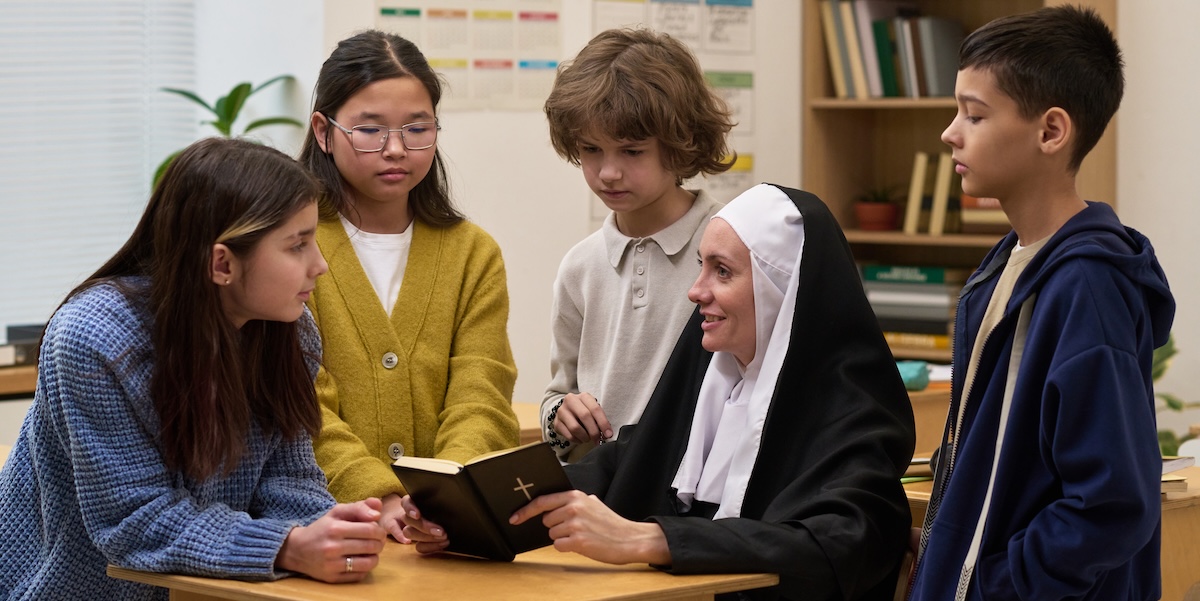
Caucasian nun sitting at desk showing Bible to group of diverse children and teenagers, including Asian girl and Caucasian boys, all listening attentively in classroom setting