

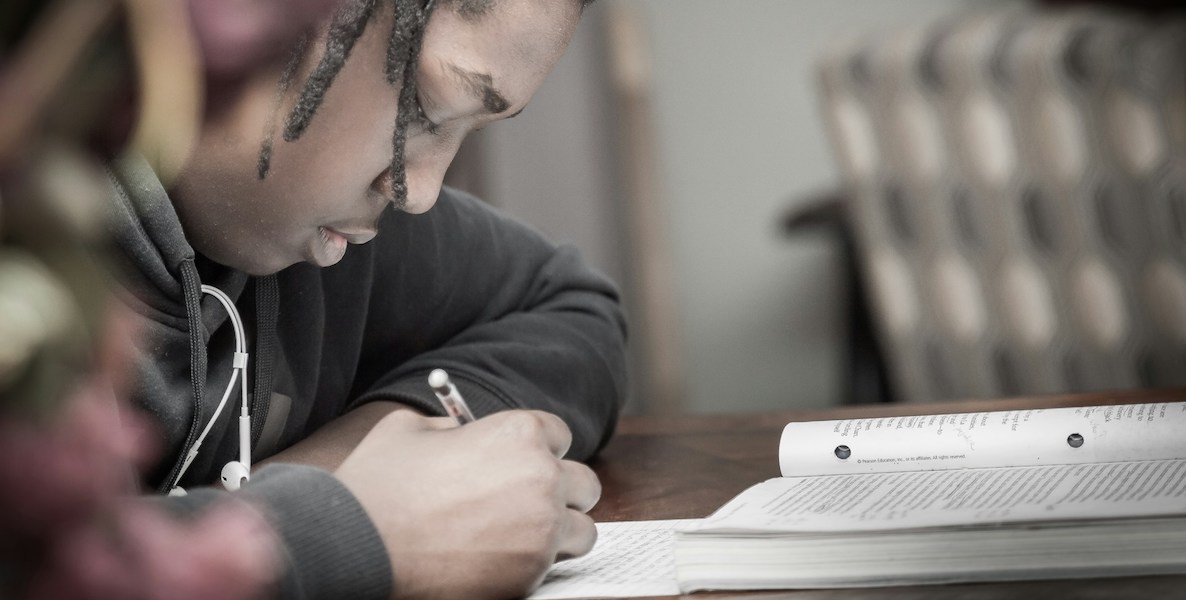


The Commonwealth of Pennsylvania seems to be bringing back cursive. In a near-unanimous vote, the state House passed a bill that would reintroduce cursive writing instruction in elementary school curricula. House Bill 17 is now in the Senate Appropriations Committee, where it appears to have bipartisan support and could become law as soon as September 8, when the legislature is back in session — which means cursive could return to PA classrooms by the fall of 2026. And it couldn’t come at a more critical time.
On the surface, the cursive comeback might seem like a nostalgic nod to a bygone era — a quaint revival of loopy loops and elegant script. But it is much more than that. The bill was introduced by Republican State Senator Dane Watro (Luzerne and Schuylkill Counties).
Listen to the audio edition here:
House Bill 17 represents a subtle but incisive reassertion of educational priorities. It is an important element in the Commonwealth’s struggle to advance literacy rates through a reclaiming of pedagogical practices grounded in research and humanity. According to data from 2024, nearly 40 percent of Pennsylvania students read below basic levels. In Philadelphia, this literacy rate challenge is educationally endemic. About “52 percent of Philadelphia’s adults are functionally illiterate.”
This is a national problem as well. Several of the most populous states (including California, New York, Florida, Texas, and New Jersey) are amongst the states with the lowest literacy rates in this nation. Our nationally low literacy rates have infected the spinal cord of the American body politic. And the evidence of our national ignorance is all around us.
The return to cursive writing is not just about penmanship. It’s about literacy. It’s about cognition. It’s about social justice and the capacity for civic engagement. And perhaps most importantly, it’s about the enduring value of human learning in an age increasingly dominated by machines.
Cursive’s connection to literacy
Literacy is a civil rights issue. Not metaphorically — literally. It may be the most under-acknowledged, least recognizable civil rights issue of our time. It is a basic, foundational capacity upon which all other educational outcomes depend. The ability to read and write is the gateway to civic participation, economic mobility, and personal agency. In a state like Pennsylvania, where literacy gaps remain stubbornly tied to race, class, and geography, any effort to deepen literacy instruction is an effort toward overall equity.
Research shows that learning cursive supports literacy development. A 2012 study detailed in the educational journal, Written Language & Literacy found that children who practiced cursive showed better spelling and syntax awareness than peers who learned only keyboarding or manuscript printing. Although “graphomotor” skills fell out of favor (and public education curricula in the 2010s), there were consistent contemporaneous studies suggesting that this was a critical mistake in the context of literacy education.
Literacy … may be the most under-acknowledged, least recognizable civil rights issue of our time.
These studies insist that cursive writing engages different parts of the brain than printing or typing — it improves memory and promotes a stronger grasp of language structure. Cursive isn’t just prettier handwriting; it’s a cognitive bridge that connects motor skills, visual processing, and literacy acquisition.
In an adjacent study, another group of scholars found similar results:
“We conclude that because of the benefits of sensory-motor integration due to the larger involvement of the senses as well as fine and precisely controlled hand movements when writing by hand and when drawing, it is vital to maintain both activities in a learning environment to facilitate and optimize learning” *
The aesthetics of cursive matter, too. Think of it as an analog form of design thinking. Steve Jobs famously credited a calligraphy class he took at Reed College for shaping Apple’s design philosophy. “If I had never dropped in on that single course in college,” Jobs said, “the Mac would have never had multiple typefaces or proportionally spaced fonts.” Cursive writing cultivates attention to beauty, form, and flow. These are not trivial attributes; they are central to how we learn, how we communicate, and how we create.
Reintroducing cursive is a vote of confidence in the value of form, process, and patience. It’s an invitation for children to slow down, connect hand to mind, and develop a deeper, more embodied relationship with language.
And then there’s the most urgent frame: the human versus the artificial.
In this moment of AI acceleration — where algorithms write emails, generate art, and even compose essays — the return to cursive is more than symbolic. It is strategic. It is a defense of the human. Handwriting is a physical act of cognition. No algorithm can replicate the subtle, sensory complexity of putting pen to paper, of tracing a thought in ink.
We are entering an era where human skills must be deliberately cultivated, not casually discarded. Teaching cursive may seem old-fashioned, but it is one of the few educational acts that preserves and promotes the irreplaceable aspects of human intelligence — motor coordination, memory, expression, and individuality. It is our handwriting, after all, that is most uniquely our own.
This is not Luddite resistance or simple nostalgia for the ways things have been done in history. AI can and should be integrated into education. But that integration must be principled. It must preserve the core human experiences of learning, reflection, and creativity. Bringing cursive back is a way of grounding our educational systems in the human competencies that no machine can mimic. Education in cursive handwriting is a collective signature of our humanity.
The battle for humanity has been underway for years now. It’s not waged in the imagined apocalypses of Hollywood, but in classrooms, libraries, and important policy decisions about the curricula that drive public education. It’s being fought in decisions about whether we prioritize handwriting or keystrokes, attention spans or screen time, critical thinking or content generation.
Cursive writing is a small but critical tool in the human cognitive toolkit. PA’s decision to restore it is not just sound pedagogy — it’s a cultural and political statement. A vote for cursive is a vote for the capacity of the human mind. For literacy. For design. For beauty. For equity. And for the stubborn insistence that human learning matters — now more than ever.
 MORE FROM JAMES PETERSON