

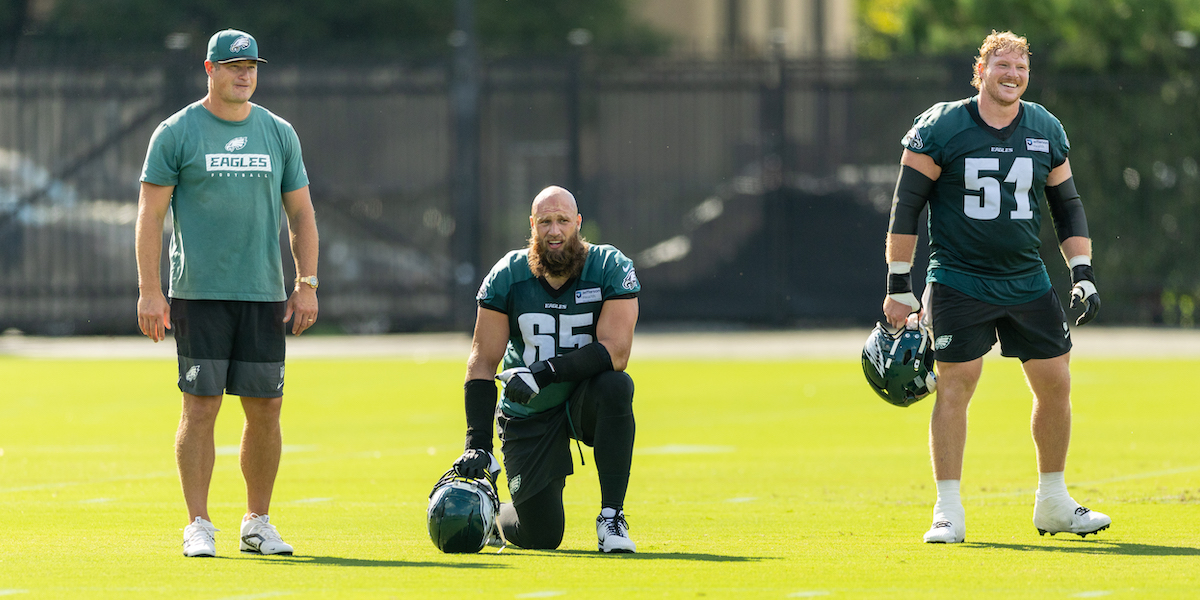


I’ve made no secret of the fact that in my personal and professional lives, teamwork is everything to me. It’s what helps win games on the field, and what helps keep me strong mentally outside of sports. That’s why, as we head to Tampa Bay this weekend to play the Bucs, I was excited to learn about a mental health initiative there called Tampa Bay Thrives. The whole idea behind TBT is teamwork; literally, the back of their volunteer t-shirts say: TOGETHER FOR A BETTER TOMORROW.
Coach Sirianni’s motto this year: “Contributions over credit.”
TBT is a nonprofit that started in 2019. The gist of it, as Carrie Zeisse, President and CEO of TBT explained it to my reporter friends at The Citizen, is that all the “stakeholders” — jargon that just means people who are affected — around Tampa’s mental health came together to figure out how to solve the problems they were facing: CEOs of all the Tampa area hospitals, corporate leaders, payors (health insurers), local government from the county and state level, national mental health leaders, school district leadership, public safety, community providers, professional sports, and university leaders.
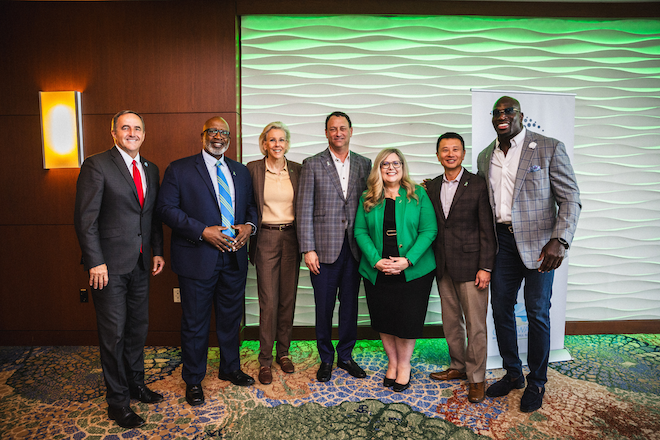
How Tampa Bay Thrives
The call to action, Zeisse explained, was in response to the Community Health Needs Assessment process, which is completed every three years; it kept showing an increased need for mental health support despite increasing investment in the area. Another analysis showed gaps in the number of providers in the Tampa area, which was leading to increased rates of inpatient and emergency room visits, and tragically showed local suicide rates far worse than the national and state average. “It was clear to these leaders that an additional mechanism for addressing mental health systemically would be needed,” Zeisse told The Citizen.
And this cross-sector group recognized that they could be more successful in solving things if they came together. They even put their money where their mouths were, creating a fund that would get this new nonprofit off the ground, with five years of financial runway to boot.
This being right before the pandemic, TBT got a crash course in how urgently people want and need mental health support — and how hard it is to get it. TBT dives deep into the data — and iterates accordingly. Those are two other parallels in sports I can relate to; as professional athletes, we’re always watching film, seeing what we did right and wrong and how we can get better, looking at stats to see where we can improve. And also like on a team, TBT doesn’t care about any one person getting credit — they’re just as happy to get a program started and let a better suited leader take it over. They just want to get the job done. That makes me think of Coach Sirianni’s motto this year: “Contributions over credit.”

A few examples of what this all looks like?
Teamwork, not competition
Early in the pandemic, TBT set up a “warmline” — like a hotline — to direct people to mental health services. Then, in 2022, when the country went live with its 988 crisis line? TBT recognized that their efforts would end up competing with 988’s resources and funding, so they moved their resources over to 988. The result is a more robust, more streamlined resource that helps more people.
Also in the pandemic, they set up a free, walk-in psychiatry clinic. To their surprise — it was totally underused. Seems counterintuitive, right? So they dug deeper. Turns out, the stigma against getting mental health support was even deeper than the need for care. So TBT launched a series of online and social media campaigns that educate people about the nitty gritty details of mental health and mental healthcare. What to expect when you go for your first session. How to break up with a therapist if it’s not a good fit. How therapy isn’t meant to last forever. What the different types of therapy even are!

Also, like everywhere else in the country, TBT recognized the urgent mental health needs of young people and teens. So they set up a pilot “Zen Den,” a wellness space in a school that offers students and teachers everything from dog and horse therapy to family counseling. And the results have been staggering! Attendance is up. Behavioral challenges are down. Most meaningfully, students are coming for help and getting it.
TBT also partnered with their closest public university, University of South Florida, to help build a pipeline for behavioral therapists — because our country’s mental health can’t improve if we don’t have enough people out there treating it. They work with the NHL’s Tampa Bay Lightning to do fundraisers and spread the word about how important strong mental health is. They have focused on outreach to men, who — as I know all too well — can be scared or stubborn about recognizing and addressing their mental health needs.
Better together
I see Tampa Bay Thrives as a sort of think tank for researching and testing creative ideas and even quicker refining of those ideas to make them as strong as possible. And in a city like Philly, with our “meds and eds” reputation, it seems like we have a lot of potential to team up to tackle mental health in a similar way. Because as TBT is the first to say, whether we’re trying to win games or improve our mental wellness, we all are truly better together.

LANE JOHNSON’S SEASON OF STRONG MENTAL HEALTH