




Yesterday, 47 million Americans were food insecure.
Today, they’ve been erased.
Not because we have solved hunger in America, but because this White House has made the choice to ignore it. To try to silence the 18 million households in the United States that were struggling to put food on the table.
This week, the White House and the USDA chose to end the measurement of hunger in America after more than three decades.
And just like that, a population of working-class Americans — larger than the entire population of Canada — has been silenced.
It seems, the White House’s logic goes: If you’re losing the game, just stop keeping score.
They have ample reason to hide. Families are struggling more than any time in recent memory. The White House’s latest budget cut dozens of core programs for working families, while the wealthy received yet another round of tax breaks. Food prices continue to rise while wages remain stagnant. Housing costs are pushing families to the brink. The safety nets that once caught struggling households are being shredded, one thread at a time.
So you have to ask yourself: If working-class families are “winning,” wouldn’t you want every metric available to demonstrate it? If poverty were falling, if hunger were shrinking, if wages were rising — wouldn’t our leaders be racing to highlight that progress?
Instead, the opposite is true. America’s working class is hurting. After several years of measurable gains in reducing poverty and food insecurity, the numbers are climbing.
To erase the measurement of hunger is to erase these people. It is to declare that their struggle doesn’t exist — or worse, that it doesn’t matter.
In 2021, food insecurity was at 10.2 percent of the population. It was at 12.8 percent in 2022, and then at 13.5 percent in 2023. Here we are in 2025, grappling with historic cuts to SNAP benefits and funding for food banks and schools, and leaders sweeping a worsening crisis under the rug.
In Philadelphia, one of the nation’s poorest big cities, data on food and nutrition security legitimizes what we see every day in our communities: The City’s 2024 Hunger Dashboard shows that nearly one in four Philadelphians are food insecure; more than 980,000 live in neighborhoods where healthy food is hard to find; and almost one-third of the city relies on SNAP to put meals on the table.
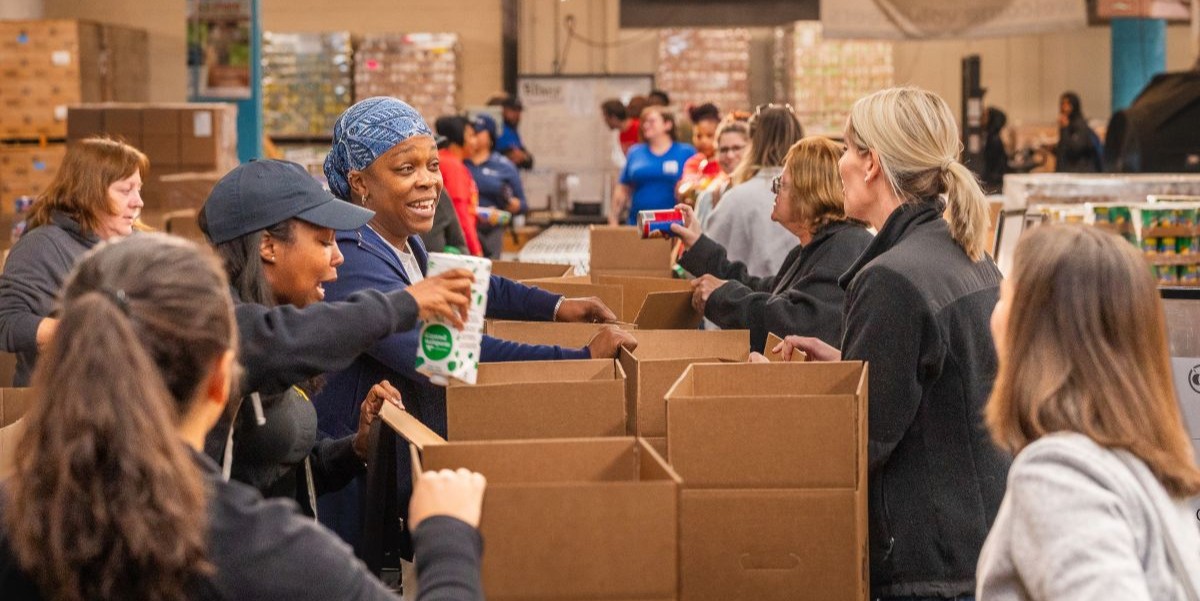
But our food banks, pantries, and meal programs see the faces behind those numbers every day: parents skipping meals so their children can eat; seniors stretching their Social Security checks to cover both prescriptions and groceries; veterans lining up for food boxes because their benefits no longer keep pace with reality.
To erase the measurement of hunger is to erase these people. It is to declare that their struggle doesn’t exist — or worse, that it doesn’t matter.
Proverbs 28:27 reminds us, “Whoever gives to the poor will not want, but he who hides his eyes will get many a curse.” With the decision to stop measuring hunger, Washington, D.C. is doing exactly that: hiding its eyes. Turning away from the uncomfortable truth of rising need in the working class, due to its failed policies.
For decades, hunger has been a problem we could name, measure, and track. That measurement matters. It acts as a compass. It allows policymakers, advocates, and communities to chart progress, to identify gaps, to hold our government accountable. By smashing that compass, the White House is leaving millions of families lost, unseen, and unhealthy.
George Matysik is the Executive Director of the Share Food Program. Mark Edwards is President and CEO of The Food Trust. Together, they co-chair the Food and Nutrition Security Task Force.
The Citizen welcomes guest commentary from community members who represent that it is their own work and their own opinion based on true facts that they know firsthand.
 MORE ON FIGHTING POVERTY FROM THE CITIZEN