



Hope is the word for 2026 in all areas of our lives. I’m dismayed that many responsible people are becoming hopeless. They have taken a hiatus from the news and plan ways to escape the bombardment of actions and statements that would have been unthinkable just a few years ago. I’m not suggesting cockeyed optimism. But I firmly believe, as Jesse Jackson says, we must keep hope alive.
Let me begin with hope in higher education, which has been my predominant lens on the world for most of my life.
On January 4, 2024, only two years ago, I suggested a list of New Year’s resolutions for higher ed. In that post, I wrote, “U. S. higher education has never been under more serious attack, from the right, from the left, from the general public, and from within.” I read that now with some nostalgia for a time that looked horrible then but has become much, much worse.
As 2026 dawns, higher education is under even greater threat this time mainly from the far right. The attacks from the left have lessened. As for the general public, they still have concerns about cost, but, according to a Gallup/Lumina Foundation report, “the demand for higher ed remains strong despite barriers.”
The attacks from the right, following the blueprint announced in Project 2025, have been cataclysmic.
With higher education under siege, the attacks from within have diminished and my 2024 suggestions for New Year’s resolutions (lead with intention; replace snobbery with partnership; better prepare and recruit local public school students; improve the preparation of teachers, principals, and substitute teachers; emphasize civil debate and listening as hallmarks of a democracy; actively support voter registration and voting) are still pertinent.
Unfortunately, nearly every one of those resolutions has been undermined by policies and executive orders of the Trump White House, abetted by a silent and cowardly Congress unwilling to protect U. S. higher education, one of the nation’s greatest claims to fame. In Philadelphia, we are better off than most because of an education-minded governor and an urban culture that supports eds and meds — our foremost employers.
The key resolution for 2026: Hope
Yet, even in Philly, it’s challenging for higher education leaders and advocates to combat exhaustion, demoralization and despair. But we must depend on hope for continued energy and resolve.
I’m reminded of Emily Dickinson’s definition of hope:
Hope is the thing with feathers
That perches in the soul.
And sings the tune without the words.
And never stops at all.
And sweetest in the gale is heard,
And sore must be the storm
That could abash the little bird
That kept so many warm.
I’ve heard it in the chillest land.
And on the strangest sea.
Yet, never, in extremity,
It asked a crumb of me.
Right now we are in “extremity” in “the chillest land,” but hope cannot be abashed.
And, yet, hope is not a strategy. But hope is necessary to forming a strategy. For 2026, we must hope and strategize.
Strategies to fulfill hopes for 2026
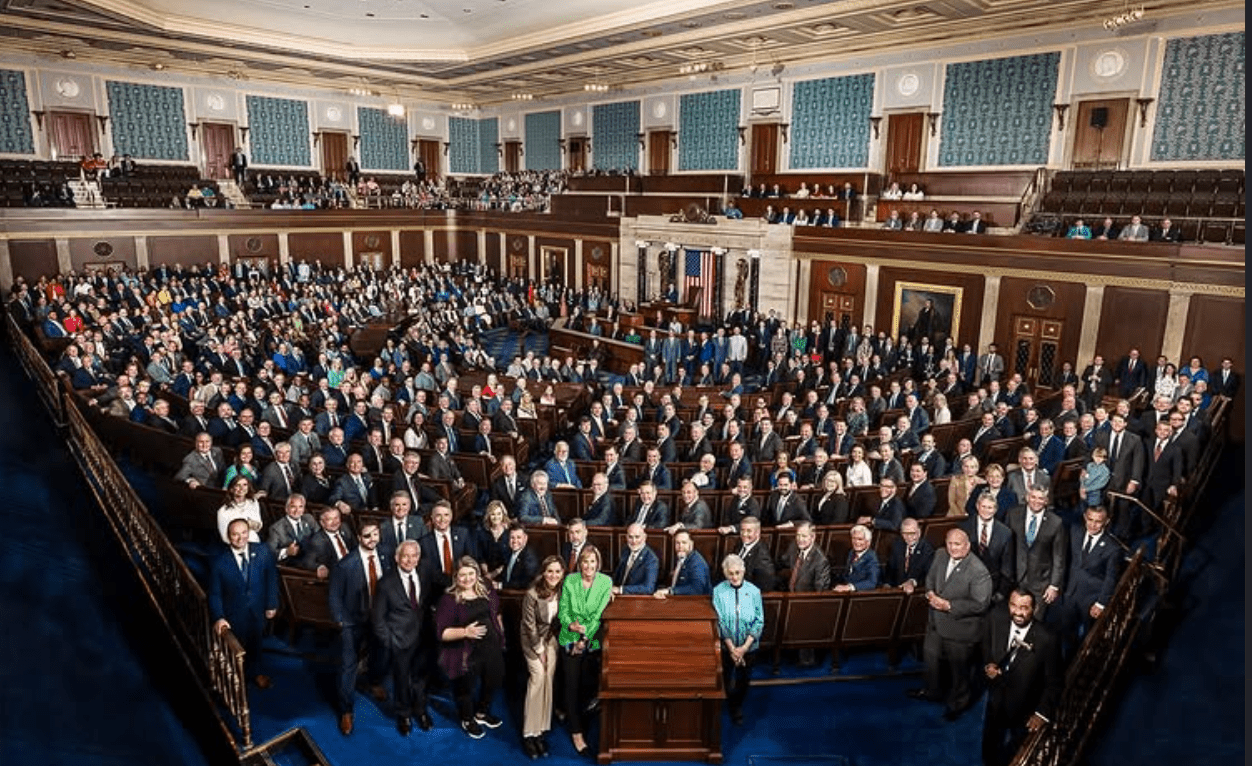
- Bombard Congress to grow a backbone and restore a balance of powers. They will be more apt to listen, since, on November 3, 2026, every member of the U.S. House is up for reelection. Let them know, Republicans and Democrats alike, that they must resist Trump’s war on higher education and science.
- Early in January, Congress will decide the fate of TRIO programs. TRIO provides federal support for tutoring, counseling, financial aid, college preparation and mentoring to low-income, first-generation students. Philadelphia examples include Community College of Philadelphia (CCP) (Upward Bound, Student Support Services); the University of Pennsylvania (Upward Bound), Cheyney University (Student Support Service), Temple University (Upward Bound), and many others. Some Republicans including Maine Senator Susan Collins have expressed support for TRIO. Encourage her and others to make good on that support.
- Encourage unity around higher education values, with, for example, Penn defending TRIO at the Community College of Philadelphia and CCP defending research at Penn.
- Philadelphia is the site of remarkable scientific leadership. Lobby to restore merit criteria for federal funding, so that Penn and other research universities can continue to find cures for diseases — and win more Nobel Prizes.
- Show support for Paul Offit and others who are publicly challenging the unsubstantiated and dangerous anti-vaccine recommendations of the CDC, prompted by Robert Kennedy, Jr., the Secretary of Health and Human Services.
- Defend First Amendment freedom of speech, which applies to government suppression of speech, not the right of anybody to say anything at any time about anything for any purpose. The government is clearly violating the First Amendment by telling universities to stop using perfectly legitimate vocabulary — diversity, equity, inclusion, for example. The defense of the First Amendment should unite Philly colleges and universities with law and media. We are all stronger–and more hopeful–together.
- Celebrate the 250th anniversary of the Declaration of Independence in the city where it all started by learning more about our founding documents and how we must prevent them from being subverted. Contact your representatives in Congress to make sure that our celebration will be in the context of our full history — things we’re proud of and things we are not, including the history of George Washington’s slave ownership highlighted in Philadelphia’s President’s House.
If we hope and act, we shall overcome.
- Lobby for a rational, fair and humane approach to student loans. The Department of Education (DOE) announced that during the week of January 7, they will send notices of the intent to garnish funds from paychecks from borrowers considered to be in default. Certainly, borrowers who owe money should make regular payments. But the DOE has made the process confusing and unfair (for example, withholding public service loan forgiveness from borrowers working for organizations with the wrong political rhetoric.) Contact Congress, the DOE, and the White House to demand that this mess be sorted out.
- Support SNAP recipients (many of whom are students) in receiving benefits. The City of Philadelphia office of Community Empowerment and Opportunity (CEO) has issued guidelines on helping those eligible for SNAP untangle the new red tape to address food insecurity. PHENND has reprinted it in its entirety here
- Lobby to stop cruel and arbitrary deportations. Many college and university students who thought they were safe under Deferred Action for Childhood Arrivals (DACA) now skip class and live in fear. Others who are naturalized US citizens fear they will be the next targets and also worry about family, friends and neighbors. For years Congress has avoided necessary reform in the entire U. S. immigration system. Look for candidates who are brave enough to campaign on immigration reform.
- Oh, yes, and guns! There’s a topic where hopelessness seems warranted. It’s unthinkable that two students who survived the Brown University attack had also survived shootings at their high schools, one at Saugus High School about 40 miles north of Los Angeles and another at her middle school adjacent to Marjory Stoneman Douglas High School in Parkland, Florida. Not hope and not thoughts and prayers are enough to address these multiple tragedies. Democrats call for gun safety. Republicans call for more effective mental health approaches. We must lobby for both.
In short, turn hope into civic action. Like every year, 2026 is an election year. We know that elections have consequences. Resolve to vote on or before November 3. The current threats to democracy and the rule of law have resulted for many of us in a heightened awareness of the rights and privileges of U.S. citizenship, guaranteed by the Constitution. We don’t take anything for granted anymore, and we shouldn’t. If we hope and act, we shall overcome.
The hope that perches in my soul has a few more targets beyond higher education.
I’m ready to support the staff of the Philadelphia Art Museum in hoping for restoration of reputation and order at Philly’s most comprehensive and iconic visual arts institution, even as the lawsuit with former director and CEO Sasha Suda plays out. We can turn hope into action by visiting the art museum and supporting it philanthropically, if we are able.
The Phillies have already fulfilled one of my hopes by re-signing Kyle Schwarber. Now my hope rests on re-signing J.T. Realmuto. Baseball has always been a sport of hope, especially in Philadelphia. As former baseball commissioner and Yale University president Bart Giamatti famously said, “Baseball breaks your heart. It is designed to break your heart.” But hope is the antidote. I for one am hoping for a World Series win in 2026. As the song says, “Wait ’til next year and hope.”
As for the Eagles, my hopes are more immediate. We still have a chance for a repeat Super Bowl victory, says hope’s little bird. May our Birds stop getting penalties, balance the running and passing game, avoid injuries, keep up a stellar defense, and restore Jake Elliott to his kicking proficiency.
Let hope triumph. I’ll look forward to writing a different and more positive list of New Year’s resolutions for 2027.
Elaine Maimon, Ph.D., is the author of Leading Academic Change: Vision, Strategy, Transformation. Her long career in higher education has encompassed top executive positions at public universities as well as distinction as a scholar in rhetoric/composition. Her co-authored book, Writing in the Arts and Sciences, has been designated as a landmark text. She is a Distinguished Fellow of the Association for Writing Across the Curriculum.
 MORE FROM ELAINE MAIMON