

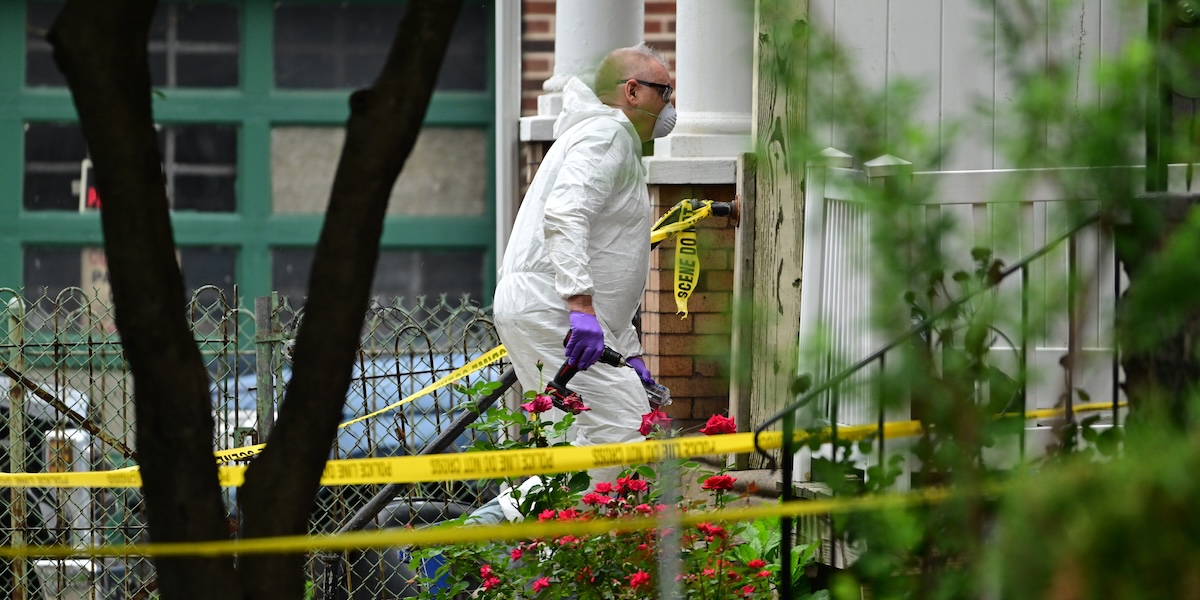


The June arrest of Eugene Horsch and the horrific information we’ve learned — and continue to learn — is yet another tragic reminder that public safety requires us to be proactive and not reactive.
The Chew Avenue home, owned by Horsch’s father, R.C. Horsch, until his death last year, was often cited by neighbors as a problem in the neighborhood, with windows boarded up and a hole in the fire-damaged roof; it was a known source of drug sales and other suspicious activity.
This house was more than just an eyesore; it’s since been called a literal “house of horrors.”
While the condition of Horsch’s house was not the cause of the horrific acts that took place there, it created the perfect cover for the macabre events we’ve recently learned of.
This isn’t an isolated case unfortunately. It’s reminiscent of the tragic murder of Kada Scott last year where her remains were found at the vacant Ada H.H. Lewis Middletown School, one of the School District’s 20 vacant properties.
The nature of city life is busy and leads people to believe that any given problem has already been handled or will be eventually, and these neglected properties become a permanent part of the landscape.
So that leaves us asking: Who should be the heroes that keep tragedy at bay? The answer is all of us. Community safety starts with recognizing problems before they become emergencies, how to report the problem and how to follow up to ensure it was resolved quickly.
In Philadelphia, our reporting system is Philly 311. You can report an issue by calling 3-1-1 or using their online portal. Either way, you can track your report to stay updated on the progress.
If you track your report and don’t see progress, this is where it’s helpful to know how to make sure it gets done. Go to frontline leaders in the community like block captains who can identify quality of life issues on your immediate block.
Community safety starts with recognizing problems before they become emergencies, how to report the problem and how to follow up to ensure it was resolved quickly.
Your neighborhood’s Registered Community Organizations serve as the community’s voice when it comes to zoning and development, when projects are proposed RCOs will organize public meetings to gather community input and answer questions.
Your representatives on City Council and in Harrisburg are here to help with large scale issues such as ordinances, policy and legislation.
For example, I recently voted for a bill that was signed into law (Act. 29 of 2026) that would require property owners to submit legitimate contact information so they can be held accountable for property maintenance and safety issues.
Civic engagement isn’t just casting a ballot on Election Day — it’s knowing your neighbors, building connections with local leaders and being able to recognize when something isn’t right and knowing where to report it.
The other side of fostering safe communities is having faith in your elected officials. We work for you and if we are not holding up to that responsibility, your power is at the ballot box.
This is how civic engagement can be a useful tool to enhance public safety.
By working together on every level, we can turn vacant homes into affordable housing, vacant and overgrown lots into community gardens and more.
I encourage you to go out and meet your neighbors. I and other lawmakers often partner with community organizations and police districts to host town hall meetings on a variety of topics, so make sure you come to the next one and invite a friend or neighbor.
Join your local town watch and if there isn’t one — get together with neighbors and set one up. When we work with one other and play our parts, we can make our neighborhoods safer block by block.
Darisha K. Parker was elected to serve her first term in the Pennsylvania House of Representatives 198th legislative district in November 2020. The lifelong Northwest Philadelphian sits on the Aging & Older Adult Services, Agriculture & Rural Affairs, Children & Youth, Insurance, and Rules committees and is vice-chair of the PA Legislative Black Caucus.
The Citizen welcomes guest commentary from community members who represent that it is their own work and their own opinion based on true facts that they know firsthand.
 THE CITIZEN EXPLAINS HOW PHILLY WORKS