



Justina Rockeymore runs her own dog grooming business out of her home in West Philadelphia. She’s a single mom with a high school senior and a four-month-old baby. She has dreams: of traveling, of opening her own salon and mobile grooming van, of being able to relax with friends and family at parties.
None of those dreams have been achievable because Rockeymore — after doing her time in Muncie Correctional Facility — has been on probation, continuously, for the last seven years. That has meant paying restitution, doing community service, traveling 1.5 hours via public transportation each way to see her probation officer (P.O.) in Delaware County (weekly, at first, then monthly), checking in every time she wants to leave the state, declining invitations in case they put her at risk of violating her probation over someone having a beer in her presence.
“I’ve been running in circles,” Rockeymore says. “Year after year, I’ve been trying to get over probation, and just haven’t been able to get there yet.”
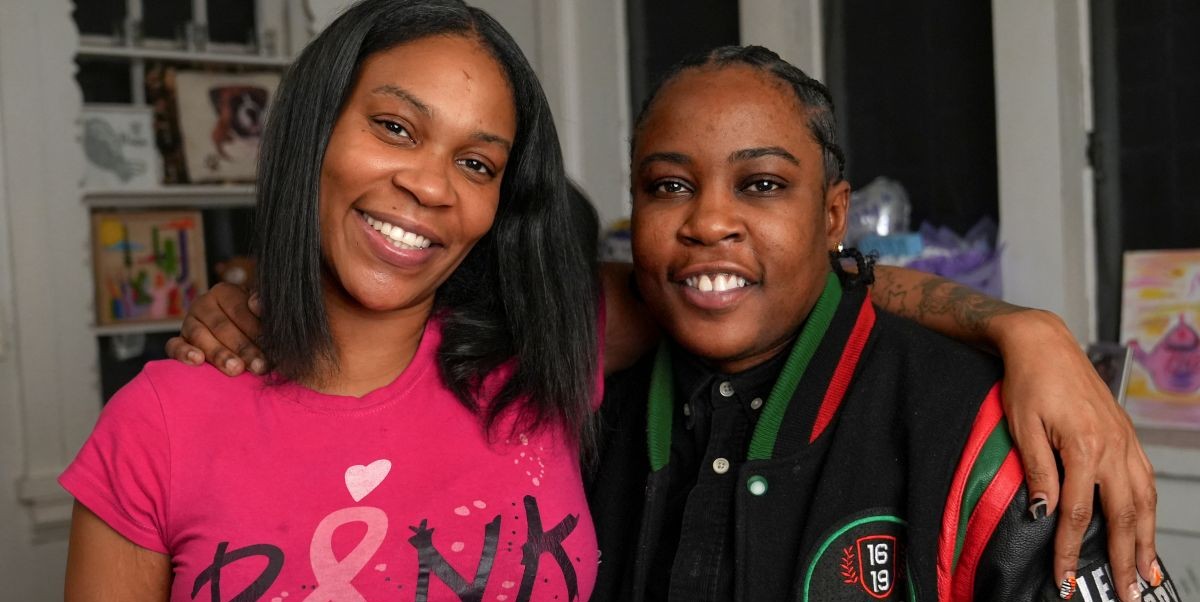
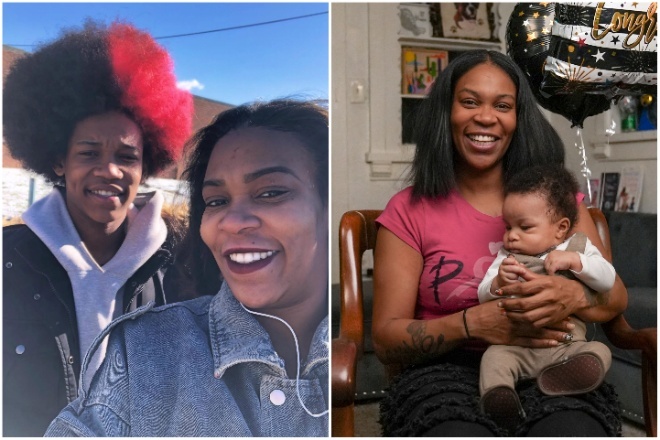
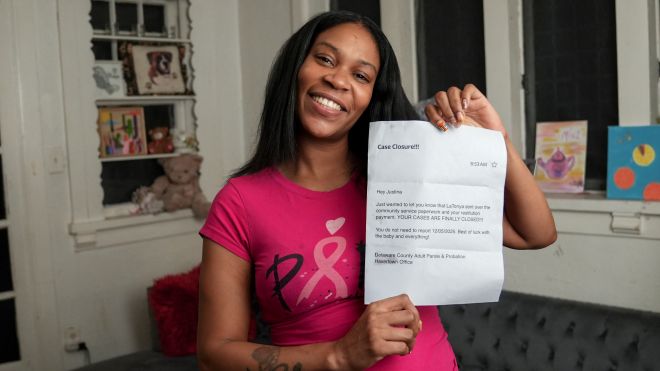
That all changed right before Thanksgiving when Rockeymore got an unexpected surprise from LaTonya Myers, founder of probation assistance program Above All Odds. Unbeknownst to her, Myers, with the help of Michael Rubin’s REFORM Alliance, paid off Rockeymore’s final $500 in probation fees. She is now — finally — free of the criminal justice system.
“It felt so good to be able to help other people, knowing I was in that situation before,” says Myers. “It was a surreal moment. Justina always shows up, advocates for others, registers people to vote. She deserves this.”
From probation to probation reformer
When Myers was 12, she was arrested for aggravated assault when, she says, she tried to protect her mom from an abusive boyfriend. After sitting in jail for 10 days, Myers was given a choice: Take a plea deal that would put her on probation, or go back to jail and wait for a hearing. The young girl chose to plead guilty to the felony and go home with her grandmother. That set her on a path that had her entangled with the criminal justice system for most of her life.
Around 2008, Myers finally completed her juvenile probation. Then, in 2014, after a fight with a girlfriend, she was arrested again and convicted of a misdemeanor assault charge. Because of her history, Myers was sentenced to 1.5 to 5 years in prison, plus another 12 years of probation. At the time, Myers recalls, the judge told her, “we’d be in each other’s lives for a long time.”
“I took that as a challenge to let her know that I would do everything I could to rehabilitate myself,” she says.
“We are not our worst mistakes. Other people, like me, deserve a second chance.” — LaTonya Myers
She got out of prison in 2016, at age 30, expecting to be on probation until age 42. Soon after, she started working for the Defender Association as the first bail navigator in Pennsylvania, helping defendants sitting in jail craft their mitigation stories before they asked judges to release them without bail. She became increasingly civically-engaged, telling her story wherever asked, and was also the focus of Episode 4 of Philly D.A., the seven part docu-series on Larry Krasner’s first term.
But still, she was entangled in the system in a way that seemed both absurd and obstructive. One morning in 2019, as she was headed to interview some defendants in jail, Myers picked up a letter informing her she was in pending violation of her probation for “non-reporting” to her probation officer. Myers says she had called her P.O. in advance of that appointment to explain why she wouldn’t be there: She was, at that exact moment, receiving a Rising Reentry Leader of the Year Award from Mayor Kenney at City Hall. (Even more absurd: Myers had invited her P.O. to attend the ceremony.)
“Instead of calling me, she immediately sent me a threatening letter in the mail that threatened my freedom,” Myers said later in this Instagram video. “She didn’t care enough about my humanity to see if I was okay.”
The Defender Association subsequently helped Myers file to have her probation terminated early, which involved going again before her sentencing judge to plead her case — something Myers didn’t even know was possible. “They tell you all about the rules of probation, but not about your rights,” she says. Before a room full of Myers’ supporters, the judge agreed to end her probation.
By then, Myers had connected with REFORM, the nonprofit launched by Fanatics owner Rubin — along with New England Patriots owner Robert Kraft and rap impresario Jay-Z — in reaction to the rapper Meek Mill’s onerous probation saga. The nonprofit has propelled a national movement to pass state laws that make it easier for formerly incarcerated people to fulfill the terms of their parole and probation — including, in 2023, PA’s Act 44, which creates a standardized and more accessible pathway to early probation termination.
“LaTonya has lived through this system and now dedicates her life to helping others navigate it,” says Erin Haney, REFORM’s Chief Policy Director. “REFORM is honored to partner with her — she brings her lived experience, talent, and heart to bear in ensuring our reforms reflect the realities of those in the system and reach the people who need them most.”
Myers testified before the legislature in support of the bill, and recalls someone from the District Attorney Committee of PA calling her an “outlier” for the way she turned her life around.
“That just gave me the motivation to prove them wrong and amplify the stories of people who needed a second chance,” Myers says.
“We are not our worst mistakes.”
In 2019, Myers launched Above All Odds to help others like her navigate the complicated probation system. Over the years, Myers and her volunteers have helped people apply for early release from probation; joined them in court and probation hearings; written character letters; served as a mediator between the parolee and parole officers, to explain the circumstances around a missed meeting or other potential violations. She has consulted with REFORM, and helped to raise money for the Community Bail Fund, particularly for mothers awaiting trial. So far, Myers says Above All Odds has served more than 500 people in Philadelphia and Delaware counties, including helping 250 people secure early probation release.
Myers first befriended Rockeymore when they were both in county jail before serving their final prison terms. They reconnected on the outside; Rockeymore has volunteered with Above All Odds, and Myers has worked to help her since she had her baby last summer. In one instance, for example, Myers called her probation officer to explain that Rockeymore wouldn’t be able to make a check-in appointment because she had no one to watch the baby, whom she is breast feeding.
“I’m so used to having PTSD, knowing I have to go to my Parole Officer. It’s been forever that someone has done anything like that for me.” — Justina Rockeymore
Rockeymore, by this time, had paid her court fees; completed a mandated drug and alcohol program; and fulfilled her community service requirement in part by working with Above All Odds. The only thing keeping her on probation going into the holiday season was a $500 restitution fee she couldn’t afford. In July, her probation rolled over for additional six months because of the outstanding payment; she expected to tack on another six months in December, because she still didn’t have the money.
Myers decided to help, and reached out to REFORM, which gave her the $500 restitution payment. Myers dropped the money off in person at the Delaware County Courthouse, sent the receipt to Rockeymore’s P.O. and got a note back confirming her case was now closed. A couple of days before Thanksgiving, she asked Rockeymore to share her story in a filmed interview. Towards the end, Rockeymore was given the letter that confirmed she is now truly free.
“I’m still smiling ear to ear,” Rockeymore says. “I’m so used to having PTSD, knowing I have to go to my Parole Officer. It’s been forever that someone has done anything like that for me.”
To Myers, it was a full circle moment, allowing her to show up for Rockeymore the way others have shown up for her.
“We are not our worst mistakes,” Myers says. “Other people, like me, deserve a second chance.”

MORE PHILADELPHIA CITIZENS OF THE WEEK