


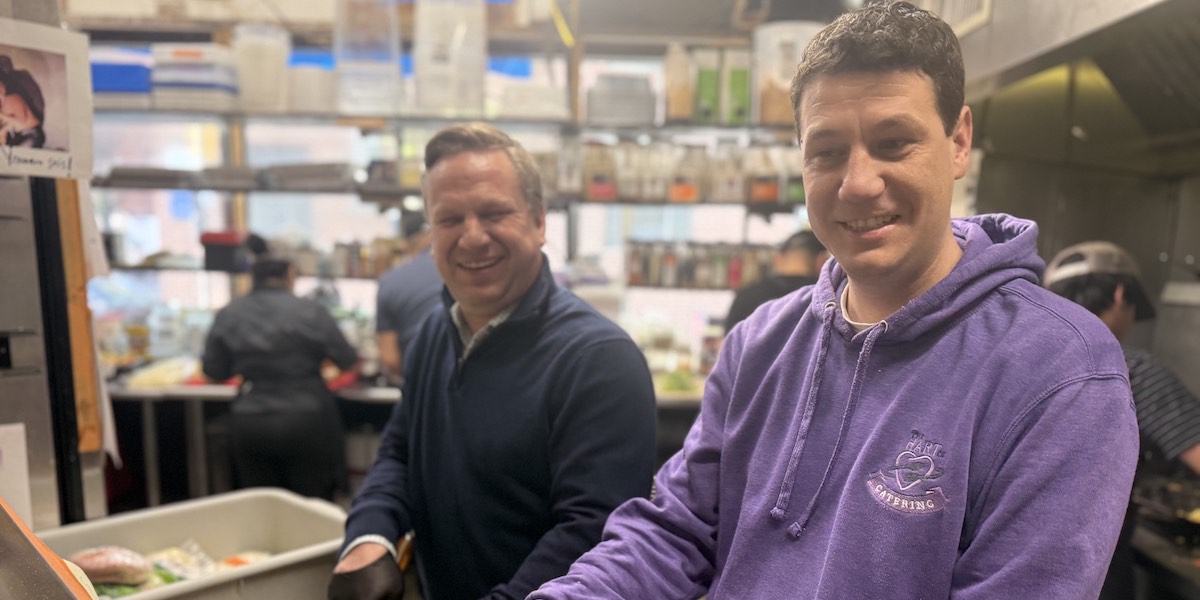


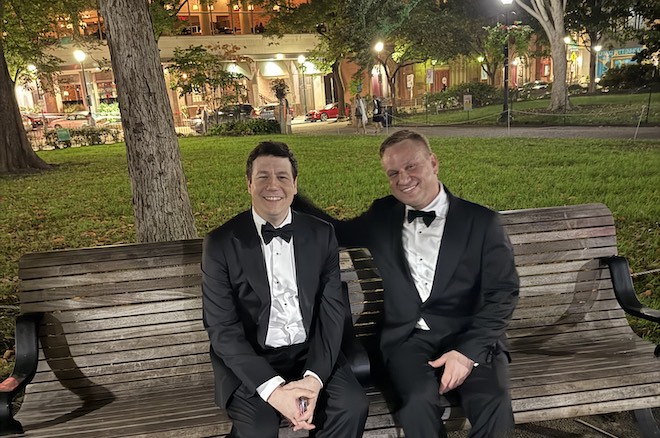
Kevin Hart and Tim Judge can’t forget where they’ve been. They couldn’t if they tried. Their business, The Hart of Catering, is two blocks from Rittenhouse Square, where, 20 years ago, then homeless and in active addiction to drugs and alcohol, the couple would sit on a bench and hope for a better future.
Today, the pair are more than successful business owners. They’re examples of what people who once had nothing can share with their community: Not just running an in-house pay-it-forward program, not just catering swanky fundraisers like last year’s Soiree on the Square or feeding people every week at a nearby church. Together, the couple bought, opened and now operates two addiction recovery houses on the same block where they’re raising their two sons.
How do they do all this? Sometimes they ask themselves that very question.
“To see the life that we have today,” Hart says, shaking his head. “There’s so many moments where you’re just like, Oh my god, this is crazy.”
The backstory
Hart (no relation to Philly-born, Hollywood-dominant comedian Kevin Hart) and Judge both attended Springfield Township High School in Montgomery County, and reconnected while working in the same restaurant in their early 20s. They had more than a workplace or mutual attraction in common. “It was good at first, but we were also just using ,” Judge recalls.
For eight years, the two struggled with addiction together. The couple would go back and forth between living with their parents, then trying to live together (usually with roommates who were also addicted), and living on the street or in shelters.
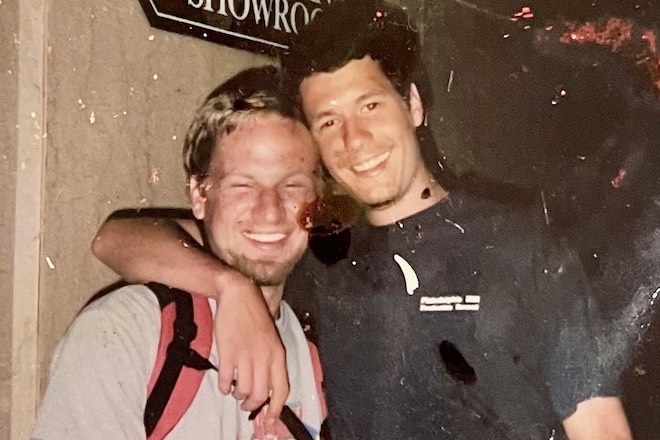
“Sometimes I’d get a good job and have some sort of promising future, and then I’d relapse and mess it all up,” Hart recalls. It was a damaging cycle that included stints in jail for probation violations.
They also spent time in recovery homes that were poorly managed or entirely unmanaged, whose owners didn’t care what went on as long as the check was coming in. Hart recalls paying to live in houses with “22 guys in a rowhome,” which resulted in profits for their owners, but not actual recovery for their residents.
Finally, Judge decided to go to Drug Treatment Court in Montgomery County. The 16-month program with supervision from probation officers was tough, but he says that it saved his life. Judge has now been sober for 14 years. Hart, who came later to the process, has been sober for eight. “Life is very full today,” he says with a grin.
Taking it Day by Day
Hart was still struggling with addiction when he found corporate catering 15 years ago. His first job was at Marathon Grill, where he worked his way up to Director of Catering. From there, he climbed the ranks in sales and operations for other catering companies. Judge, meanwhile, found work as the general manager of area restaurants, including La Provence in Ambler.
When Covid hit, Hart, then in active recovery, decided it was a good opportunity to take time off. Three of his biggest clients heard that he was leaving, and each asked separately if he was thinking about starting his own place. This was his lightbulb moment — and opportunity. He decided to go for it. He’d call his catering operation the Hart of Catering. Eventually, Judge would join him as co-owner.
“To see the life that we have today … There’s so many moments where you’re just like, Oh my god, this is crazy.” — Kevin Hart, The Hart of Catering
Hart found the location that he was looking for (and more) in a once beloved Rittenhouse bruncherie. Since 1981, Day by Day, a daytime only spot and catering company, had operated at the corner of 21st and Sansom streets, predating both “Restaurant Row” and even “Rittenhouse Row.” For 40 years, it was a neighborhood hangout, unpretentious, with gorgeous windows, cozy atmosphere and a prime location.
Hart had been looking for a kitchen. But he couldn’t resist expanding to a cafe too. They serve quiche, avocado toast, crabmeat Benedict, kale salad, mascarpone French toast and 20 different kinds of sandwiches.
They also keep both the spirit of Day by Day alive and pay homage to recovery with a mural on the wall that reads, “One day at a time,” referencing the Alcoholics Anonymous slogan. The cafe, Judge says, isn’t the largest part of the business, though it stays busy. Catering is The Hart of Catering’s bread and butter.
From a street taco package to a cheesesteak bar to simple boxed lunches, there’s lots for catering clients to choose from. A staff of 50 to 55 workers includes chefs, drivers, sales managers and servers who cater corporate events, weddings and bar mitzvahs all over the Philadelphia area. During busy seasons (May for weddings, December for holidays), they can have up to 80 people on payroll.
Bringing food to people is “always a good thing,” whether it’s for a special event in a person’s life or if food is something that they are struggling to afford, Judge says.
Paying food forward
In 2023, Hart was approached by the Welcome Church, a “congregation without walls” founded to serve people in poverty. The nonprofit group asked him if the cafe would run a “Pay-It-Forward” program where a customer can come in for, say, a BLT, and also purchase a meal for someone who comes along later for something to eat. The paying customer gets to write a message on and stick a heart-shaped Post-It note onto a wall by the front cafe’s door. The next person can come in, grab the note, and redeem it for a deli sandwich, drink and chips.
The program began in 2013 at Rosa’s Fresh Pizza, a Washington Square West pizzeria that closed during the pandemic. It’s also been picked up by the Old Nelson at 15th and Arch streets. Hart estimates the cafe has anywhere from 10 to 100 meals a week donated. He would like other restaurateurs to join in.
He’s had customers buy 10 pay-it-forward meals at a time, and seen all 10 stickies gone in a couple of hours. There are some weeks where people will donate a lot, and some dry spells, but what stays consistent, he says, is, “the need is there.” Hart Zooms monthly with the Welcome Church and the City’s homeless outreach team to brainstorm ideas of how to raise continued awareness for the program.
Not every vulnerable population that Hart of Catering feeds comes to 21st and Sansom. Every Tuesday, the business donates 125 hot meals to the Open Hearts Café, a pop-up inside Holy Trinity Church on the corner of 19th and Walnut. Guests arrive, enjoy a sit-down meal, and then request — Hart called it “order” — clothes, toiletries, blankets, shoes and other essentials to take with them. Hart of Catering also maintains a donation bin to collect clothing for Open Hearts at the cafe.
Judge says that even though Philadelphians can sometimes get a bad rep for being rude and obnoxious (“We’re gonna say what we think, that’s true.”), he loves living in a city with such a strong sense of community. “People really just want to take care of one another.”
Starting at home
The Hart-Judge family lives in Grays Ferry. One day a few years ago, a neighbor who flips houses approached the couple, asking if they knew anyone who wanted to rent a house on their street. Not exactly on the spot but almost, the pair decided to rent it themselves — and turn it into a recovery home for people healing from substance abuse.
Offering help, safety, space and grace to people who were experiencing the kinds of things they’d experienced had been a dream of theirs for a while. The pair wanted to create a recovery house and do it right, “where it’s people-based, not profit-based,” Hart says. They call it the Hart of Recovery. They quickly saw that they were filling a need — so much so that they began renting a second house on the same block to open another recovery home.
The first house is for people closer to the beginning of their sobriety journeys, with slightly stricter rules. The second, a sober house, is for people who have generally been sober for a year or two, have steady jobs, and still want to be in an environment living with people who are like-minded, making them less prone to relapse.
Judge loves living in a city with such a strong sense of community. “People really just want to take care of one another. — Tim Judge, The Hart of Catering
Both homes are co-ed and proudly LGBTQ-friendly. Almost a third of people residing at Hart of Recovery are transgender. “That’s a huge blank spot in this community,” Hart reflects. Although there’s little difference between rates of addiction among transgender and cisgender individuals, Hart has seen how hard it can be to be trans in recovery. He cites multiple stories of trans women referred to him who had been forced to live in men’s recovery houses while they were transitioning.
At the Hart of Recovery, everyone has a private bedroom, of which there are 11. Hart remembers wishing he had his own space — a door he could close — when he was beginning the recovery process. Members of Philly’s tight-knit recovery community often refer people seeking a place to recover from addiction to Hart and Judge. While the expectation is that residents are going to different places for support such as counseling, for many, the resource they have had the hardest time finding is a safe, stable place to stay.
Many recovery homes have strict policies that require entrants to pay first and last weeks’ rent before they walk in the door. But not Hart of Recovery. From day one, they’ve waived those fees. “The money will come when they get situated,” Hart says. “I’ve definitely lost money doing this over the last three years.” But it’s more than worth it.
The couple says the houses are largely self-sufficient now; residents who have been there for a longer period of time have stepped up to help manage operations. Others, such as a resident Hart picked up a while ago from a shelter in West Philly, have become Hart of Catering and Hart of Recovery employees — in this instance, both the café manager and the house manager.
It’s a fairly common story, Hart says — and probably part of the reason why both homes have a very low turnover rate. It doesn’t always work out — a few residents have relapsed. Judge says they never kick anyone out onto the street, but instead take them to detox centers. For the most part, though, folks are there to stay until they feel stable enough to get places of their own.
“I think sometimes in the back of your head you realize, if you mess this up, the alternative for sober living is not as nice,” he reasons. “So it’s just another reason to stay sober sometimes. It’s obviously not the sole reason that someone’s going to stay sober, but it could help. It could help.”
 MORE BUSINESS FOR GOOD FROM THE CITIZEN