


Shortly after a passenger fatally shot Philadelphia bus driver Bernard Gribbin in October 2023, Philadelphia transit officials announced plans to equip buses with bulletproof compartments.
Officials with the Southeastern Pennsylvania Transportation Authority (SEPTA) said the plan would make Philadelphia the first city in the country with bulletproof glass protecting the driver’s seat. The Transport Workers Union Local 234, which represents more than 5,200 bus drivers and other SEPTA employees, hailed the decision as long overdue.
This story was originally published by The Trace, a nonprofit newsroom covering gun violence in America. Sign up for its newsletters here.
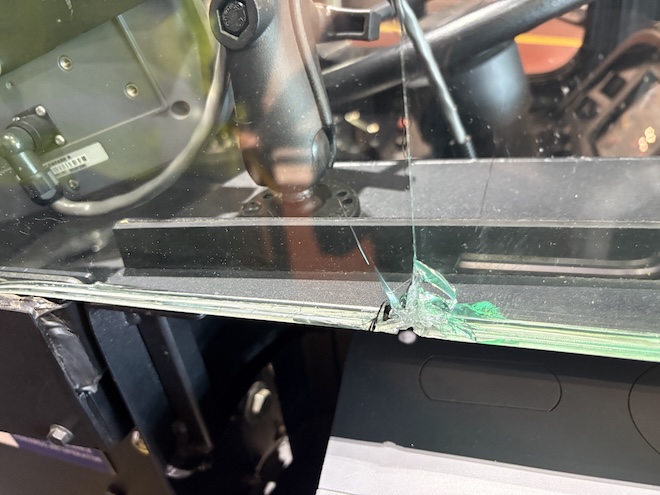
But more than three years after Gribbin’s death, the promised compartments are not on the streets. SEPTA launched a pilot program in the spring, retrofitting eight buses with bulletproof glass and steel doors. By July, however, those buses had been taken out of service after design defects caused the doors to shift out of place and the glass to crack. Instead of crisscrossing Philadelphia picking up commuters, the buses are awaiting repairs.
“It’s not as easy as one might think, not even close, as far as retrofitting these buses to put these bullet-resistant shields on,” SEPTA spokesperson John Golden told The Trace.
“If we had those doors, Bernard Gribbin would still be working here today.” — Will Vera
Jeremy Chisholm, SEPTA’s senior director of automotive engineering and acquisitions, said the agency knew developing the compartments would take time. “Once we get these repaired, we’ll get back to monitoring them,” he added. “It’s difficult for us to do something like this because we’re not really a lab. We don’t have that sort of expertise or capability, just because we don’t have the equipment. But we know who we can hire for help to determine what’s the best course of action.”
Custom Glass Solutions, the Trumbauersville, Pennsylvania, company that manufactured the bulletproof doors, is working with SEPTA to fix the problem. Chisholm estimated that each of the doors weighs about 375 pounds. The metal plates used to mount the doors to the bus ceilings are bending under the weight, causing the doors to tilt forward and stress the glass until it breaks.
“The door is quite heavy,” Chisholm said. “So CGS is coming up with a new design for that upper plate to make sure that doesn’t happen again.” SEPTA hopes to have the eight buses repaired and back on the streets in the early part of next year.
Philadelphia City Councilmember Mike Driscoll, who chairs the Transportation and Public Utilities Committee, said he was unaware of the problems with the pilot program but remains supportive of it.
“The transportation workers put themselves out there with COVID. They were on the front lines,” he said. “So anything we can do to protect them, even these bulletproof shields, I’m all in.”
Whether SEPTA installs the compartments on more buses will depend on how well the repaired doors perform and whether the agency can afford to expand the program. Each door is made of ballistic-rated steel and bulletproof glass and costs about $17,000. The glass consists of tempered, laminated, and polycarbonate layers and an anti-glare film. It is designed to withstand three shots from a .44 Magnum fired from 15 feet away.
Since Gribbin was killed on his bus in the Germantown neighborhood, other incidents of gun violence have underscored the dangers facing Philadelphia’s bus drivers and passengers alike.
Lonnie Turner, 26, boarded a bus with a handgun in October and told the driver he had just shot two people. Authorities later determined that he had killed his adoptive mother and sister before setting fire to their home. When Turner refused to leave the bus, the driver evacuated the other passengers and called police, setting off a standoff that lasted several hours. Turner eventually shot and killed himself on the bus.
Last year, a man shot four people — three of them teenagers — on a crowded bus in the city’s Fairmount Park neighborhood. All four survived. Surveillance footage showed passengers ducking behind seats and attempting to crawl through windows to escape. Police later charged the alleged shooter with attempted murder.
“It’s not as easy as one might think, not even close, as far as retrofitting these buses to put these bullet-resistant shields on.” — John Golden
Will Vera, president of TWU Local 234, the transit workers’ union, said he supports SEPTA’s efforts to resolve the design problems. He wants to see the compartments installed on all 1,300 buses in the city’s fleet.
“We want it done right, we want it done on every single bus that we do have on the street now, and we want it done on every bus that they purchase moving forward,” he said. “If we had those doors, Bernard Gribbin would still be working here today.”
Despite the setbacks, Vera said he is proud that Philadelphia is leading the way in protecting bus drivers with bulletproof glass. “I’m honored to be a part of this conversation. I believe in being trendsetters, and I know that this will move around the country.”
In February 2025, SEPTA hosted a demonstration in which SWAT officers fired at the bulletproof glass to test its strength. Transit officials from around the country attended.
At the event, John Samuelsen, president of the Transport Workers Union of America, called for all buses in the country to be equipped with bulletproof protection for drivers. “This safety measure is necessary because of the outrageous and grotesque level of violence against front-line transit workers,” he said. “We’re just doing our best to try to keep our operators safe.”
Mensah Dean is a staff writer at The Trace. Previously he was a staff writer on the Justice & Injustice team at The Philadelphia Inquirer, where he focused on gun violence, corruption and wrongdoing in the public and private sectors for five years. Dean also covered criminal courts, public schools and city government for the Philadelphia Daily News, The Inquirer’s sister publication.
 MORE FROM THE TRACE
