



Nearly 250 years ago, John Adams sat down to write his wife Abigail a letter about what he had just helped set in motion. The Continental Congress had voted for independence, and Adams was already thinking about how future generations should mark the occasion. His prescription was specific: “pomp and parade, with shows, games, sports, bells, bonfires, and illuminations from one end of this continent to the other.”
This was not a man being casual. Adams approached the work of the Revolution with seriousness and a deep sense of responsibility, and he understood something about self-government that we sometimes forget: Celebration is a civic act. The parades, the bells, the fireworks, the flags are not mere trappings. They are acts of civic invitation and civic welcome. For many, they are the first entry point into civic life, and for others, they are what calls them back to it year after year. Through them, each generation is invited into the American story. They are foundational to sustaining constitutional democracy.
There is a tendency in our public discourse to treat patriotic celebration as unsophisticated or kitschy, as something you outgrow or observe with obligation and even a tinge of cynicism.
We sometimes act as though the serious work of citizenship happens only in policy papers, panel discussions, or on Election Day, and the rest is secondary. Adams and other Founders would have seen that as incomplete. They understood that people don’t come to care about self-government through abstraction alone. They come to it through experience, through the kind of shared, joyful, embodied moments that spark curiosity and invite deeper engagement, staying with you and shaping how you see your country and your place in it.
“Posterity!” Adams wrote. “You will never know how much it cost the present generation to preserve your freedom! I hope you will make a good use of it.”
As the United States marks its 250th anniversary, that question of belonging takes on special weight. A milestone like this becomes part of how a generation remembers not just a celebration, but its introduction to the responsibilities and possibilities of self-government. That is why acts of civic welcome matter. They offer a rare chance to meet people where they are, to replace distance with connection, and formality with joyful participation.
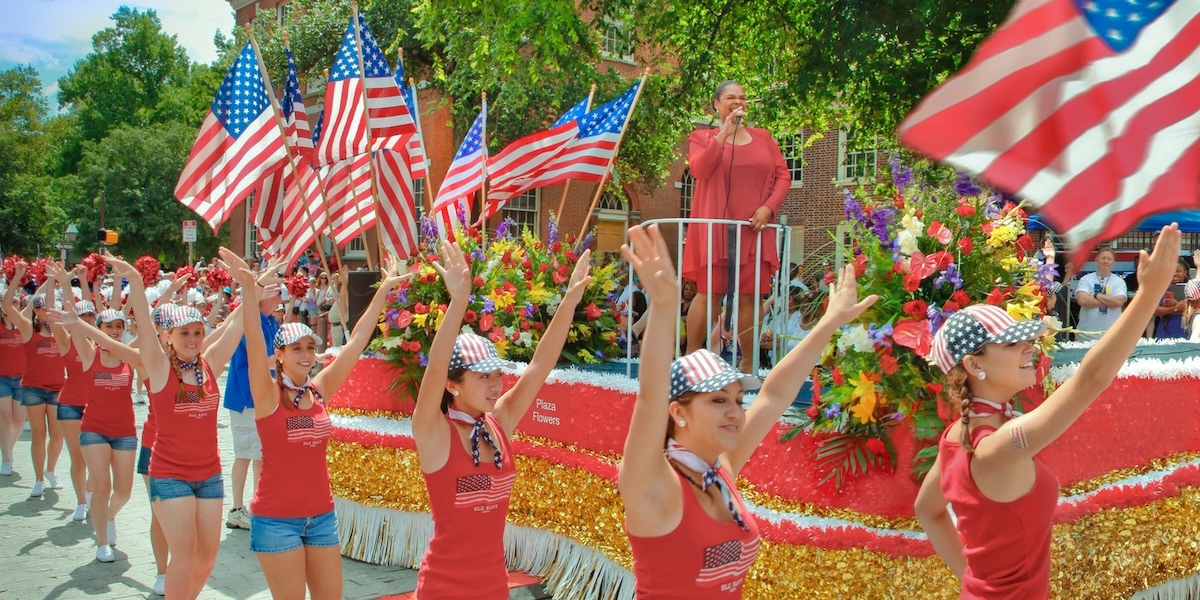
That is the spirit behind Philadelphia’s Red, White, & Blue To-Do, a day of civic celebration on July 2, 2026, in the city where independence was debated, declared, and set into motion. Presented by the Philadelphia Historic District 250th Committee, the day will unfold across America’s most historic square mile — with bells ringing across the historic district, doors opening at sites that shaped the nation’s founding, and streets filling with the kind of shared purpose, music, food, community, and spangled revelry our Founders might be elated to see.
At the center of it all this year is the Pomp & Parade, a procession of red wagon floats, drill teams, cultural dance troupes, and families from across Philadelphia, rolling into an All-American Block Party filled with activities for everyone. From there, the Independence Folk Festival will carry the afternoon and evening forward, with diverse musical traditions animating the streets before the day concludes on Independence Mall with a Salute to Service featuring The United States Army Field Band and Soldiers’ Chorus.
It will be a great day. And every bit of it serves the purpose Adams had in mind when he wrote that letter to Abigail: that the rituals of celebration are how a free people remind themselves of what they share. At their best, civic traditions do more than mark history. They are acts of civic welcome, inviting each of us into the American story and making it personal. They build the kind of durable connection that a constitutional democracy depends on.
Celebration is a civic act.
“Posterity!” Adams wrote. “You will never know how much it cost the present generation to preserve your freedom! I hope you will make a good use of it.”
That charge is not met by remembrance alone. It is met by renewal, by people coming together and deciding, across every difference and every background that this experiment in self-government is worth continuing. Civic welcome is how that work begins, opening the door for each new generation to see themselves in the work and responsibility of citizenship. A system like ours does not run on autopilot. It endures only if each generation is prepared to understand it, participate in it, and sustain it.
That is how we make good use of what we have been given. And if there is any place to begin, it is Philadelphia, where this story started, and where each generation is invited, welcomed, and called upon to step into it again.
Vince Stango is the interim President & CEO of the National Constitution Center.
The Citizen welcomes guest commentary from community members who represent that it is their own work and their own opinion based on true facts that they know firsthand.
 SPEND THE SEMIQUINCENTENNIAL MAKING PHILLY A BETTER PLACE