


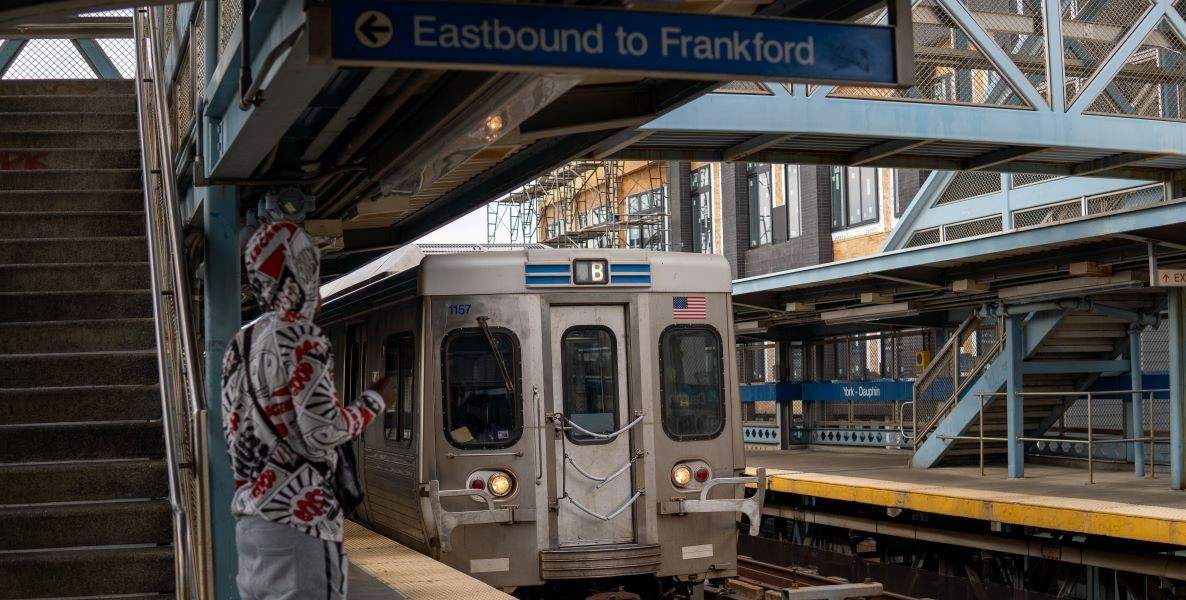


We are now just 16 days away from when the first round of SEPTA cuts will begin if the Pennsylvania legislature doesn’t pass a budget.
SEPTA has been sounding the alarm that this is not a bluff, and 20 percent service cuts are both imminent and ready to deploy if Senate Republicans fail to approve Governor Josh Shapiro’s transit funding proposal. Everyone by now has seen the red signs going up at bus stops around the city announcing service cuts or outright elimination of routes. This is not a test.
Listen to the audio edition here:
All eyes are on Senate Republicans in Harrisburg, where Senate Majority Leader Joe Pittman has continued to make skeptical remarks about transit as recently as last week, while projecting cautious optimism about the budget overall. Budget negotiations are in their final and least transparent form, with three principals — Governor Shapiro, Senator Pittman, and House Majority Leader Matt Bradford — attempting to negotiate a deal behind closed doors.
Transit district Republicans to the rescue?
Most of the Senate Republican caucus does not see transit funding as a priority, but their narrow majority includes four Senators representing districts within the SEPTA and Pittsburgh Regional Transit (PRT) service areas. That list includes Senators Joe Picozzi (Northeast Philly), Frank Farry (Bucks), Tracy Pennycuick (Montgomery), and Devlin Robinson (Allegheny).
These Senators’ constituents rely on transit more than their colleagues’, and their reelection prospects could be at risk if voters blame them for their transportation woes in the event that 45 percent of SEPTA service is wiped out by January, which the agency has said is on the horizon.
Senator Pittman can’t hold together a majority of his caucus on the budget without these four Senators, which should in theory give them some extra agency to secure transit funding if they decide to play hardball with their leadership. Rep. Martina White has said publicly she won’t vote for a budget that fails to fund transit, and it would count for a lot if these Senators told Majority Leader Pittman the same thing.
In a piece from a few months ago about state transit funding politics, I encouraged Northeast Philly Senator Joe Picozzi and his Republican colleagues in the SEPTA zone to capitalize on their pivotal position by acting as a bloc, and trying to leverage their votes for funding to win on some of their other transit priorities.
It would be better if everyone would stop making their own jobs harder this year by trying to figure out a comprehensive transportation package this August, and just agree to agree it’s an issue for the next two years.
Last week, Senators Picozzi, Farry and Pennycuick did exactly that, introducing a package of bills placing new accountability measures on SEPTA to improve its record on fare evasion, pursue more public-private partnerships, and report to the state on their progress addressing various performance and efficiency metrics.
According to a social media post from Senator Picozzi, SEPTA General Manager Scott Sauer helped with drafting the legislation, and SEPTA has endorsed it. In fact, much of what the legislature aims to do is already happening or in progress at SEPTA, helping underscore once again that SEPTA is already the most efficient large transit system in the country, and continually improving.
While these priorities might not top state Democrats’ wish list if Dems were in a similar negotiating position as Picozzi and his colleagues, this is a sign of progress that the pivotal members are putting forward proposals, and they’re getting their way, hopefully securing their votes for funding. On Wednesday, House Democrats passed their fifth transit funding bill this year (HB1788) that incorporates the Senate Republican triad’s demands, and even expands them to include Pittsburgh Regional Transit. That bill also included $600 million in spending for roads and bridges, funded by bond revenue.
Will Senators Picozzi, Farry, and Pennycuick pivot to supporting a Senate companion bill to HB1788 now that their priorities have been adopted by the House? If these three, plus Senator Robinson from Allegheny County, pledge to withhold their votes for the budget unless transit is funded, they could play a decisive role.
What does Senate Republican leadership want?
At this stage, if Majority Leader Pittman and Senate President Pro Tempore Kim Ward would allow the full Senate to vote on a transit bill, it would probably pass. But whether Republican leadership will allow that to happen in time to avoid the first round of SEPTA cuts is the big open question.
The most maddening part of the state transit funding debate is that there doesn’t appear to be anything Senate Republican leaders want so badly that they’re interested in doing a deal on transit funding.
The main asks that have come up in media reports involve taxing and regulating “skill games” machines that have been popping up at gas stations and non-casino venues; school vouchers; and more road and bridge funding.
The skill games lobbying scrum has been a hot mess in a way that could hamper a timely resolution in the timeframe that SEPTA needs. And Democrats in the legislature are highly unlikely to budge on school vouchers, even as Governor Shapiro has been warmer to certain versions of them.
There was some chatter this week that recreational marijuana might be back on the negotiating table, but that issue has its own complex cross-pressures and lobbying interests that make it unlikely to be resolved in SEPTA’s timeframe either.
Senator Pittman has said his caucus wants to see funding increases for roads and bridges equivalent to any increase in transit funding, but that everyone is scared off by the revenue part of the conversation. From Spotlight PA:
“The GOP-controlled state Senate hasn’t offered a transportation bill and hasn’t taken any action to advance the state House proposal.
“Everybody recognizes” that Pennsylvania has “an infrastructure problem” that requires a comprehensive solution, state Senate Majority Leader Joe Pittman (R., Indiana) told Spotlight PA earlier this year.
“But,” he added, “when I pose the question of how we’re going to pay for it, I get a lot of deer in the headlights.”
In theory, it would be admirable to holistically tackle big complex problems like Pennsylvania’s infrastructure needs and funding, but sometimes the right move is just to kick the can one more time. The time to negotiate a big sprawling comprehensive package of road and transit funding was at the beginning of this term, if it was going to happen — not now, when we’re only a week from SEPTA doomsday.
While PennDOT has a very long list of capital projects and a large annual budget deficit, none of this is immediately catastrophic — not in the same league as cutting 45 percent of SEPTA’s service by the end of the year. And the scope of the need at PennDOT is truly enormous compared to what transit agencies need. For reference, if you combine SEPTA and PRT’s annual deficits, it’s about 4 percent of what PennDOT says its annual deficit is for roads and bridges.
It sounds sensible at first blush to say we should just fix both things, but one of these things is immediately fixable within the next week with a comparatively small amount of money, and the other thing would require a months-long or even years-long effort from the Shapiro administration and legislators and a contentiously massive amount of money.
Accountability for thee, but not for me
It’s also darkly amusing how all these accountability bills were needed to win political support for transit funding, but road funding never seems to face any similar demands for accountability or performance reporting. You never hear state Republicans going on about highway fare evasion, or the need to cut inefficient uses of road money from PennDOT’s list.
Unlike some of my fellow liberals, I genuinely thought the Picozzi package of bills was a positive development on the merits, and would have been pleased if a Democrat had introduced something similar.
The United States spends a lot of money on our transportation infrastructure only to get fewer projects and worse results than in other wealthy countries and even some not-so-wealthy countries. PA is no outlier in this. State governments have outsized authority over how our infrastructure money is spent, and the projects that are selected for funding.
So yes, transit agencies deserve more scrutiny on efficiency and cost-effectiveness grounds. But so do state Departments of Transportation over their questionable transportation investments and inefficiencies.
All these accountability bills were needed to win political support for transit funding, but road funding never seems to face any similar demands for accountability or performance reporting.
Not everything on PennDOT’s official Transportation Improvement Projects (TIP) list is absolutely necessary to build, and some of their projects could be less expensive with a smaller scope. The way transportation projects are selected in PA is mostly based on inertia (the project’s been on the list for a long time and kept inching up) and politics (who has the power to get their demands granted).
Unlike some states like Virginia with their Smart Scale program, our Commonwealth doesn’t have an explicit system for ranking transportation investments based on need, or economic development considerations, or the amount of people served per dollar spent. It’s just a big political free-for-all.
While I agree that PennDOT’s true maintenance needs for roads and bridges are greater than the funding our state government provides them, it is hard to take their $9.4 billion annual deficit claim seriously when the safety and maintenance projects are all blended together with a lot of capacity expansion projects in shrinking parts of the state.
Few areas of PA experience serious traffic congestion. PennDOT’s most recent report on this from 2024 found the most congested and unreliable roads in the state were that way mostly because of things like inclement weather, road work, crashes and other incidents — not the kind of recurring congestion that could warrant adding more road capacity. Most of the state is shrinking west of the Susquehanna River, calling into question whether anecdotal accounts of congestion on state and township roads justify adding lanes or interchanges in such places with our limited state dollars.
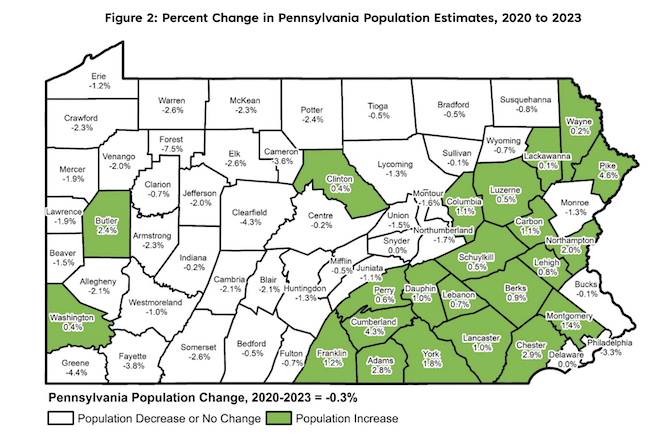
Before our state legislators agree to another multi-billion dollar package of new funding for PA’s transportation needs like Act 89, the first step should be sorting out what the true needs and priorities are, and what are the nice-to-haves that should move down the priority list or be removed from it completely.
This is doubly important because Congress is about to begin negotiating the next multi-year surface transportation reauthorization bill, which will guide how the next round of federal transportation funding is spent. This is information our state legislators should know before deciding how and where to leverage our state transportation dollars. The best thing we can do in the meantime is clean up our list, and decide on some limited priorities for federal funding.
With that in mind, it would be better if everyone would stop making their own jobs harder this year by trying to figure out a comprehensive transportation package this August, and just agree to agree it’s an issue for the next two years.
The Senate Republicans who know their local transit agencies best have put forward accountability proposals, and the Democrats have since voted to adopt those proposals. Everyone will be able to breathe a little easier if Senate Republicans can just take yes for an answer on the Picozzi bills and the extra road and bridge funding and call it a win.
 MORE ON THE BATTLE FOR SEPTA