


Philadelphia’s arts and culture sector faces real challenges, just like the city itself.
Cultural organizations across Philadelphia are confronting a cascade of challenges — rising costs, audiences that have not fully returned to pre-pandemic levels, a philanthropic sector that prioritizes programs over general operating support, and whether they can keep their doors open. The announcement that the Academy of Natural Sciences will close its public museum this September after nearly two centuries is only the latest reminder that the institutions Philadelphians have long assumed would always be here cannot be taken for granted.
That is why Larry Platt’s recent Citizen column, “What Arts Funding?,” raises a question Philadelphia needs to confront: If arts and culture are so essential to our economy, our identity and our quality of life, why does our public investment fail to reflect their value?
The fact that Philadelphia faces persistent poverty and profound needs across our neighborhoods cannot be overlooked as we consider the needs of our creative sector. To the contrary — those challenges make thoughtful investment in the far-reaching possibilities of our creative sector more important, not less. Our sector must be recognized as a civic asset with a proven track record of transformative change. Cultural organizations create jobs, enrich the lives of multi-generational communities, bring activity to commercial corridors, draw visitors, and provide places where neighbors can gather and connect.
When those organizations shrink, the loss is not confined to a balance sheet. It can mean fewer teaching artists in schools. Fewer performances in neighborhoods. Fewer paid opportunities for artists. Fewer people employed in theaters, museums, cultural centers, and heritage sites. And, eventually, fewer places that make Philadelphia feel like … Philadelphia.
The Greater Philadelphia Cultural Alliance advocates for nearly 400 organizations across the region representing the breadth of our regional cultural community — from artists and performing arts organizations to museums, historic sites and creative businesses. For years, that community has raised concerns about public investment in arts and culture. The conversation now deserves to focus not only on the size of the gap, but on the possibility of closing it.
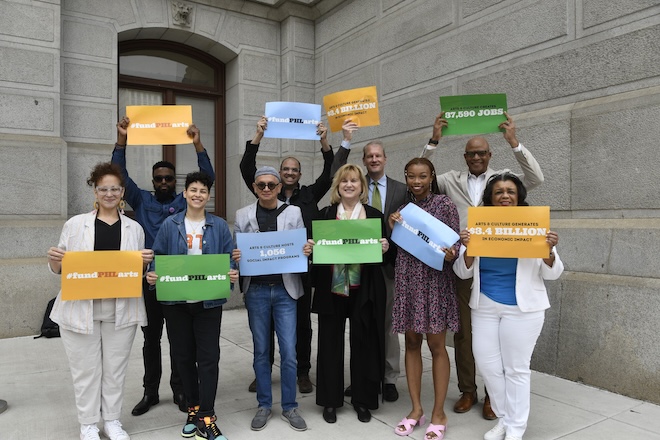
Consider what Philadelphia’s cultural sector already does.
Our creative sector generates $3.3 billion in annual economic activity across our region and supports approximately 132,000 jobs, resulting in nearly $9 billion in wages for local workers. Arts-driven tourism brings visitors into hotels, restaurants, shops and neighborhoods. The data is undeniable: Cultural assets are integral to the infrastructure that helps our region compete, attract people, grow and thrive.
Yet, recent research suggests Philadelphia has been moving in the opposite direction.
SMU DataArts examined 10 U.S. cities between 2019 and 2024 and found that the cultural sectors in cities that made strategic investments in the arts had the strongest post COVID-19 rebounds. For example, of the cities studied, Cleveland had the highest per capita arts investment and, as a direct consequence, its creative sector experienced the most robust revenue growth.
By contrast, Philadelphia’s disinvestment in the arts resulted in the greatest contraction among the cities participating in the SMU study — revenues declined 26 percent, full-time staffing fell 47 percent — the largest workforce reduction among the cities studied — and Philadelphia recorded the greatest decline in audience and community participation.
The comparison of Cleveland’s vigorous post-pandemic recovery with Philadelphia’s decline tells a clear story about contrasting understandings of the potential benefits of arts investments.
Nearly six years since the Covid-19 pandemic, our cultural sector continues to see the troubling consequences of shortsighted policies that reduce investment in the arts. Philadelphia’s Fiscal Year 2027 budget reduced City support for the Philadelphia Cultural Fund from $5 million to $3.5 million. The Philadelphia Cultural Fund’s reduction could mean that grants will reach roughly 100 fewer cultural organizations. Mural Arts Philadelphia also saw its City allocation fall, with anticipated consequences for public-art projects, job training and paid opportunities in neighborhoods.
Other cities provide useful contrasts — not because Philadelphia should copy them wholesale, but because they demonstrate what sustained investment can enable. In addition to Cleveland, New York City, Chicago, and Pittsburgh all invest more per capita in the arts than Philadelphia. Each offers models that can inform our own arts policies.
Pittsburgh, our sister-city in western Pennsylvania offers one model worth studying. The Allegheny Regional Asset District, or RAD, distributes funding from the county’s sales and use tax to arts organizations, as well as libraries, parks, regional attractions and other civic assets. What matters most is what that kind of sustained funding allows cultural organizations to do. RAD’s investments support day-to-day operations and critical capital improvements. That stability gives organizations the ability to plan ahead, respond to emergencies, retain staff, and invest in growth.
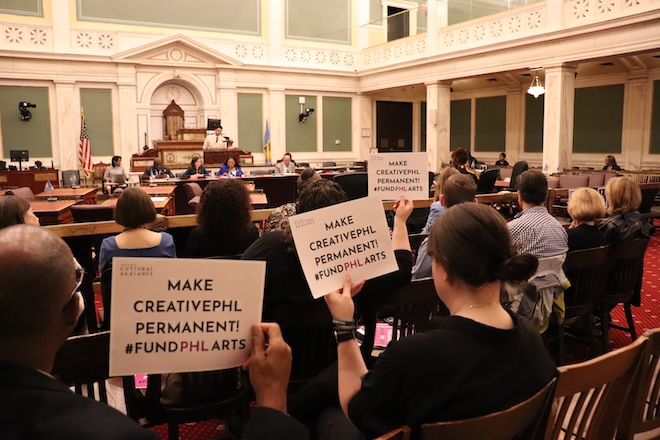
In New York, Mayor Zohran Mamdani and the City Council appropriated a record-setting $323 million to the City Department of Cultural Affairs (DCLA) in the city’s Fiscal Year 2027 budget. Manhattan Borough President Brad Hoylman-Sigal dedicated his office’s entire $50 million FY27 discretionary capital allocation to arts and culture. That investment is intended for tangible projects: renovating cultural spaces, supporting arts education and improving infrastructure. His office has explicitly framed the initiative as a way to leverage public dollars alongside private and philanthropic investment. That distinction matters. Public funding does not replace responsible fundraising, earned revenue or sound business planning. It can make those strategies stronger.
Building a stronger future for the arts and culture in Philadelphia will require new ideas and a real commitment to arts funding as a civic investment. Two key strategies can help create the foundation for lasting support and growth.
First, the City must significantly increase direct investment in arts and culture. Increased annual appropriations to the Philadelphia Cultural Fund will support the general operations of cultural organizations throughout the city. Capital investments will protect and preserve the City’s vast portfolio of heritage and arts-related buildings, ensuring their continued utility and contribution to the vitality of our neighborhoods.
Second, Philadelphia and regional leaders should begin building a dedicated, recurring funding mechanism for the cultural sector. A dedicated arts fund will provide the reliable operating support needed to help our cultural organizations thrive, keep cultural workers employed, programs running, and arts experiences accessible in neighborhoods that may not experience it otherwise. Capital improvements made possible by a dedicated arts fund may not sound transformational until a leak forces a theater to cancel performances. An upgraded HVAC system may not seem glamorous until a museum can no longer safely protect its collections or welcomes visitors.
That is the value of consistent City appropriations coupled with a new dedicated arts fund. Together, they will give cultural organizations the stability to do more than simply survive, but ensure their capacity to better serve their communities, strengthen their institutions, and plan for the future.
The findings of the SMU DataArts report and models from other cities provoke questions worth asking: What could our cultural organizations accomplish if they spent less time filling financial gaps and more time expanding access, employing artists, reaching young people and strengthening neighborhoods?
Arts and culture are among the assets that define Philadelphia. Understanding how to sustain them should be part of the city’s broader conversation about economic growth, neighborhood vitality and Philadelphia’s future.
And, greater public investment in Philadelphia’s arts and culture plays a critical role in shaping the city’s future. It’s why public funding is vital to building a thriving cultural ecosystem.
The Cultural Alliance intends to keep bringing cultural organizations, business leaders, residents and policymakers into that conversation — and to examine solutions capable of matching the scale of the sector’s contribution.
Philadelphia already knows what its cultural community creates.
The question is whether our leaders are willing to act — and invest accordingly.
Patricia Wilson Aden is the President and CEO of the Greater Philadelphia Cultural Alliance, which leads, strengthens and amplifies the voices of 400+ member organizations that make up the region’s cultural community.
The Citizen welcomes guest commentary from community members who represent that it is their own work and their own opinion based on true facts that they know firsthand.
 MORE ON BRINGING ARTS TO THE PEOPLE
