



I have long suffered through conversations about the relative benefits of the arts versus sports. If The Citizen’s Larry Platt has established his bona fides as an Eagles fan, I take a certain pride in being the Philadelphian who could not care less about what occurs inside an arena or stadium.
That is a matter of personal taste. What Philadelphia chooses to fund, teach, and monumentalize is far more consequential. It is a declaration of civic values.
In his recent column, “What Arts Funding?”, Platt makes the economic argument that Philadelphia’s persistent neglect of arts and culture is not simply shortsighted. It is self-defeating. A recent SMU DataArts study found that Philadelphia experienced the greatest cultural-sector contraction among the 10 cities it examined. Local government support covered approximately 7 percent of cultural organizations’ expenses in 2019. By 2024, that figure had fallen to 1 percent. City grants to cultural organizations dropped from approximately 10 cents per capita to one cent. Philadelphia arts organizations responded by cutting full-time staff by 47 percent, the steepest reduction among the cities studied.
This did not happen while Philadelphia’s government was shrinking. From 2021 to 2024, the city’s overall budget grew from $4.7 billion to $6.2 billion, outpacing inflation. We did not run out of money. We made choices about what mattered.
Platt is right that funding the arts is an investment rather than a handout. Southeastern Pennsylvania’s nonprofit arts and cultural sector produces approximately $3.3 billion in economic activity and generates an estimated $429 million in local, state, and federal tax revenue. It supports working people, fills restaurants and hotels, animates commercial corridors, and gives visitors a reason to return.
But I want to take his argument further.
The arts should not have to justify their existence solely through jobs, tourism, and tax revenue. We do not ask the Eagles to demonstrate that they deepen democracy, preserve neighborhood memory, or help our children imagine fuller lives. Sports are allowed to function as identity, ritual, and civic religion. The arts are repeatedly required to arrive at City Hall carrying spreadsheets, pleading to be recognized as economically useful.
Why must culture continually prove its economic value while sports are presumed to possess civic value?
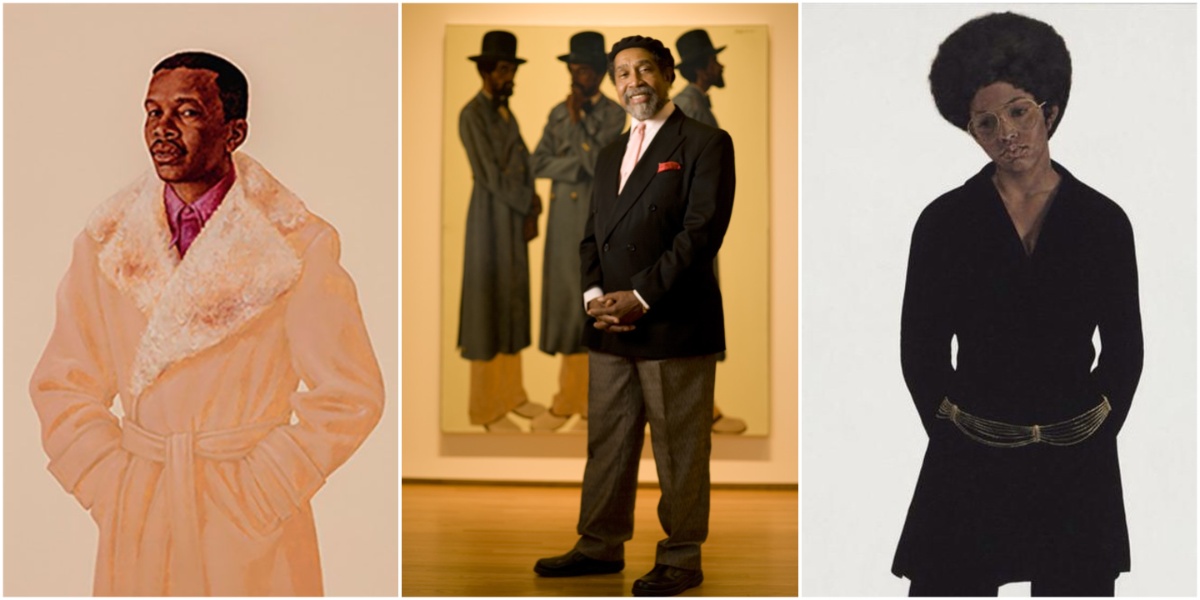
Fuller, Locke, Jamison, Pindell, and more
Culture is not an amenity we fund after a city has resolved all of its serious concerns. Culture is how a city understands those concerns, remembers what produced them, and imagines alternatives. It helps determine who belongs, whose histories are preserved, and who gets to participate in what comes next. Culture is infrastructure.
Philadelphia offers a particularly painful case study. How is it that the city that gave the world Meta Vaux Warrick Fuller, Alain Locke, Judith Jamison, Howardena Pindell, Barbara Chase-Riboud, and Barkley L. Hendricks has done so little to make their names part of our common civic vocabulary?
These are not marginal figures. Fuller was a pioneering sculptor of Black history and identity whose work anticipated the Harlem Renaissance as an apprentice of Augustus Rodin. Locke, the first Black Rhodes Scholar, became an intellectual architect of that Renaissance. Jamison became one of the most consequential dancers and artistic directors of the twentieth century. Pindell transformed abstraction while confronting racism and exclusion within the art world. Chase-Riboud became an internationally celebrated sculptor, poet, and novelist. Hendricks revolutionized portraiture by rendering ordinary Black people with the scale, confidence, and visual authority traditionally reserved for the powerful.
Their achievements were international, but their foundations were distinctly Philadelphian.
They were not simply born here. Philadelphia formed them.
Fuller was educated in Philadelphia’s public schools and won a scholarship to J. Liberty Tadd’s Industrial Art School before studying at the Pennsylvania Museum School of Industrial Art. Locke graduated from Central High School. Jamison attended Germantown High School and trained at the Judimar School of Dance before studying at the Philadelphia Dance Academy. Pindell attended Philadelphia High School for Girls and took free Saturday classes at Fleisher Art Memorial, along with other local youth art programs. Chase-Riboud attended Girls’ High and began studying at Fleisher and the Philadelphia Museum of Art as a child. Hendricks attended Simon Gratz High School before enrolling at the Pennsylvania Academy of the Fine Arts.
Their lives demonstrate what becomes possible when public education and accessible cultural institutions operate as an interconnected civic ecosystem.
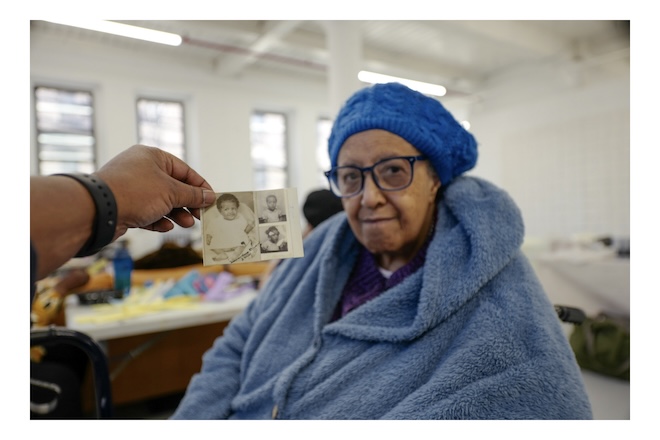
In March, I interviewed Howardena Pindell, who spoke fondly about the art classes she attended as a young person and about visiting the Philadelphia Museum of Art as a child. These encounters helped a young Black girl understand that art could become the organizing force of her life. She would eventually become a groundbreaking artist and activist and, during her twelve years at the Museum of Modern Art, its first African American curator.
Barkley Hendricks did in paint what Philadelphia has repeatedly failed to do in public life. He rendered ordinary Black presence as confident, consequential, and worthy of monumental attention.
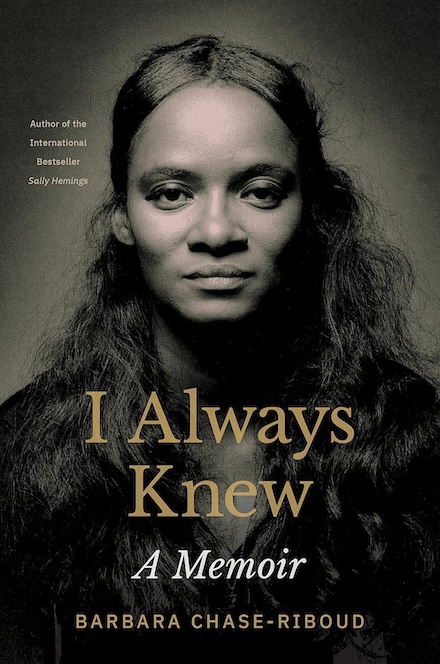
Until recently, I did not know that Barbara Chase-Riboud had attended Fleisher art classes as a child. Her 2022 memoir, I Always Knew, gave me a deeper understanding of the cultural education Philadelphia once provided a young Black girl growing up in the historic Seventh Ward.
The memoir is constructed from 300 letters Chase-Riboud wrote to her mother, Vivian Mae Chase, between 1957 and 1991. Writing from Paris, Rome, and other parts of the world, she describes the museums, theaters, artists, and cultural life she encountered abroad. What struck me was the perspective she carried with her from Philadelphia. She could measure the theaters of Europe against the Academy of Music she knew from her own neighborhood. Before she could interpret Paris or Rome, Philadelphia had taught her how to look.
Chase-Riboud first traveled to Rome in 1957 through a John Hay Whitney Fellowship at the American Academy in Rome. Twenty-two years later, her first novel, Sally Hemings, became an international bestseller and won the 1979 Janet Heidinger Kafka Prize. In 2024, eight major Paris institutions joined in an unprecedented, citywide presentation of her visual art.
Her mother’s home stood one block from where I live today.
Yet virtually nothing in the surrounding landscape acknowledges the extraordinary Black cultural world that existed there, the institutions that nurtured it, or the internationally consequential artist who emerged from it. Throughout the neighborhood we have a scattering of little blue historical markers. They are important, but they are not a cultural strategy. There is not even one for Barbara Chase-Riboud.
We have confused documentation with memory. A historical marker tells us that something once happened in a place. Civic memory makes that history active in the education, landscape, and imagination of a city.
How does Philly value Black culture?
Philadelphia’s relationship to Black culture is frequently extractive. We produce extraordinary talent. We fail to finance or institutionalize it. We watch artists leave and gain recognition elsewhere. We reclaim them once the rest of the world confirms their importance, but rarely convert that recognition into lasting institutions, public memory, or ownership for the communities that produced them.
Philadelphia has never lacked culture. It has lacked the civic imagination and political will to value the people who create it.
Sports possess an organized political and economic machinery. Owners, corporations, unions, lobbyists, and elected officials can quickly align behind a stadium or major sporting event. Sports investment is presented as economic development. Arts funding is treated as discretionary generosity. Sports negotiate from a position of power, while cultural organizations are forced to compete against one another for survival grants.
That imbalance does not prove that sports matter more. It proves that sports have developed a stronger structure of ownership, investment, and advocacy.
If budgets are moral documents, as politicians are fond of reminding us, Philadelphia’s budget tells us that culture is useful for marketing the city but expendable when it comes time to sustain the people and institutions that produce it.
We need more than another rhetorical celebration of Philadelphia as a great arts city. City government should establish a predictable, multiyear funding floor for the Philadelphia Cultural Fund and tie cultural investment to the growth of the overall municipal budget. It should create sustained support for neighborhood-based and Black-led cultural organizations. Philadelphia’s Black artists and thinkers should be incorporated into the public-school curriculum, public art, and the city’s official historical narrative.
We should commission monuments and public-history projects honoring figures such as Fuller, Locke, Jamison, Pindell, Chase-Riboud, and Hendricks. But recognition must also lead to ownership. Philadelphia needs affordable artist studios, permanently protected cultural spaces, acquisition programs for local artists, and cooperative or trust-based models that allow cultural organizations to own the places where culture is produced.
Recognition without resources is a ceremony. Recognition connected to ownership becomes infrastructure.
I do not expect Philadelphia to stop loving the Eagles, the Sixers, or Rocky Balboa, although I can imagine, and dream of, better. I am asking why civic love for sports is treated as natural and inexhaustible while our devotion to artists must continually be justified, quantified, and defended.
In her 2014 essay “Woolf’s Darkness: Embracing the Inexplicable,” Rebecca Solnit invokes her friend, the environmental writer Chip Ward, and his phrase “the tyranny of the quantifiable”: the way what can be measured takes precedence over what cannot. Private profit outranks public good. Speed and efficiency displace enjoyment and quality. Systems of accounting become incapable of counting what matters.
That tyranny has stunted our political imagination. Too much of Philadelphia’s civic vision remains ahistorical, shaped by racial hierarchy and market logic, with little understanding of how our built and imagined environments teach us whose lives matter.
Philadelphia does not need more proof that culture has value. It needs the imagination to act as though it already knows.
Tayyib Smith is a systems architect and entrepreneur working at the intersection of art, inclusive real estate, and cultural equity. As the founding partner of The Growth Collective, he advances equitable ownership, access to capital, and neighborhood-scale economic repair in communities historically shaped by racism and divestment. As principal of Smith & Roller Holdings, Smith leads adaptive reuse and development projects for long-term community stewardship.
The Citizen welcomes guest commentary from community members who represent that it is their own work and their own opinion based on true facts that they know firsthand.
 MORE ON THE ARTS IN PHILLY