


Germantowner Sumanya “Sumi” Narra is familiar with busted up storm drains.
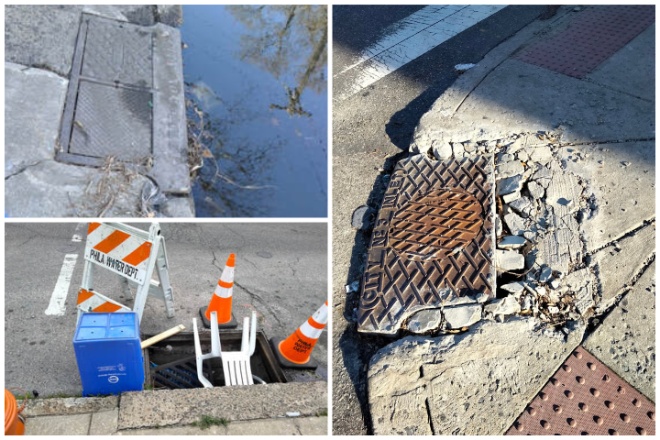
When it rains, she’s seen the drains on nearby blocks fill with leaves and debris, creating puddles people have to jump over. Kids might love it, but it’s a safety issue; she worries about neighbors slipping and falling. One particularly problematic drain keeps falling off the curb. She and her neighbors keep hounding 311 and the Streets Department fixes the pavement around the drain, only for it to collapse again.
Those are the smaller frustrations. Narra, a member of Germantown Residents for Economic Alternatives Together’s climate resilience team, is also worried about the bigger challenges clogged or damaged storm drains pose to the neighborhood. Germantown is one of several neighborhoods in Philly that is prone to flash and basement flooding.
“If the drains are clogged we’re unable to get that water back out,” she says. She remembers worrying that the drains would be blocked this past winter, when a water pipe burst. “It would have been like an ice skating rink if it hadn’t been addressed so quickly,” she recalls thinking at the time.
Heavier-than-average rainfalls are making flash flooding more common nationwide. Much of this is the result of climate change; warmer air can hold more precipitation, so when it rains, it pours. But Philadelphia has one unique challenge contributing to excessive street flooding: trash.
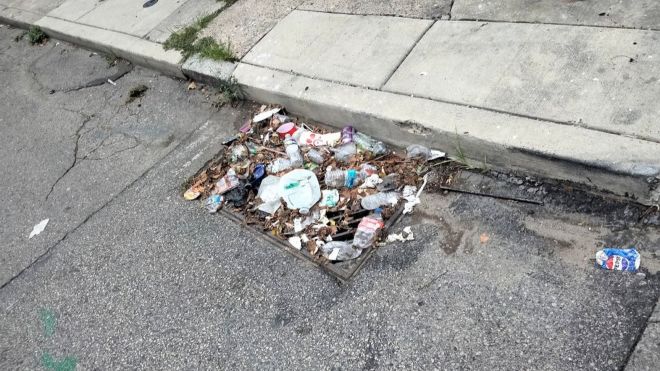
Yes, other big cities like Chicago or New York have litter, but they don’t frequently rank as America’s dirtiest city. When rain water floods Filthadelphia’s streets and sidewalks, discarded Yuengling cans and plastic bottles bob along like a child’s paper boat. Then, they clog the drains meant to keep our streets from flooding, leading to back up on our roads
“Water is a great conveyor of trash,” says Howard Neukrug, executive director of the Penn Water Center. Before coming to Penn, he was the commissioner and CEO of the Philadelphia Water Department (PWD). “When you have a good storm it cleans up the streets. The inlet tries to prevent that trash from getting into the sewer because once it’s there, it’s either going to head to the wastewater treatment plants, or more likely right out into the rivers and streams.”
One Germantown resident thinks he has (at least a partial) solution: Rally neighbors around cleaning up the storm drains. This summer, Kadafi El-Kardah launched Drain Buddies, a volunteer program that encourages neighbors to pick up litter and take care of their storm drains.
Why is Philadelphia flood prone?
Flooding, Neukrug says, typically occurs in one of a few ways: a river or stream overruns its banks, saturated groundwater seeps into basements, rain overwhelms sewer systems, leading to backups in people’s homes, or a flash flood occurs when street runoff overwhelms our drainage system, causing water to pool on roads and sidewalks. Flash floods can be exacerbated by clogged inlets.
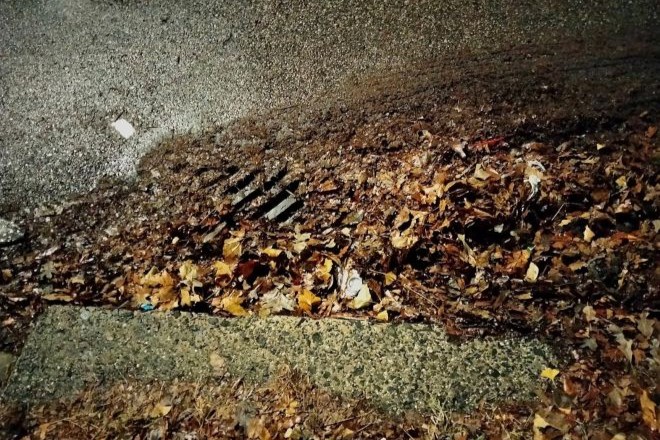
Drain Buddies is designed to address the latter problem, which is common in Germantown, Chestnut Hill, Roxborough, Andorra and Torresdale. Philadelphia’s drains are especially susceptible to clogs because of their age. Many of the pipes are more than 100 years old — and they were designed to accommodate the amount of rain the city received back then. So it’s easy for litter, fallen tree leaves and other detritus to gum up the pipes. If we pick it up and put it in the trash before a storm hits we have a chance of preventing flooding.
“I would love to see neighbors feel excited about taking a little bit of ownership on their block and in their neighborhood,” Narra says. She’s a member of the Drain Buddies advisory board. “It doesn’t take a lot of effort to take a little bit of responsibility for a drain and keeping it clear, so that way water flows and there won’t be backups or flooding issues.”
Shouldn’t the Water Department do that? They do. PWD has a robust and dedicated crew that travels around the city to clean our more than 75,000-plus storm drains. Ahead of big storms, they clean inlets they know tend to flood. When he was PWD’s head honcho, Neukrug remembers receiving a 3 a.m. phone call from then-Mayor Michael Nutter, who had seen water pooling around an inlet and blocking a handicap ramp; he wanted it fixed ASAP.
This is a project that does so much. It improves the social fabric, it improves the cleanliness of our blocks. It gets neighbors out talking to each other.” — Kadafi El-Kardah
“They’ve been doing this for over 100 years. They know which inlets are troublesome,” Neukrug says. “They have a pretty good track record with that.”
Even with that dedication, flooding still occurs — especially when storms like last month’s microbursts take Philadelphians by surprise. PWD’s job would be easier if Philadelphians would stop throwing trash on the ground and start putting it in the bin. Just look at how other states with these programs are doing: Nationwide, volunteers have removed 1,106,019 pounds of trash from 20 states, according to a Hamline University tracker that measures the impact of drain adoption programs.
A solution from a lifetime Germantowner
For El-Kardah, Drain Buddies is about more than keeping streets clean; he sees it as a way to build community with his neighbors. He grew up in Germantown and fondly remembers roaming the Wissahickon as a boy, spending hours walking trails and trudging over streams. He earned a bachelor’s degree in environmental science in 2015 from La Salle University and has worked in watershed education and housing.
He’s remained active in his neighborhood, planting trees as a Tree Tender and becoming a Citizen Planner — someone who is trained to go to zoning meetings and advocate for their neighbors — through the Philadelphia City Planning Commission’s Citizens Planning Institute.
But as he’s grown older, he’s noticed that Germantown has become less connected. As new people move in, they don’t always connect to folks who have called the neighborhood home for decades.
“That social fabric is missing,” he says. “I was seeing the issues in the neighborhood, and I wanted to do something about it.”
He landed on drains because he knows that cleaning and caring for the neighborhood has great potential to bring people closer together. Neighbors can stop and chat while they’re outside caring for their drains. It can also rally old and new Germantowners alike around common causes — like submitting 311 requests to get the City to fix clogged or busted drains. Plus, there’s a drain on almost every block, so lots of neighbors can participate.
Dozens of studies confirm cleaner, greener streets and well maintained infrastructure reduce violence, make people less depressed and encourage people to get outside and get to know one another. Local litter-cleaning startup Glitter has been proving this locally — working with state government leaders to fund block cleaning programs to reduce crime across the city.
El-Kardah applied for funding and secured a $5,500 from Knight Emerging City Champion fellowship. He received an additional $2,000 from the Feet First Philly Public Space Enhancement Grant program. He used the funds to buy supplies, create a digital map of adoptable drains, and build an advisory board of Germantowners and environmental advocates to help guide the project. He opened up the drain adoption application form on July 17.
“As neighbors, we have so much power to fix our own issues. We don’t need the city to do everything for us,” he says.
Claim (and name!) a drain
To apply to be a Drain Buddy, all you have to do is go to the program’s website, pick an available drain you want to adopt from the map, and fill out a short application form. El-Kardah will review the applications and distribute cleaning supplies. He plans to give priority to Germantown residents, but anyone who works, attends school, or worships in the neighborhood is eligible to apply. He’s starting with 30 kits, but has the funds for more.
“This is a project that does so much. It improves the social fabric, it improves the cleanliness of our blocks. It gets neighbors out talking to each other,” El-Kardah says. “I won’t say we’ll solve all the issues, but it gets people to think about how they can work together and actually tackle something that’s been a problem in the neighborhood.”
Each Drain Buddy kit is packaged in a green tote, with a litter picker, a hand broom and dust pan, gloves, a safety vest and trash bags. Volunteers commit to checking in and filling out a form on the drain’s condition at least twice per month. There is a dashboard on the site that will track the number of adopted drains, the amount of litter collected and how many 311 requests they submit.
El-Kardah is also asking volunteers to give their drain a name that represents something they value about the community. Names could be a place — like Vernon Park or Grumblethorpe (where the oldest Gingko Tree lives) — or a value, like “Unity” or “Kindness,” that neighbors want to exemplify.
“As neighbors, we have so much power to fix our own issues. We don’t need the city to do everything for us.” — Kadafi El-Kardah
So far, about seven people have applied. He plans to distribute supplies so volunteers can start cleaning in August. El-Kardah hopes to grow the program by partnering with local businesses to offer gift cards as prizes to the top Drain Buddies. Narra says the advisory board sees potential for the program to engage young Germantowners — perhaps through a system where families clean drains together, so parents and guardians can engage their children.
“Sometimes it’s the older adults who, with great care and responsibility, continue to do the work of caring for the neighborhood. But I’d really love to see more young folks being engaged,” she says.
Is Philadelphia ready for more climate-induced flooding?
Neighbors rallying to keep drains clean is an important part of reducing the impacts of flash flooding — which are only likely to get worse over the next few years.
“People need to have some level of responsibility towards keeping their house, the sidewalk outside of their house, and I’ll go even as far as to say the curb outside their house, free from leaves, debris and snow,” Neukrug says. “In order to have a sustainable, clean, green city, you need to be responsible for yourself and your neighbors.”
But we also need increased investment in upgrading our stormwater infrastructure. For its part, the City has been working to mitigate the impacts of climate-change related flooding. Under Mayor Nutter, Philadelphia launched the Green City, Clean Waters initiative. The 25-year, $2 billion plan calls for increasing green stormwater infrastructure to absorb polluted, rainwater runoff before it reaches rivers and streams or causes sewage overflows into our waterways. The city has built parks, rain gardens, and increased porous pavement as part of the program.
PWD implemented Soak It Up Adoption as part of the program, giving small grants to nonprofits and community civic organizations, to clean and maintain green stormwater infrastructure. Last year, they collected more than 115,861 pounds of trash.
The City has also looked at “grey” infrastructure projects — like underground storage tanks or sewer tunnels — to help address the issue. One plan, the estimated $800 million Wingohocking Sewer Tunnel, proposes building a five mile relief system under Germantown and Mt. Airy to prevent flooding and sewage overflows. But it may face funding challenges and will take 10 years to build; it’s not an immediate solution.
Federal infrastructure funding rollbacks under the Trump administration make all of these problems worse, Neukrug says, because it leaves cities and states struggling to fill existing budgetary gaps, leaving little funds leftover for massive, new projects. He jokes that maybe if LeBron James would be the spokesperson for these issues we could actually get some government funding.
“We don’t have a federal safety net that’s sufficient, so it falls on the state, which struggles everyday, and on the big cities. It’s a national problem; it’s not a local problem,” he says. “How do you prioritize building a new storm sewer when we have crime and the education system and everything else that’s going on to fund? How do you justify it?”
 MORE AMAZING PHILADELPHIA CITIZENS
