


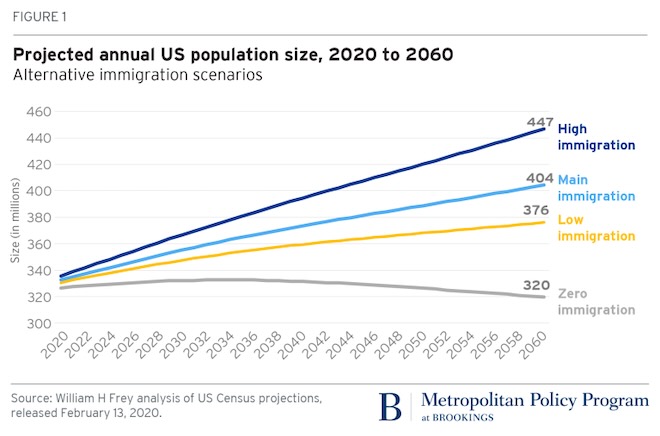
If the U.S. continues its current trajectory of near-zero immigration, the country’s population will likely peak within two decades. When that happens, the math becomes stark: Each time one city gains a person, another city loses one.
For generations, the answer to “why move there?” was simple: jobs. People followed employment opportunities, and cities competed on economic growth. But that equation is breaking down.
Remote work has disaggregated jobs from place, and the very notion of perpetual job growth is increasingly in question with the rise of AI. The fact that New York City only added 27,000 jobs in 2025 — with every sector losing jobs except home healthcare — is likely an indicator of what’s to come.
So what will bring people to a city in the 2020s?
The obvious answer might be affordability. And for a while, that works. For example, Providence, Rhode Island saw an influx of residents drawn to the city’s cheap housing market positioned conveniently next to expensive Boston. But that advantage is already eroding as the price differential between the cities narrows. Cheaper housing is a city’s temporary advantage at best.
If not jobs, and not cheap housing, could the answer be something less tangible and also equally hard to find: community and civic connection?
Tulsa’s experiment in belonging
Even before remote work made it obvious that cities needed new attraction strategies, Tulsa, Oklahoma was already worried about its path to growth. As an Economic Innovation Group report put it:
Tulsa’s traditionally natural resource-oriented economy has been held back from becoming more dynamic and economically competitive in recent years because of inconsistent population growth, difficulty retaining and attracting highly educated workers, and lackluster growth in high-tech, high-wage industries and occupations.
To address this issue, the George Kaiser Family Foundation funded a new talent attraction program that would address all three of those issues and bring in highly educated tech workers. Launched in 2019 before remote work became commonplace, Tulsa Remote offered $10,000 to remote workers who would relocate to Tulsa.
Today the program admits about 600 people annually. Since inception, it’s lured 4,000 newcomers — 1 percent of the population. That might sound modest until you consider that the entire city only net-added 2,000 residents between 2020 and 2024. In other words, without Tulsa Remote, the city would have lost population.
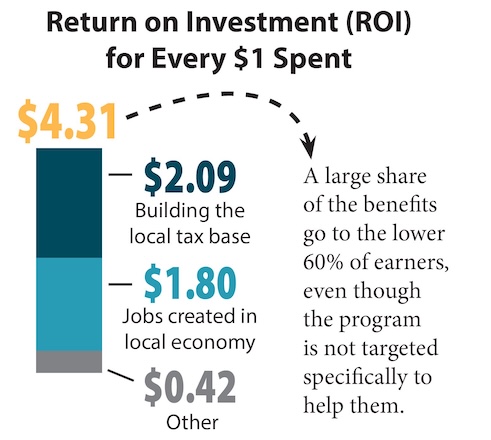
The strategy has seemingly achieved its goals. A study has shown that for each $1 spent on attracting remote workers, the city has reaped $4 more in return.
The program’s $10,000 package has also gotten the city a certain amount of publicity, differentiating it from an array of mid-sized, semi-forgotten midwestern cities like Omaha, Wichita and Des Moines.
But if Tulsa Remote may have set out to prove that luring remote workers is an effective economic development strategy, it may have inadvertently proven something else: that people will move for civic connection.
We need more gathering places
Tulsa isn’t the only city with incentives for people to move there — in fact, more than 100 communities have some financial incentive for relocating. But Tulsa Remote may be the only one with such an extensive set of opportunities for social connection for recruits.
What once began as occasional events has turned into a full-fledged event machine with about a dozen social events each month. Importantly, what began as opportunities for Remoters has morphed into events for regular Tulsans. Meanwhile, those on a Slack channel hundreds of members deep can self-organize activities. In addition, Remoters and their spouses get a free membership to a co-working and business accelerator space that itself has multiple events each week.
While about two-thirds of participants in Tulsa Remote say that the financial incentive was important to getting them to relocate, the broader civic infrastructure for connection seems to be critical to keeping them in the city. Indeed, Tulsa Remote has come under a larger Experience Tulsa brand with several other efforts aimed at promoting city vibrancy.
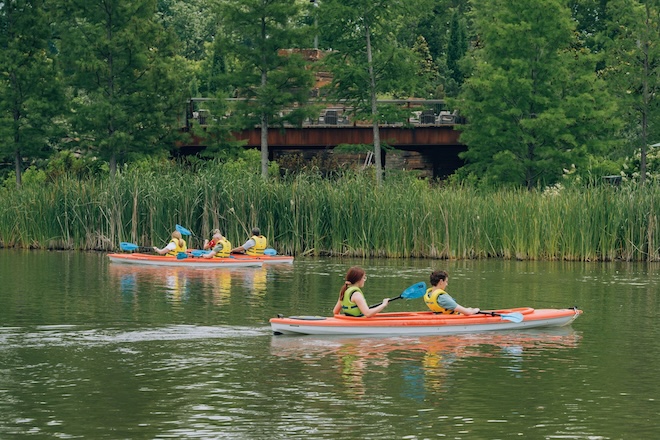
The call to engage extends beyond a handful of professional, economic-development oriented programs to public spaces for connection, such as the 66-acre park, the Gathering Place.
I first heard of the Gathering Place a few years ago when a friend told me he’d flown from Philadelphia to Tulsa to take his young daughter there. Given the six-hour, non-direct voyage, this seemed crazy at the time. But now I get it. It’s like Disneyland — but free, urban, and nature-oriented.
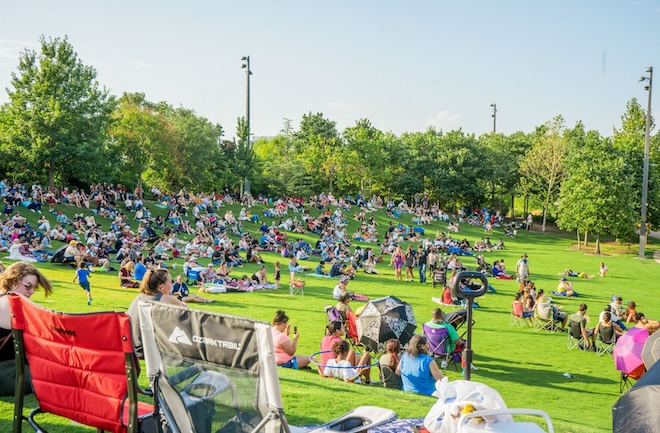
The Gathering Place is a $465 million privately-funded and maintained public park. Geared toward families with young children, the space also serves others. When I walked through it in January, adults were using the free wifi in the Lodge to do work. A cozy fireplace and designer furniture made it clear that this is not a rec room, but rather a true public living room. Walking the grounds, advertised activities included tai chi class often aimed at older adults. If it was beautiful and impressive on a January morning, I can only imagine how amazing it is in the spring.
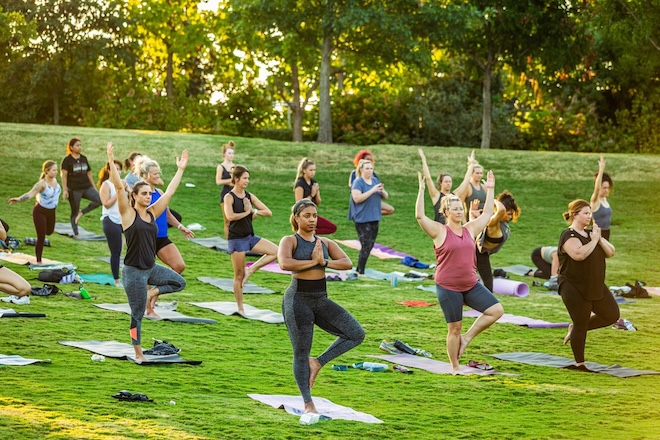
A talent attraction strategy and parks. If this sounds like the average city playbook, the key differentiator is that Tulsa has figured out that civic connection and economic development aren’t two separate goals — but one and the same thing.
A civic connection district
Here’s the catch: essentially all of this work is funded by the George Kaiser Family Foundation, a $5 billion local philanthropy. Most cities don’t have a George Kaiser waiting in the wings.
But should they need one? Cities already fund Business Improvement Districts that organize restaurant weeks and market to tourists. We’ve collectively decided that attracting visitors and maintaining streetscapes justify dedicated funding and institutional support. Why not extend that model to attracting and retaining residents?
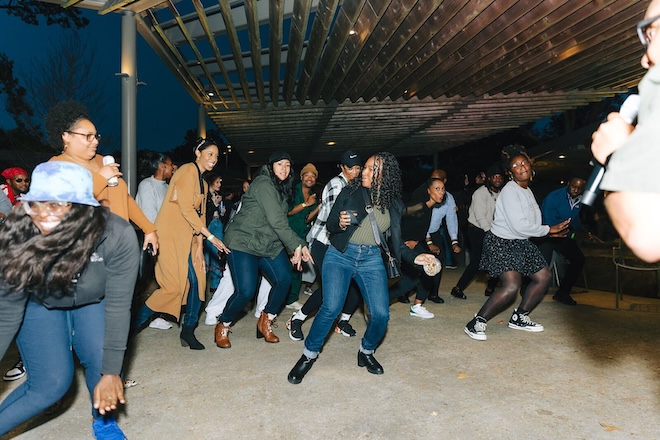
A “Civic Connection District” could function similarly — pooling resources from multiple stakeholders to fund programming, events, and connection infrastructure. The goal wouldn’t be tourism revenue but population growth or even stability, which ultimately drives tax base, commercial activity, and civic vitality.
In a zero-sum population future, cities that figure out how to create belonging — and fund it sustainably — may be the ones that thrive.
Diana Lind is a writer and urban policy specialist. This article was also published as part of her Substack newsletter, The New Urban Order. Sign up for the newsletter here.
 MORE FROM THE NEW URBAN ORDER