


It’s scary to consider, but gas prices hovering above $4 — despite dominating the headlines for weeks — might not be the most pressing energy issue in the country right now. You could make an argument for any number of issues: AI data centers and the surging demand for electricity; the rise of home heating bills in recent years; the ping-ponging of policy goals in Washington.
And when’s the last time you heard a conversation about fracking?
No matter what the future holds for the rest of the country, Pennsylvania is poised to play a leading role in shaping our energy future. Currently, PA is the nation’s top exporter of electricity and a leading natural gas producer. Along with efforts to expand the nuclear and renewable energy supplies in the Commonwealth, a bright opportunity awaits — if only we can seize it, economically, while balancing the goals of decarbonization and equity.
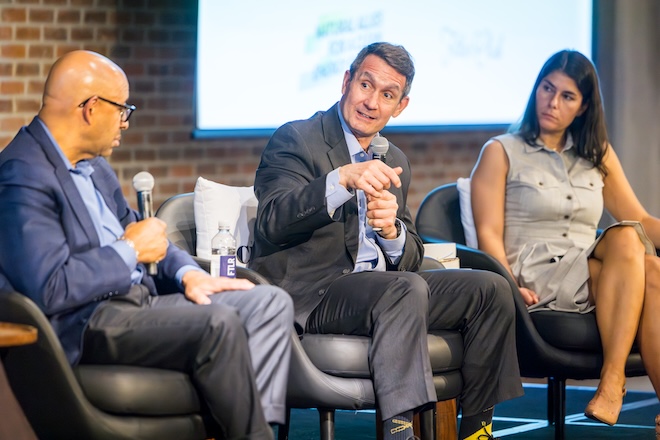
That opportunity was front and center on Tuesday night during a panel discussion hosted by Natural Allies for a Cleaner Energy Future, an industry group dedicated to advocating for a “big tent” approach to American energy — one that’s inclusive of natural gas, renewables, and more energy sources. Citizen Media Group CEO Larry Platt served as moderator for the panel featuring:
-
- Michael Nutter, former Philadelphia Mayor and co-chair of the leadership council for Natural Allies for a Cleaner Energy Future
- Eugene DePasquale, former Pennsylvania Auditor General and Chair of PA Democratic Party
- Ali Perelman, Executive Director of Build Philly Now and Founder of Philadelphia 3.0
The conversation kicked off with a discussion of the “abundance agenda” — an idea put forth by journalists Ezra Klein and Derek Thompson in their book, Abundance — which posits that the best path forward for national energy policy is one that encourages more production of practically every source, prioritizing abundance over scarcity. But also, moderator Platt asked the panelists to think about the downstream implications of achieving that goal: “We’re here not just to talk about what we can pull out of the ground so much as what we do with that abundance,” he said.
Reframing gas
Each of the panelists advocated for a thoughtful, “all of the above” energy strategy in the Commonwealth — one where natural gas is embraced as a necessity, rather than vilified for its environmental drawbacks, like methane leakage during its extraction from the Earth.
DePasquale, who authored the Alternative Energy Investment Act of 2008 while serving in the state legislature, said that the Commonwealth’s status as an energy powerhouse relies on natural gas — and that’s not changing anytime soon. “Without natural gas in the portfolio, [PA’s] energy portfolio simply doesn’t work,” he said. “And I’m not convinced in the current political framework that you’re going to be changing the portfolio standard, period.”
Nutter, like DePasquale, urged people to consider that the Commonwealth’s green energy infrastructure — for solar, wind, and hydro power — is not yet ready for primetime. It currently generates only about 4 percent of the energy consumed in the state. “I’d like a clean-energy future, but I also would like people to be able to cook a meal at night,” he says. “This is the real world, and we already have an abundance of natural gas here.”
Additionally both of the former elected officials advocated for the public to take a long-term view of where things are headed. Natural gas, they said, has been a major improvement over coal, which dominated our energy supply not long ago. Because of that transition, DePasquale said, “you have more reliable energy, more affordable energy, more jobs and a cleaner environment.”
Electric anxiety
Before the concerns over data centers arose, the rising demands for electricity were already apparent in Philly and beyond. The day-to-day electrification of our lives — from hybrid cars to the transitions away from gas stoves to induction — requires urgent attention from a policy standpoint, said Perelman.
“I just don’t think that we’re going to find ourselves in a position where we’re overproducing energy,” she said, calling on elected officials to meet the growing demands. “The fundamental underpinning of abundance is the idea that state capacity is a choice. It’s a political choice. We can either try to maximize state capacity or create impediments.”
Perelman said that this current moment could be a turning point. With rising gas prices at the pump, along with rising PECO bills at home, Pennsylvanians want the government to do more to keep energy prices down. “We think about the government’s ability to provide streets and sanitation or to collect taxes. Most Americans have never really had to think about [government’s role] in energy infrastructure, but we are quickly inching towards a shift in the paradigm.”
Watch the full event here:
Watch event highlights here:
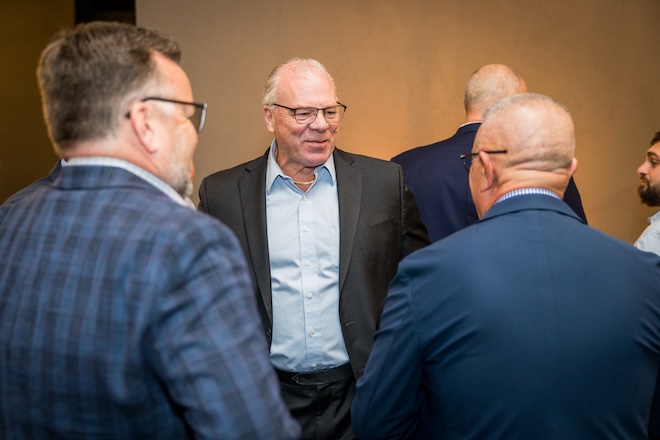
See photos from the evening here:



MORE CITIZEN EVENTS
Left to right: Larry Platt, Michael Nutter, Eugene DePasquale and Ali Perelman.