



Jahnavi Rao remembers sitting on her parents’ couch in 2016, watching as the election results poured in, while Donald Trump defeated Hillary Clinton. A 16-year-old student at Conestoga High School, Rao was passionate about climate change but had dreamed of being a singer her whole life. She’d even performed at the Kimmel Center as part of the International Opera Theater.
But at school the day after Election Day, after observing her classmates and friends on both sides of the aisle “walking in a daze,” she started on a path that would take her life in another direction entirely.
“The resounding opinion from people regardless of who they supported was that this was the most talked about event of our entire lives,” Rao says, “and it felt like we had absolutely no say. And I felt helpless.”
While Rao and her friends weren’t old enough to vote, they still cared about their school, community, and state. She realized that much of the senior class at Conestoga, however, would be old enough to vote by the next election. But no one was talking about voting, and though they had government classes, the responsibility of voting and civic action wasn’t part of the discussion.
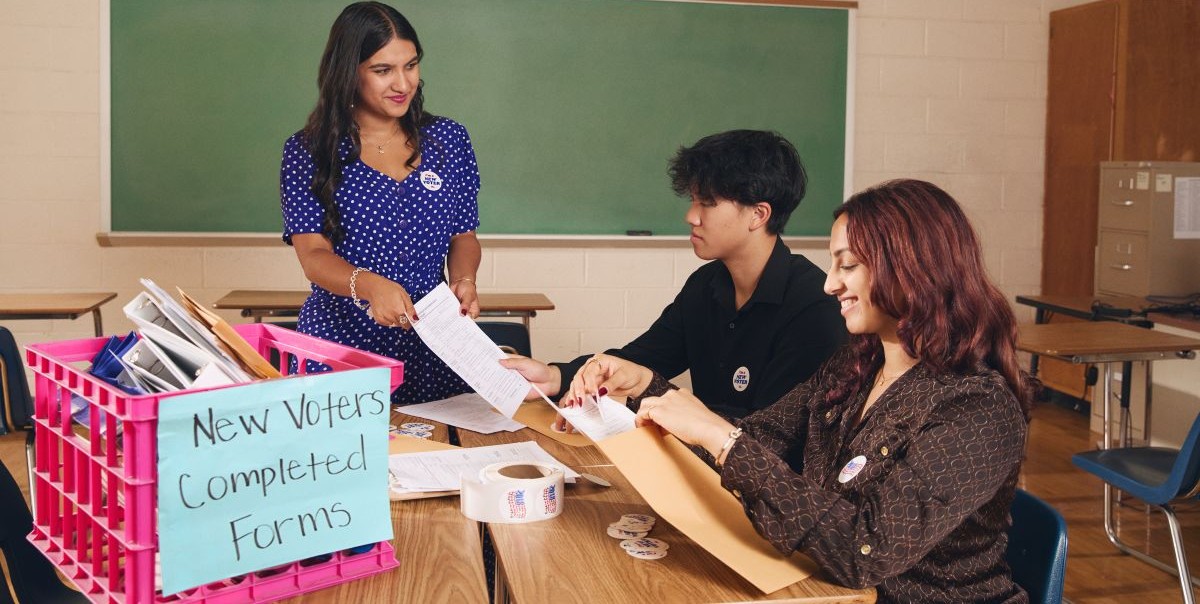
So, Rao decided to do something about it. In 2017, she founded New Voters, a student club that registered 85 percent of eligible voters at her school before the 2018 midterms, became an official 501(c)3 nonprofit, and, by her senior year — the same year as the Parkland school shooting — quickly ballooned out to 100 Pennsylvania high schools.
“That was genuinely the most meaningful moment in my life because being able to stop feeling helpless, because even though I’m not old enough to vote, I can make something happen in my community,” says Rao. “Beyond that, it was the act of making something tangibly happen at my school not despite my youth, but because of my youth.”
Today, New Voters is a youth voter registration and civics organization focusing on getting 18-year-olds to the polls, one of several in Philadelphia empowering youth voters like PA Youth Vote and Vote That Jawn. New Voters is student-led, putting high school students in the lead on organizing voter registration drives and education and awareness of civic responsibilities.
Next year, in celebration of America’s semiquincentennial, they’re organizing a fellowship for 125 talented high school students to take ownership over the nation’s future.
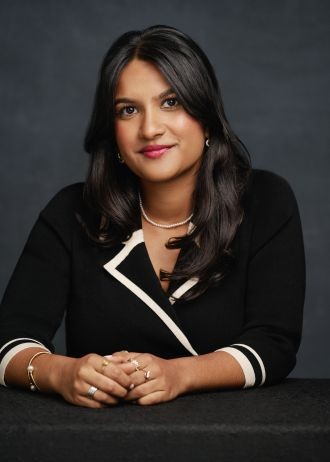
Rao went on to Harvard University, taking time off to build New Voters into a national organization in 2020 and joining the Biden White House as an intern in the Office of Public Engagement before graduating in 2023. Today, her Paoli-based team includes five full-time staff and has employed over 400 student interns. Through the over 1,000 voter registration drives high school students have held since its founding, they’ve registered more than 80,000 new voters and have over 400 school chapters across 42 states. Rao’s work got her recognized as one of Forbes’ 30 Under 30.
Youth Turnout
In 2020, the margin in the presidential election in PA was a little over 80,000 people. The number of eligible 18-year-olds who didn’t vote in 2020? 170,000. In other words, there are enough 18-year-olds alone in Pennsylvania to change the outcome of elections. Since 90 percent of the four million high school graduates in the United States every year are eligible to vote, that’s an enormous potential voting bloc for long-term turnout, as studies show voting tends to be habitual, especially the earlier you cast your first ballot.
Unfortunately, young voters are poorly represented among the electorate. Although 35.6 percent of PA’s 18-year-olds registered to vote between June and September 2024, the total turnout for voters aged 18 to 24 in the Commonwealth was just 54 percent. These numbers have increased 40 percent in the last decade, however, owing partly to PA’s status as a swing state, and partly from frustration on the part of young people who feel like they aren’t being heard. In the 2024 election, 9.4 percent of Philadelphia’s ballots were cast by voters aged 18 to 24.
Lexi Lin is a senior at Conestoga High School and a New Voters student leader. She sees two issues when it comes to getting out the youth vote. First is awareness: No one, she says, is really talking about signing up to vote, like the way friends discuss getting their drivers licenses. The other is that many feel they don’t have a voice or an impact, and consequently aren’t motivated to vote.
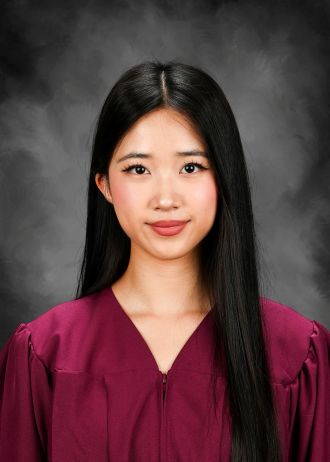
This fall, Lin, who was already interested in social justice advocacy, was looking to get more involved in civics. Because it was founded at Conestoga, there is, Lin says, “actually a lot of buzz regarding New Voters at our school. A lot of kids know about it already, and I thought that New Voters was the perfect opportunity.”
The application process is fairly straightforward and similar to a job or internship application: there’s a basic Google form that asks what position you’re looking for, strengths and weaknesses, skills and experience, and to submit a resume. Lin was called for an interview a few days later, and was offered the role of a state coordinator in the outreach branch.
New Voters assigns each new student leader a college-age personal mentor who provides guidance on everything from scripts for outreach to managing team members, and how to connect with different groups and organizations. They meet multiple times a week for follow up and accountability, learning their state-specific voting regulations as well as nonpartisan activism and organizing practices. New Voters outlines expectations for the students, including attendance and reaching outreach or signup goals. Success is rewarded with gifts up to $50 in value such as hoodies, a camera, and a plaque, plus press and recognition, like the PA Governor’s Civic Engagement Award.
“My team and I have been able to send over 500 emails just to high schools, libraries — just basically outreaching to get people, students, teachers to help students set up these voter registration drives. I think education, awareness in general, is a huge part of the work I did with New Voters. And then in a statistical sense, we were also able to get kids to sign up to vote, to pledge to vote. And I think it’s been a great experience.”
Students reaching students is also highly effective. Rao says that youth voter turnout all comes down to peer-to-peer communication. Students and their friend groups network with their classmates and clubs. They know teachers well enough to establish allies, know the school micro-cliques, team captains, and share Snapchat conversations.
“I, at this point, am 25, and I’m too old to talk to a high school student,” Rao says. “I’m too old, a teacher is too old, Dwayne the Rock Johnson is — look, if your classmate can get you to come to homecoming, come to their recital, or a football game, they can surely get you to fill out a form that takes less than five minutes.”
Rao believes that this approach is effective on many civic fronts, from activism to awareness on community issues. Speaking to the next generation of voters can only really happen in a high school: “It’s the last place where every single person goes.”
The New Voters 250 Fellowship
Students also have opportunities to intern with New Voters, which hosts a free New Researchers Summer Program for up to 80 high school students to learn how to conduct research for impact.
This year, New Voters is accepting applications for the New Voters 250 Fellowship, a national civic engagement program for high school students. The Fellowship will equip 125 exceptional student leaders to organize 250 voter registration drives and civic projects in their communities for America’s 250th anniversary before the 2026 midterms. To be eligible, applicants must be current high school sophomores or juniors. They’re looking for young people with a passion for civic action in their communities, and preferably with previous civic engagement experience.
Fellows will be required to complete 75 service hours on a community project (of their choosing) and attend monthly webinars on civic topics featuring guest speakers. They will receive all the materials necessary to help hold their registration drives, personal mentorship and support, and New Voters 250 Fellowship swag. In June, they’ll be gathering at the University of Maryland for an intensive four-day summit which includes an excursion to Washington, D.C.
Youth voter organizations haven’t really brought all their leaders together before, Rao says. This gathering of students right outside of the nation’s capital for its 250th birthday holds special significance.
“Four million students graduate from high school every year. And we want to make sure we’re not only registering them to vote, but we’re equipping and enabling them to organize and be leaders forever.”
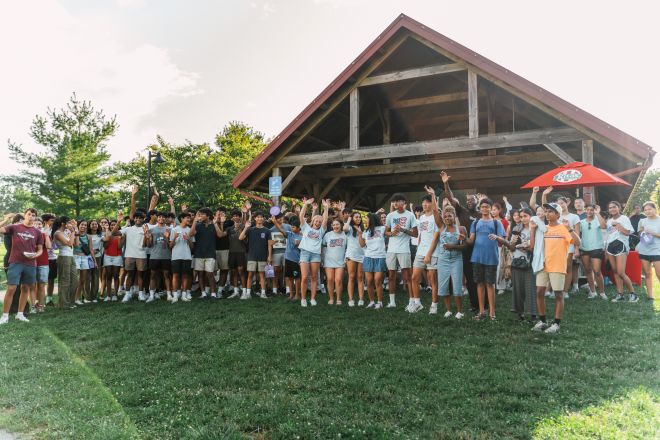
“America’s next 250 starts with you(th).”
Rao has a hypothesis: If you run a registration drive in your schools, you can extend those same principles of the near-peer and peer-to-peer organizing model to any other issue that you care about. New Voters is pursuing that idea with a deep focus on service and local impact through its New Voters Research Network.
As it turns out, there is limited research on youth voter behavior, and high school political behavior research is essentially nonexistent. No one can definitively say what engagement tactics work best, what time of year is best for outreach, and who should be the messenger on political issues. Good research is needed, and Rao believes young people need to lead it (or at least be heavily involved). So they’re building a community of researchers through their researchers program and getting answers to those questions.
They have also established the New Voters Collaborative, a coalition of organizations that care about high school voting. The coalition meets monthly, publishes articles, writes reports and white papers, and distributes what they learn amongst each other. Vote16USA, PA Youth Vote, the League of Women Voters, and various high school-led organizations are members.
Rao wants the New Voters Fellowship to grant students the “feeling of knowing you can make a difference” she had when she held her first successful voter registration drive. “Young people feel unaware, and that they don’t have a say in the whole concept of the nation’s 250th. That’s why our tagline is: ‘America’s next 250 starts with you(th),’ really emphasizing that ownership. This is your 250. So, whatever you want to do with it? Make it happen.”
Lexi Lin plans on pursuing public policy in college, potentially in the business realm. “Just being able to have a voice is very, very important. And I feel like New Voters definitely made that path a lot more clear. I think that there’s a lot of impact that can come with civic engagement and policy change for the better is something that I think can benefit society very positively.”
Applications for the New Voters 250 Fellowship are now open through December 31, 2025. High school sophomores and juniors interested in civic leadership and voter engagement are encouraged to apply at: http://tinyurl.com/NV250Fellow.
 Every Voice, Every Vote funds Philadelphia media and community organizations to expand access to civic news and information. The coalition is led by The Lenfest Institute for Journalism. Lead support for Every Voice, Every Vote in 2024 and 2025 is provided by the William Penn Foundation with additional funding from The Lenfest Institute for Journalism, Comcast NBC Universal, The John S. and James L. Knight Foundation, Henry L. Kimelman Family Foundation, Judy and Peter Leone, Arctos Foundation, Wyncote Foundation, 25th Century Foundation, and Dolfinger-McMahon Foundation.
 MORE ON THE YOUTH VOTE FROM THE CITIZEN