

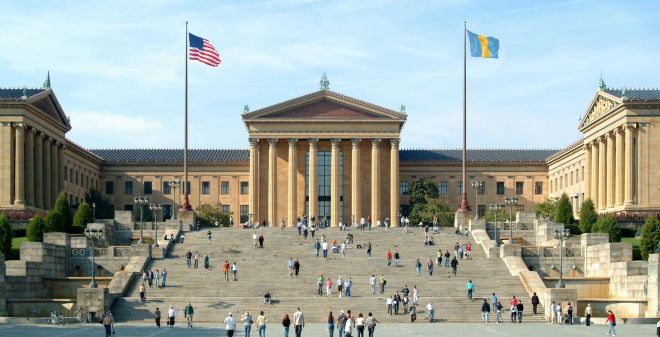


Last month, the Philadelphia Museum of Art announced a rebrand which included a new name — Philadelphia Art Museum — a new logo, and a new visual identity. Though there was some positive response, the reaction to the rebrand was overwhelmingly negative on social media. Imagine a local Cracker Barrel fiasco and you get the idea. The museum’s director, Sasha Suda, was fired within a month, and now Suda’s suing the museum.
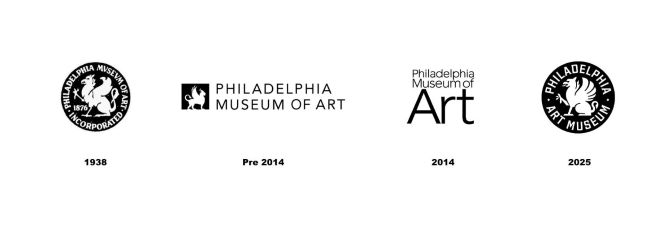
(For what it’s worth, I think the name simplification made sense and think the logo is actually the best of the bunch. I have problems with the website’s theatrics and the nickname, PhAM.)
Suda had been hired in 2022 to help turn around a museum roiled by a sexual harassment controversy and in need of a refresh. But five years after the pandemic, museum attendance has remained 15 percent down from nearly 775,000 attendees in 2019. Its 115,000-square-foot annex, the Perelman Building, has been mothballed since its 2020 pandemic-forced closure. It’s running an annual deficit of about $2 million on a total budget of $62 million. Though the rebrand was meant to convey a more inviting, less pretentious vibe, and jumpstart programs like a DJ-in-residence that were meant to bring in a younger crowd, those moves sound a lot like the the proverbial rearranging-chairs-on-the-Titanic when you consider the outlook for museums writ large.
As the Philadelphia Inquirer notes, the Philadelphia Art Museum is far from the only cultural institution suffering these days:
Slightly more than half (55 percent) of U.S museums have not recouped their pre-pandemic attendance numbers, according to a forthcoming survey by the American Alliance of Museums that drew data from 511 museums (of which 98 were art museums).
Just down the block from the Philadelphia Art Museum, the Academy of Natural Sciences of Drexel University cut its days of operation by half and now is just open on weekends.
Museums have actually fared better than some other kinds of art. According to the 2025 PA Culture Check released by the Philadelphia Cultural Alliance, only 41 percent of performing arts organizations in the state have returned to pre-pandemic levels.
From these statistics, you might think that Philadelphia’s art scene — and that of most American cities — is moribund. But that couldn’t be farther from the truth. Instead, I’d argue that the creative class in Philadelphia today is the strongest it’s been since the early 1990s when then-Mayor Ed Rendell originated the Avenue of the Arts downtown.
This time, the art scene that is thriving in Philly and many other cities is not buoyed by legacy institutions nor even new institutions. Rather it’s smaller entities that are more likely to be for-profit than nonprofit, and less likely to be producing the kind of art that would fill a museum or a concert hall. Instead, the creative class of podcasters and ceramicists, installation artists and textile artists, independent musicians and Substackers is imbuing Philadelphia with the kind of contemporary feedback loop that a generation accustomed to constant banter on social media expects from the real world.
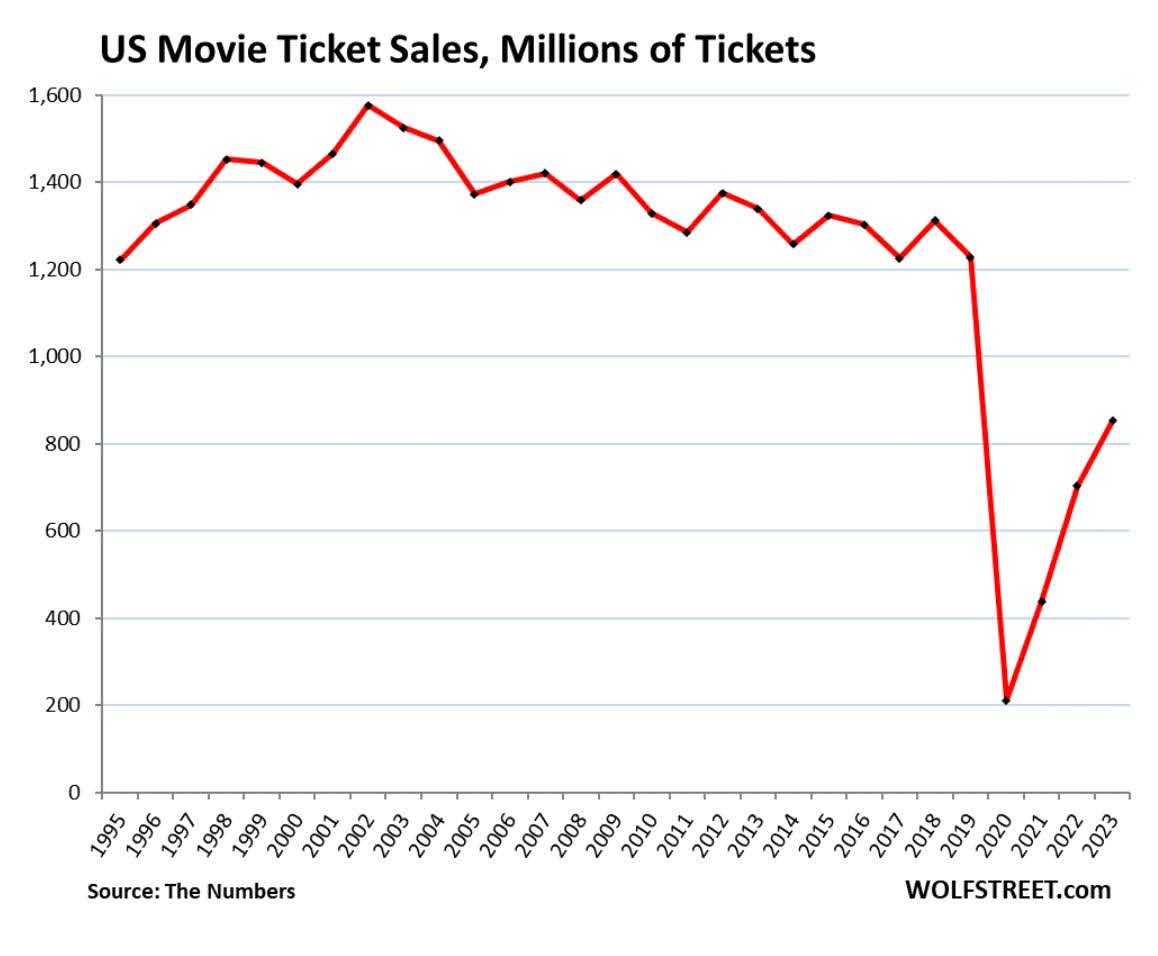
Ultimately what distinguishes the two art scenes is the business model at play. The thriving art scene is fueled by creative entrepreneurs, some who have created small businesses — music venues and gallery-like stores — and others who have created more nimble organizations. Consider the growing Philadelphia Film Society, which touted a 160 percent attendance increase between 2022 and 2024 at a time when movie tickets sold in the U.S. have plunged by nearly half since their peak in 2002.
Though PFS raised more than $3 million in donations to renovate its main film center, it merely operates other theaters in town rather than owning expensive real estate. Other organizations are swapping fundraising that mostly depends on philanthropy and individual donor largesse for the common man’s FOMO of casual experiences, classes, and impulse art buys.
For example, the soon to open Ministry of Awe, an 8,500-square-foot independent art experience, launched by artist Meg Saligman, that’s been all over the press this week. Saligman has worked with more than 100 artists and arts organizations on realizing what’s been called an “artistic fantastia.”
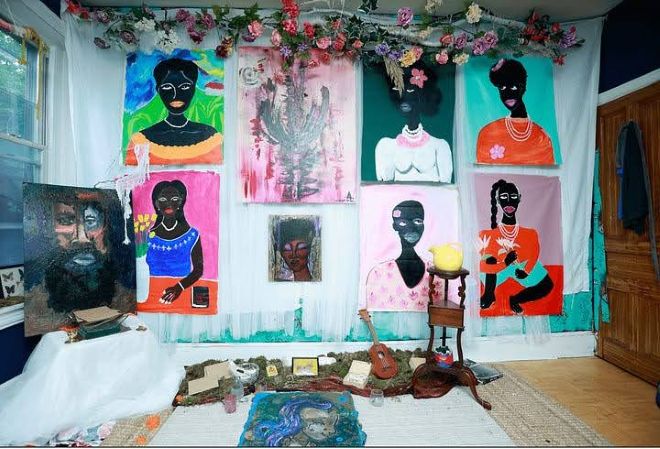

Spaces like Ministry of Awe, The Colored Girls Museum in Germantown, or Academy of Vocal Arts in Rittenhouse — all occupying small-scale buildings — have turned the prevailing art institution model on its head. Instead of spending big on fancy real estate, they’re turning homey (or actual homes) into a human scale experience that doesn’t need a huge endowment to operate.
By contrast, many of our oldest institutions are saddled by their enormous and expensive buildings or compelled to raise astronomic sums to finance new buildings. The new $160 million David Adjaye-designed Studio Museum in Harlem just opened to raves — but how can an organization that gets fewer than 150,000 annual visitors sustain such an investment?
I thought about the unenviable position these legacy organizations are in when I attended a members’ reception for the Barnes Foundation’s new (and excellent) exhibit of Henri Rousseau paintings.
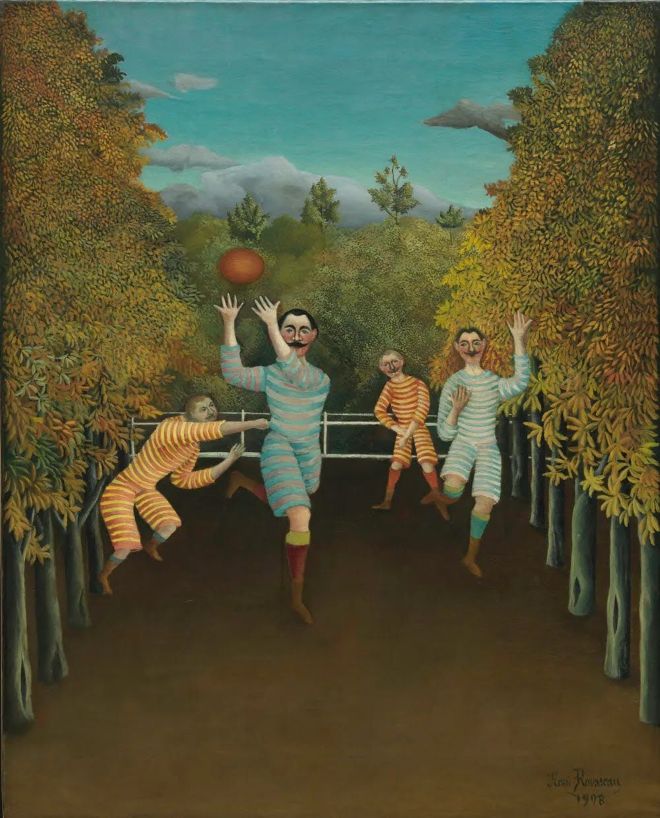
At 44, my husband and I were clearly a younger generation than most of the other member attendees. As I scarfed down a plate of hummus and pita, a young jazz trio played and I surveyed the Boomers in the room, thinking about how many organizations are struggling to bring in younger demographics.
I then thought of another event, a public presentation where Lindsey Scannapieco, founder of the creative class epicenter Bok Building, talked about purchasing new buildings from the former University of the Arts for a Village of Industry and Art. Scannapieco talked about her deep social capital — among artists, influencers, the Philadelphia Inquirer — that helped move the needle to get the money needed to win the building at auction. Bok had inspired a devotion similar to that for political candidates.
These people spent their time advocating for Scannapieco by writing local representatives and posting on social media — and no need to call them a member, thank them with a glass of wine and a jazz trio. Saligman’s Ministry of Awe seems similarly primed to leverage the the multiplier effect of having built something with a community, not for it.
Many ailing cultural institutions have no role for the public aside from patron. They can invent new ways for people to patronize — the DJ nights, the kids craft class — but ultimately few institutions are moving toward a model where what they’re trying to build is a community, rather than a revenue source. They also have limited the kind of exchange to the museum transferring information and hopefully enlightenment, with attendees left to assess whether that’s “worth” the $30 cover change. People would give something more back if there was a real relationship at hand — not just “community engagement” through “interactive” exhibits. It’s a misstep to think that social capital is any less important than the cold, hard stuff these days.
Diana Lind is a writer and urban policy specialist. This article was also published as part of her Substack newsletter, The New Urban Order. Sign up for the newsletter here.
 MORE FROM THE NEW URBAN ORDER