





Last week, I wrote about how Tokyo has launched a four-day workweek for city employees in a bid to support young people starting or growing a family.
Now I want to share another idea for how cities can support families: the family zoning plan.
Most people would agree that the cost of housing is too high for many families to live in cities. The typical YIMBY refrain is that we just need to build more housing to solve this problem. But for families in particular, the problem is not just the quantity of housing; it’s also quality or the type of housing we’re building.
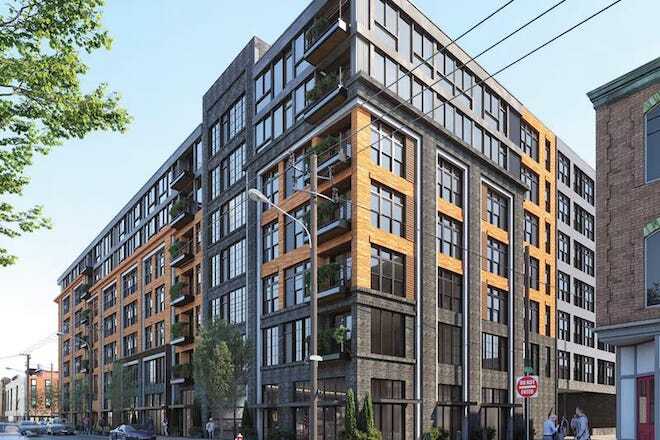
Perfect example: Last week in Philadelphia, The Inquirer reported that a vacant lot in Queen Village will be turned into an apartment building with 157 units. The project sits in one of the city’s top public school catchments — literally a two-minute walk from a school — and there’s not one three-bedroom included in the building. This is highly typical of large, urban new construction projects, which are mostly composed of studios, one-bedrooms, and a few two-bedrooms.
Bobby Fijan, a developer and proptech co-founder, lived in Philadelphia, where he saw this problem first-hand. He’s now on a mission to use developer floor plan data to show how to reconfigure apartments to be more family-friendly. Too bad he didn’t consult on this one!
For smaller sites, most developers opt to construct single-family homes because that’s what can be built without a zoning variance. While townhouses are fine for families, they are the least efficient use of land and result in very few families actually being housed.
Since 2014, Philadelphia built 4x as many Studio as 3BR apartments
Since 2018, Minneapolis built 6.5X as many Studio as 3BR apartments
— Bobby Fijan (@bobbyfijan.bsky.social) February 13, 2025 at 6:07 PM
So, we need more mid-sized apartment buildings. Mid-sized apartment buildings are naturally better suited to larger, family-sized apartments. But most smaller project sites are still zoned for single-family housing, or at most, triplexes.
San Francisco, solving the problem?
To address this problem, San Francisco announced last month its intent to create a Family Zoning Plan — it’s a step toward tackling both the problem of quantity and the quality of the housing getting built.
The Family Zoning Plan proposes to change San Francisco’s zoning code by “removing obstacles to building dense multifamily housing in most neighborhoods and creating new opportunities to build housing near neighborhood amenities, including good schools, job opportunities, and transit,” according to the Bay Area planning advocacy organization, SPUR.
Key provisions include:
- Zoning for six- to eight-story multifamily housing above shops, restaurants, and other businesses on neighborhood commercial streets with relatively heavy foot traffic and in key transit corridors, as well as taller high-rise buildings in certain high-volume transportation corridors.
- Implementing “density decontrol,” thereby allowing property owners to build additional housing units while complying with existing height restrictions and setback requirements on many residential streets in high-resource neighborhoods. Small apartment or condominium buildings up to four or six stories will be permitted.
The truth is that San Francisco could have called this the “Mid-Sized Building Zoning Plan,” but no one other than urban planners would have cared. The family focus is key — and pretty brilliant.
What is family-focused housing?
Using the framing of “family” is both totally sincere and also a kind of brilliant cover to usher in more mid-rise development that benefits everyone, not just families. It’s really hard to argue with being against families that are struggling to afford housing and so that framing is bound to soften any attacks on this plan.
But what I like even more is that this plan is making a connection between families and multi-unit buildings. Having grown up in a 42-story building, I know firsthand the many ways that living in an apartment building is actually great for families.
I saw how my family outsourced a lot of small tasks to our building’s super and doormen: grabbing packages, fixing a tub drain, and keeping an eye on me while I waited for a bus in the morning while my parents headed off to work. Sometimes I think that part of the reason that New York City is so productive is that everyone who lives in apartment buildings gets a fractional assistant.
Home maintenance is the last thing any young parent wants to deal with while juggling the demands of family schedules. For these very same reasons, many older adults choose to live in apartment buildings. They’re happy to pay a maintenance fee in exchange for the occasional helping hand.
Living in new construction would also benefit many families. Most of the housing stock that is built for families is old. (In Philadelphia, I’ve yet to live in a house built later than 1890.) So, not only do families have to contend with maintaining a home on their own, but they also have to deal with maintaining an old home at that.
Apartment buildings can offer more than just convenience. Many family-oriented apartment buildings have shared playrooms and courtyards where parents can connect with one another while their kids socialize. Apartment buildings can offer a community that can be particularly useful in the years before kids have the built-in social lives that come with K-12 school.
I loved living three stories above my best friend — from a very young age, we could go between each other’s apartments without parents having to worry about us and we were constantly and independently going up and down the stairwells for playdates.
I hope this Family Zoning Plan helps families to see themselves in a multi-unit building, rather than just single-family housing.
Is family housing the new workforce housing?
We’ve created transit-oriented zoning so that more people can easily access transportation. We’ve created workforce housing with the idea that we need to retain essential workers. We should think about family zoning in a similar way — to enable families to better access our cities and to retain our families.
San Francisco’s plan for mid-sized buildings is a very good start. But it doesn’t go far enough. So far as I can tell, this plan does not call for changing the building code requirements to enable single-stair buildings. This extensive piece by Pew about single-stair buildings (Check out that read time of 93 minutes!) makes the case very well why single-stair reform is essential to getting larger apartment sizes, more climate resilient housing, and lower cost construction. Single-stair reform is particularly effective for infill lots like those described by the Family Zoning Plan. Unless I’m missing something, it seems odd that single-stair reform isn’t part of this package.
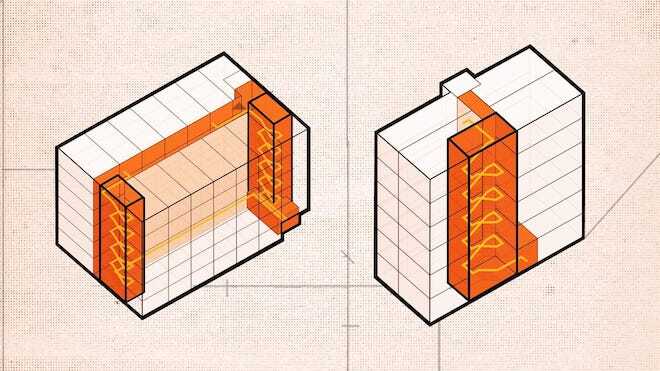
Another thing San Francisco could do: Give developers a tax abatement for including family-sized apartments in their buildings. While requiring larger apartments is a bad idea, it seems pretty reasonable to incentivize it somehow. I think encouraging some kind of ratio of apartment sizes that produces a better mix of housing options would be best; otherwise I could imagine developers would take advantage of the tax abatement to just build extra-large luxury apartments.
We have come to the realization that we need something other than market-driven YIMBYism to keep local essential works such as school teachers, nurses, firefighters, etc. in our most expensive communities. Perhaps it’s time we realize the same about families — the market for new construction often won’t create family-sized units if left to its own devices.
Diana Lind is a writer and urban policy specialist. This article was also published as part of her Substack newsletter, The New Urban Order. Sign up for the newsletter here.
 MORE FROM THE NEW URBAN ORDER