


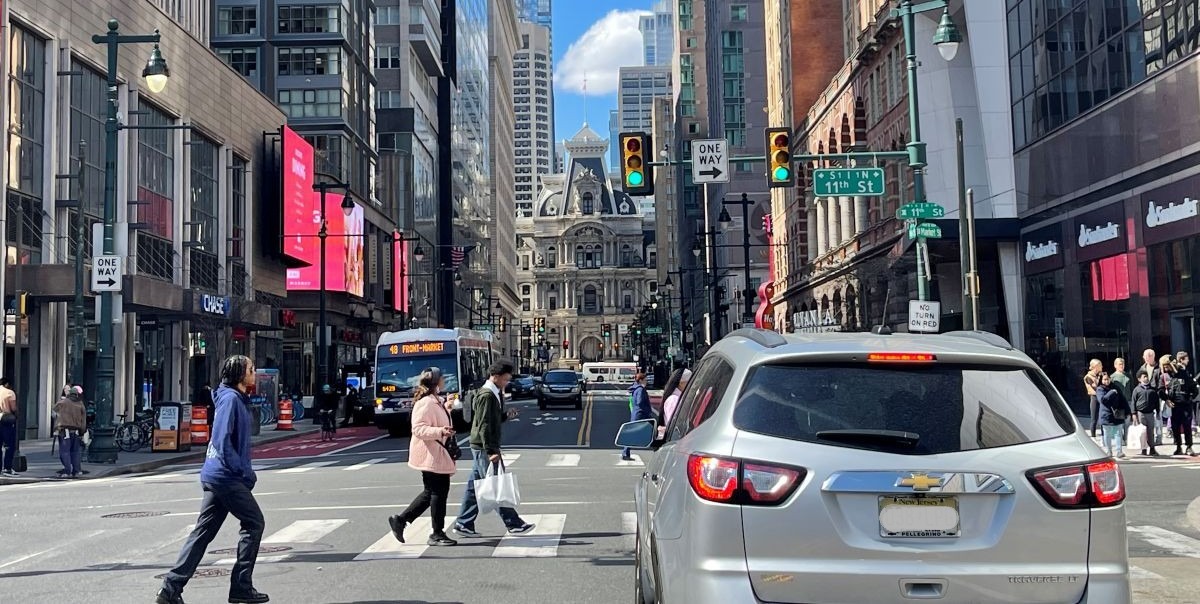


Coinciding with the launch of Mayor Parker’s Market East advisory committee, chaired by Brandywine’s Jerry Sweeney, the Department of Planning and Development has been soliciting ideas from residents about how to improve Market East.
There are a lot of unsound ideas out there about Market East economic development that misunderstand the core problem. (Monday’s Axios Philly newsletter is just the latest entry in this series.) The main problem Market East has is the mismatch between the volume of commercial activity needed to fill in such a large street with shopping and offices and other commercial ventures, and the level of demand that exists today. There are a lot of different ways to approach closing this gap, but the commonality is that Market East just needs to bring in a lot more of everyone.
This seems like an obvious point, but it’s worth spelling out concretely because a good portion of the Sixers arena skepticism was coming from people and groups whose primary complaint about the arena was the potential impact on parking and traffic — two unavoidable trade-offs of any plan that succeeds at bringing a lot more people and jobs and visitors to Market East.
As Center City District frequently points out, Center City has had a stronger post-pandemic recovery than some more purely-commercial city downtowns in part because we have a more substantial residential population downtown, and things don’t completely empty out after 6pm as in some other places.
While Center City commercial occupancy overall is up, Market East’s commercial occupancy is at only 72 percent as of this May. According to CCD’s latest report, Market East also has more of a “9-5” rhythm than Rittenhouse Row or Midtown Village, which stay busier at night.
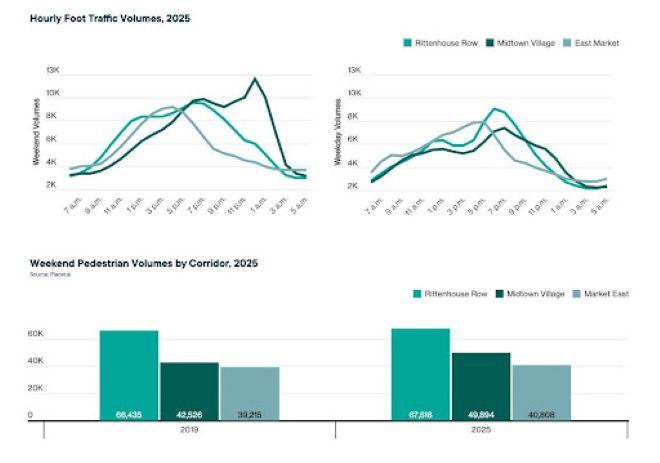
A mix of high-rise housing and office buildings, with ground floor retail services and hospitality, is still the classic recipe for Center City economic development, and it’s been working on pockets of Market East already. The need to think outside the box in this case has been vastly overrated; many boring but correct answers are right there, inside the box.
We just need to find a way to get people to keep doing more of what they’ve already been doing, with a new emphasis on development finance interventions to offset current headwinds from high interest rates and construction costs.
CTRL+C, CRTL+V East Market
Getting the ball rolling on several more projects of a similar scale and site plan as National Real Estate’s East Market development between 7th Street and City Hall would be a good goal for the Mayor’s Task Force.
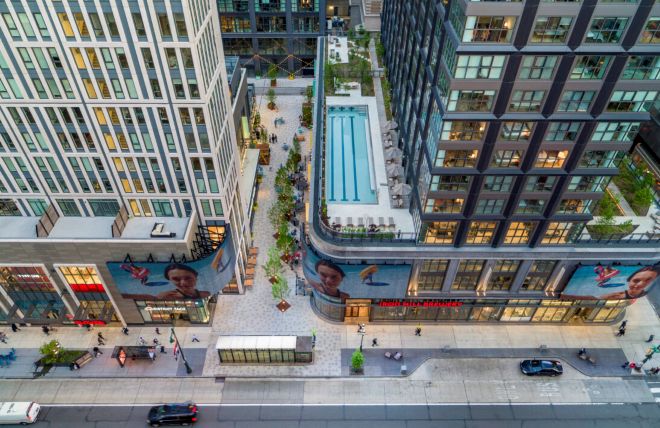
The East Market project is exemplary because it’s the right scale to deliver on the goal of having a lot more baked-in foot traffic in the area from new residents. It’s also impressive how they broke up the massing to allow for high-quality pedestrianized streets and public spaces through the middle of the site.
The idea that some groups like the Preservation Alliance have put forward that Market East should be “human-scale” is right overall, but they’re wrong to argue this should mean preserving two- to three-story buildings on the corridor. The East Market project proves you can achieve “human scale” with pretty tall buildings, and that it all depends on what the ground floor experience is like for pedestrians.
The only disappointing thing about the East Market project is that so far, the hospitality tenants haven’t done as much as they could to activate the pedestrian space with more outdoor restaurant seating. Imagine walking through there on a Friday after work and all the restaurant spaces and the public space are kind of porous and the whole place feels lively. The path to gaining outdoor seating approval on publicly-owned sidewalk space is complicated and politicized, but in this case, private ownership over the street easement would appear to be a benefit.
More generally on that point, it’s unclear what tools the City has to incentivize the property owners to pursue more outdoor hospitality, and it may just come down to tenant selection. One question for the advisory committee is whether there are any city laws or policies that could be changed to de-risk outdoor dining even further for operators on Market East.
Regarding the pedestrian through-streets in East Market, perhaps there is something more the city could do on the policy side to incentivize site plan choices like that.
The East Callowhill Overlay has a density bonus provision for restoring sections of Water Street — a smaller alley street — through development sites, since that area has some very long blocks and is not the most pedestrian-friendly environment today. Nobody has used that bonus yet, but rewarding builders with more density when they create pedestrian easements through the property is an interesting idea for how to approach the public realm questions on Market East beyond the direct levers the city and PennDOT control in terms of street design.
With City Council fixing most of the remaining zoning headwinds on Market East with their big parking reform bill in the spring, a lot of the low-hanging fruit has already been well-picked. The proximate problem now isn’t zoning for once, but financing and business considerations among the various big property owners. It’s clear something along the lines of a Keystone Opportunity Zone or other tax abatement strategy, perhaps combined with a new revolving loan fund, will be necessary to close the financing gaps for new development, and bring more of these property owners off the sidelines.
Jon Geeting is Policy and Advocacy Director for Build Philly Now, on whose blog this column first appeared.
 MORE ON WHAT TO DO ABOUT MARKET EAST
